
Buying in Bulk: The Full Accounting of Benefits and Drawbacks
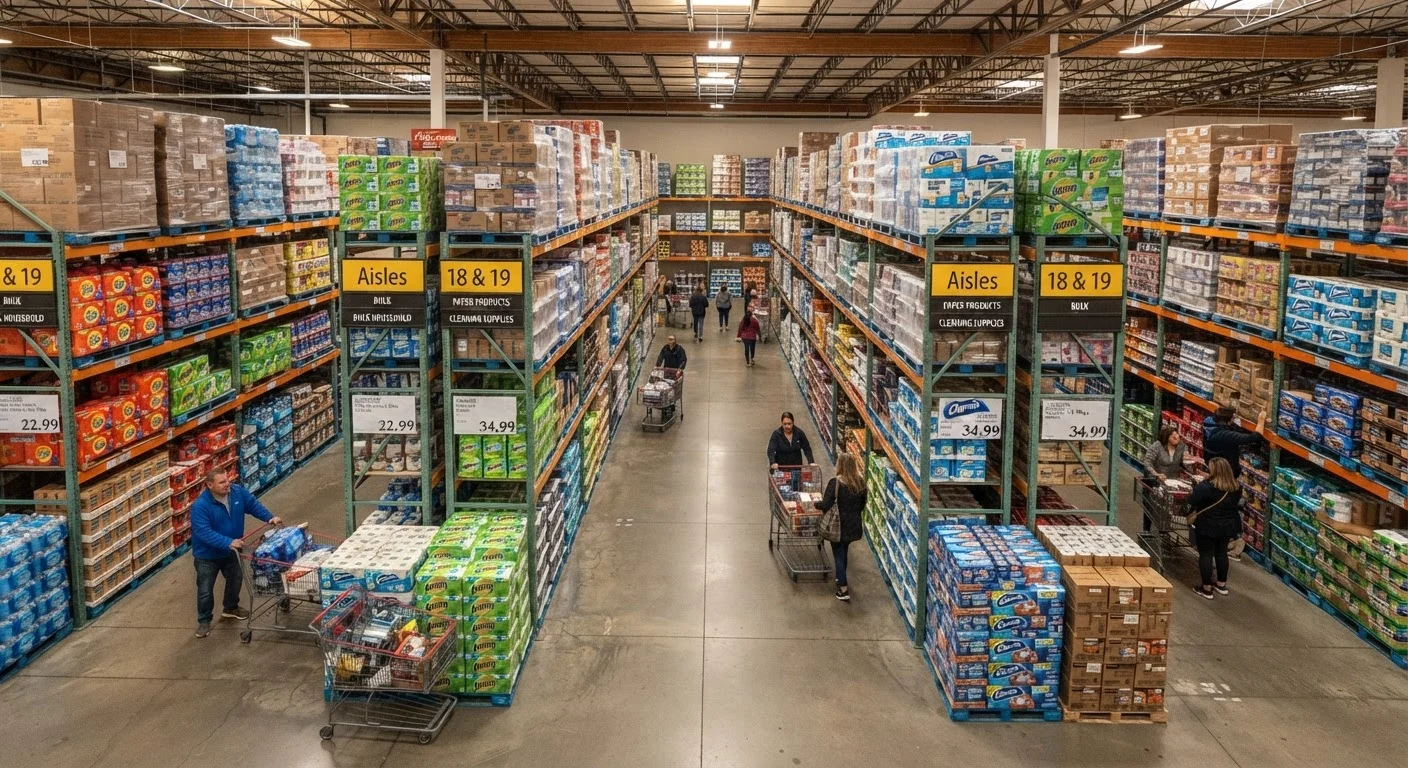
Photo credit: ArticlesHaven.net
In this article
Bulk buying can lower per-unit costs but introduces storage, waste, and cash-flow trade-offs. Here's how to assess whether bulk makes sense for your household.
Key Takeaways
- Bulk buying lowers per-unit cost but requires upfront cash and adequate storage space.
- Non-perishables and high-turnover items are the safest categories for bulk purchasing.
- Households that overbuy perishables often lose money to spoilage despite the unit discount.
- A membership fee can offset bulk savings if shopping frequency doesn't justify the cost.
- Calculating true savings means accounting for storage, spoilage, and opportunity cost.
Lower per-unit cost on stable products
Buying larger quantities typically reduces the per-unit price, which adds up meaningfully for items a household uses consistently. The savings are most reliable with non-perishable goods where the full quantity will actually be consumed.
Fewer shopping trips required
Maintaining a stockpile of staples reduces the frequency of restocking runs, saving time and incidental spending like fuel or impulse purchases made during extra store visits.
Protection against price increases
Buying ahead at today's price insulates you from near-term price hikes on commodities or heavily used products. This is particularly relevant for items subject to supply-chain volatility.
Reduced packaging waste over time
Fewer, larger packages generally produce less packaging material per unit of product compared to buying many smaller containers, which can align with household sustainability goals.
High upfront cash requirement
Bulk purchases demand a larger immediate outlay, which can strain a tight monthly budget even when the per-unit math is favorable. That cash could otherwise cover other pressing household needs.
Storage space demands are substantial
Warehouse-sized quantities require dedicated, appropriate storage - cool, dry, and accessible. Many households simply don't have the square footage to store bulk goods properly without creating clutter or spoilage conditions.
Spoilage risk with perishables
Buying perishable foods in bulk quantities that exceed your household's consumption rate leads to waste that quickly erases any per-unit savings. Even non-perishables can degrade if stored incorrectly.
Locks you into a product before you know you like it
Purchasing 48 units of a product you've never tried before is a gamble. If the quality disappoints or your preference changes, you're stuck with a large quantity you won't use.
Membership costs may not be justified
Many bulk-focused retailers charge annual membership fees. If your purchasing patterns don't generate enough savings to offset that fee, you're effectively paying to shop there.
What Bulk Buying Actually Means
Buying in bulk means purchasing larger quantities of a product in a single transaction - typically at a lower cost per unit than smaller packages. It's a strategy available through warehouse clubs, online retailers, grocery stores, and direct distributors. The appeal is straightforward: pay less per ounce, per roll, or per serving.
But the per-unit price is only part of the equation. To evaluate whether bulk makes financial sense, you need to factor in storage capacity, how quickly your household uses the item, whether the product can expire or degrade, and the upfront cash required. Understanding how unit pricing works is the foundation of any honest bulk comparison.
Bulk Buying Is a Strategy, Not a Rule
There's no single answer to whether bulk buying saves money - it depends entirely on the product, the household, and the consumption pattern. Applying it selectively to a defined list of staples is more effective than adopting it as a general shopping philosophy. Review your bulk purchases periodically to confirm the savings are materializing rather than going to waste.
The Genuine Advantages
When the conditions are right, bulk purchasing delivers measurable value across several dimensions:
Lower per-unit cost on stable products
Buying larger quantities typically reduces the per-unit price, which adds up meaningfully for items a household uses consistently. The savings are most reliable with non-perishable goods where the full quantity will actually be consumed.
Fewer shopping trips required
Maintaining a stockpile of staples reduces the frequency of restocking runs, saving time and incidental spending like fuel or impulse purchases made during extra store visits.
Protection against price increases
Buying ahead at today's price insulates you from near-term price hikes on commodities or heavily used products. This is particularly relevant for items subject to supply-chain volatility.
Reduced packaging waste over time
Fewer, larger packages generally produce less packaging material per unit of product compared to buying many smaller containers, which can align with household sustainability goals.
These benefits are most reliable for products with long shelf lives and consistent demand - think paper goods, canned foods, cleaning supplies, and personal care staples. For households with larger family sizes or high consumption rates, the math tends to work out favorably. See also: when bulk buying actually makes sense.
The Real Drawbacks
Bulk buying is not universally smart, and the downsides are concrete - not just theoretical:
High upfront cash requirement
Bulk purchases demand a larger immediate outlay, which can strain a tight monthly budget even when the per-unit math is favorable. That cash could otherwise cover other pressing household needs.
Storage space demands are substantial
Warehouse-sized quantities require dedicated, appropriate storage - cool, dry, and accessible. Many households simply don't have the square footage to store bulk goods properly without creating clutter or spoilage conditions.
Spoilage risk with perishables
Buying perishable foods in bulk quantities that exceed your household's consumption rate leads to waste that quickly erases any per-unit savings. Even non-perishables can degrade if stored incorrectly.
Locks you into a product before you know you like it
Purchasing 48 units of a product you've never tried before is a gamble. If the quality disappoints or your preference changes, you're stuck with a large quantity you won't use.
Membership costs may not be justified
Many bulk-focused retailers charge annual membership fees. If your purchasing patterns don't generate enough savings to offset that fee, you're effectively paying to shop there.
The biggest trap is treating bulk buying as automatically frugal. A low unit price can still cost more in the long run if you're throwing out expired product or storing goods you'll never use. Membership fees add another layer - the real trade-offs of club store memberships deserve careful scrutiny before assuming they pay for themselves.
~40%
Average household food waste by weight
USDA estimates suggest roughly 30-40% of the US food supply goes uneaten, a significant portion of which occurs at the household level - a risk amplified by over-purchasing in bulk.
10-15%
Typical per-unit savings when buying in bulk
Consumer research generally places the per-unit discount for bulk goods in the 10-15% range compared to standard retail packaging, though results vary significantly by product category.
How to Decide What to Buy in Bulk
Not every product belongs in a bulk cart. A practical decision framework helps separate good bulk candidates from poor ones:
- High turnover, long shelf life: Toilet paper, laundry detergent, canned goods, and dry staples are reliable bulk purchases.
- Perishables with uncertain consumption: Fresh produce, dairy, and bread are high-risk - spoilage easily offsets any per-unit discount.
- Single-use or situational items: Seasonal products or items you buy infrequently tie up money and space without benefit.
- Products prone to reformulation: If a brand regularly changes formulas or packaging, buying a massive quantity locks you into something you may stop wanting.
Applying a cost-per-use mental model sharpens these decisions further - especially for items that wear out rather than expire.

Author
Articles Haven Editorial Contributor
Articles Haven Editorial Team is the collective byline for our editorial team and contributor network. Articles published under this byline or an editorial pen name are researched, written, and reviewed according to our editorial standards for clarity, consistency, and independence before publication.
View all articles →