
Why Sale Prices Aren't Always the Lowest Price
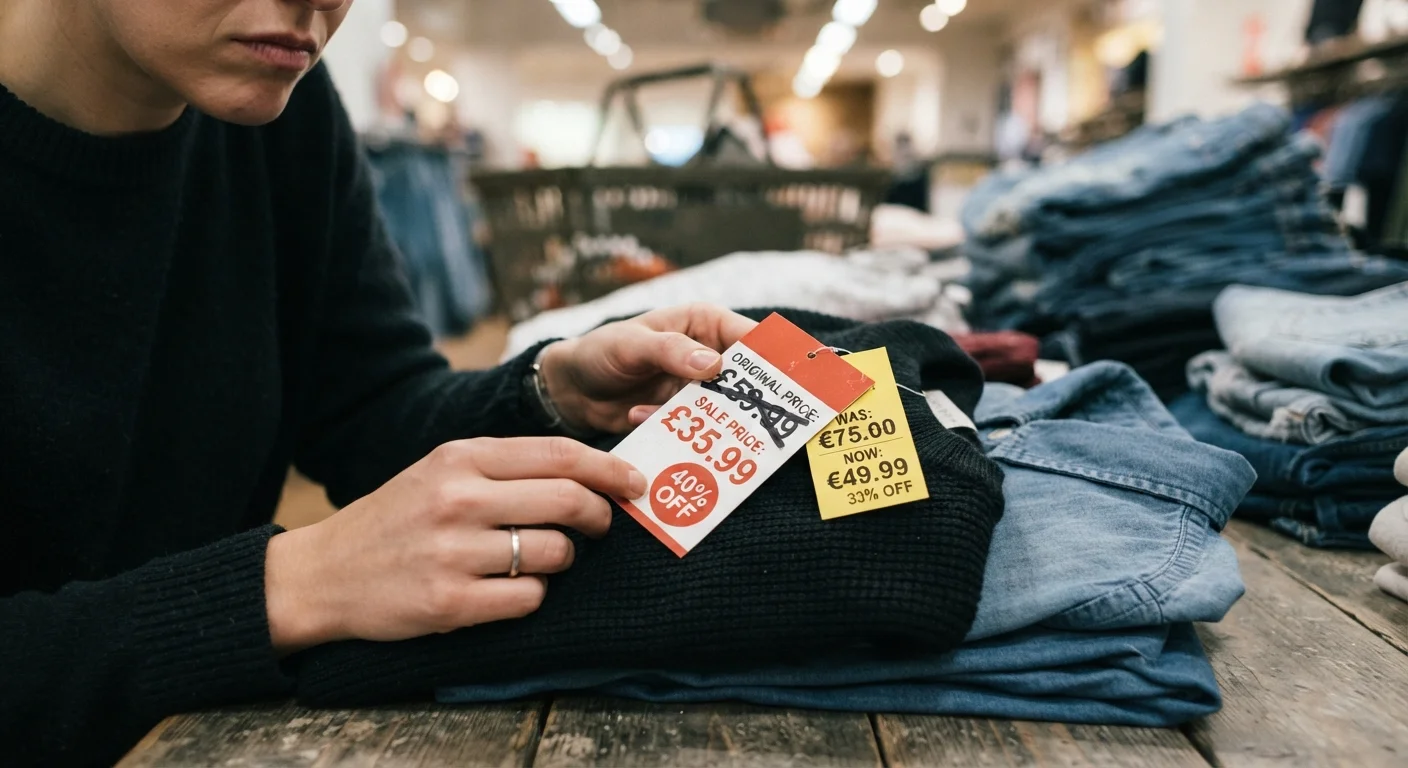
Photo credit: ArticlesHaven.net
In this article
Retailers use pricing psychology to make deals look bigger than they are. Learn the tactics behind inflated 'original' prices.
Key Takeaways
- Retailers often inflate 'original' prices to make discounts appear larger than they are.
- A sale price can still be higher than what the item regularly sells for elsewhere.
- Price anchoring is a documented psychological tactic used to influence perceived value.
- Tracking price history over time is one of the most reliable ways to spot a genuine deal.
- Regulatory rules around reference pricing vary and are inconsistently enforced.
The Gap Between 'Sale' and 'Savings'
Walk through any major retailer - online or in a physical store - and you'll see the same pattern: a bold sale price sitting next to a higher 'original' or 'was' figure, with a percentage-off badge making the deal look unmissable. The trouble is, that original price is often doing more psychological work than economic work.
Retailers have long used a practice called reference pricing - showing a higher comparison price alongside the current selling price - to frame a deal as more valuable. When that reference price is inflated or was only ever briefly in effect, the apparent savings shrink or disappear entirely. Understanding how this works puts you in a much stronger position to evaluate whether a marked-down item is actually worth buying.
For a deeper look at how price anchoring shapes your willingness to pay in the first place, see how price anchoring shapes what you're willing to pay.
Myth
If a tag shows a big percentage off, you're getting a genuinely good deal.
Fact
The percentage off is only as meaningful as the reference price it's calculated from - and that reference price is frequently inflated.
A 40% discount sounds significant, but if the 'original' price was set artificially high - or was active for just a few days - the math loses its meaning. The sale price itself may be close to or even above what the product normally sells for at other retailers. Percentages are persuasive partly because they feel objective, but they depend entirely on the starting figure chosen by the retailer.
Myth
Retailers are required to have actually sold an item at its 'original' price before marking it down.
Fact
Rules exist, but they vary by jurisdiction and enforcement is inconsistent - many reference prices exist in regulatory gray areas.
The FTC's guidelines on deceptive pricing set a reasonable standard: a former price should reflect genuine sales, not a token offering. But what counts as 'genuine' isn't always tightly defined, and state-level enforcement varies widely. Some retailers use manufacturer suggested retail prices (MSRP) as the reference, even when the product never sold at that figure in their stores. Others rotate prices quickly enough to technically satisfy a minimum offering period while functionally maintaining a permanent 'sale.'
Myth
Sale events like major shopping holidays reliably offer the lowest prices of the year.
Fact
Research on major retail sale events consistently finds that many items are available at the same or lower prices at other points in the year.
Major shopping events generate significant hype, but independent price-tracking analyses have repeatedly found that a meaningful share of 'doorbuster' and event deals are not the lowest prices those products reach over a 12-month period. In some categories, prices are actually raised in the weeks before an event and then 'discounted' back. This doesn't mean all event deals are fake - some categories do see genuine low points - but treating a sale event as automatically the best time to buy is a misplaced assumption.
Myth
If a product is expensive year-round, seeing it on sale means you should buy it now.
Fact
The urgency implied by a sale has no bearing on whether the timing is actually right for your needs or budget.
Sale framing is designed to create a sense of time pressure - buy now or lose the deal. But a deal that doesn't fit your actual needs, budget, or timing isn't a deal; it's an expense you moved forward. Products that are frequently on sale are likely to be on sale again. If a product is truly rarely discounted, that's worth knowing - but that information comes from tracking price history, not from trusting a sale tag's urgency framing.
Myth
Online prices are more transparent and competitive, so online sales are more genuine.
Fact
Online retailers use the same reference pricing tactics as physical stores, often with additional dynamic pricing layered on top.
E-commerce platforms can change prices multiple times per day based on demand signals, competitor pricing, and user behavior. This makes reference pricing even harder to evaluate, since the 'original' price shown may reflect a brief algorithmic spike rather than a stable market rate. Browser extensions that log price history can be particularly useful in this context, allowing you to see a product's actual price trajectory rather than relying on the retailer's framing.
What the Research and Regulations Actually Say
Consumer protection agencies in the US, including the Federal Trade Commission (FTC), have published guidance on deceptive pricing. Their rules generally hold that a 'former price' used as a reference should reflect a price at which the item was actually sold - in meaningful quantities and not just for a token period - before the markdown. In practice, enforcement is uneven, and many reference prices fall into gray areas.
~33%
Of 'sale' items not at lowest annual price
Price-tracking analyses of major US retail events have found roughly a third of promoted items were available at equal or lower prices at other times of year.
2-5 days
Minimum offering period in some state rules
Several US states have reference pricing rules requiring items to have been offered at the higher price for a minimum period - sometimes as few as two days - before being advertised as discounted.
Price history tools - browser extensions and comparison sites that track how a product's price has changed over time - are among the most practical defenses a consumer has. If a product has been sold at its 'sale' price for most of the past year, the original price is largely fictional.
It's also worth noting that sale prices are relative. A price that looks low compared to a retailer's own 'original' may still be higher than what competitors charge every day. Retail price vs. sale price vs. true value breaks down exactly how these three figures can diverge in ways that matter to your wallet.
Don't Rely on Sale End Dates Alone
A countdown timer or 'ends Sunday' label creates urgency - but the same item may go back on sale the following week at the same price. Urgency framing is a documented sales tactic, not a reliable signal that a deal is rare or time-limited. Give yourself at least a brief comparison window before deciding, even during high-pressure sale events.
Making Smarter Comparisons Before You Buy
The most effective counter to inflated sale pricing is straightforward: compare across sources before buying, not after. Check the item's price at multiple sellers, look at price-tracking history if available, and ask whether the product is marked down because demand has genuinely slowed - or simply because a retailer has structured the sale that way.
Sales tied to specific calendar events (major shopping holidays, end-of-season clearances) can include genuine markdowns, but they also attract the most aggressive reference-price inflation. Urgency framing - countdown timers, limited-stock warnings - can amplify the pressure to skip this comparison step. The psychology behind urgency tactics in online sales explains those mechanics in detail.
If you want a practical framework for deciding whether a discounted price actually represents value, the anatomy of a good deal is a useful next read. And remember: price alone is rarely the full picture - why comparing products on price alone usually backfires explains what else to factor in.
Reference Prices Can Be Misleading by Design
The crossed-out 'original' price next to a sale figure is not a neutral data point - it is a deliberate framing choice by the retailer. Regulatory protections exist but are unevenly applied. The most reliable approach is to check what the item actually sells for across multiple sources and over time, rather than taking any single retailer's reference price at face value.

Author
Articles Haven Editorial Contributor
Articles Haven Editorial Team is the collective byline for our editorial team and contributor network. Articles published under this byline or an editorial pen name are researched, written, and reviewed according to our editorial standards for clarity, consistency, and independence before publication.
View all articles →