
Grounding Techniques for Moments of Overwhelm
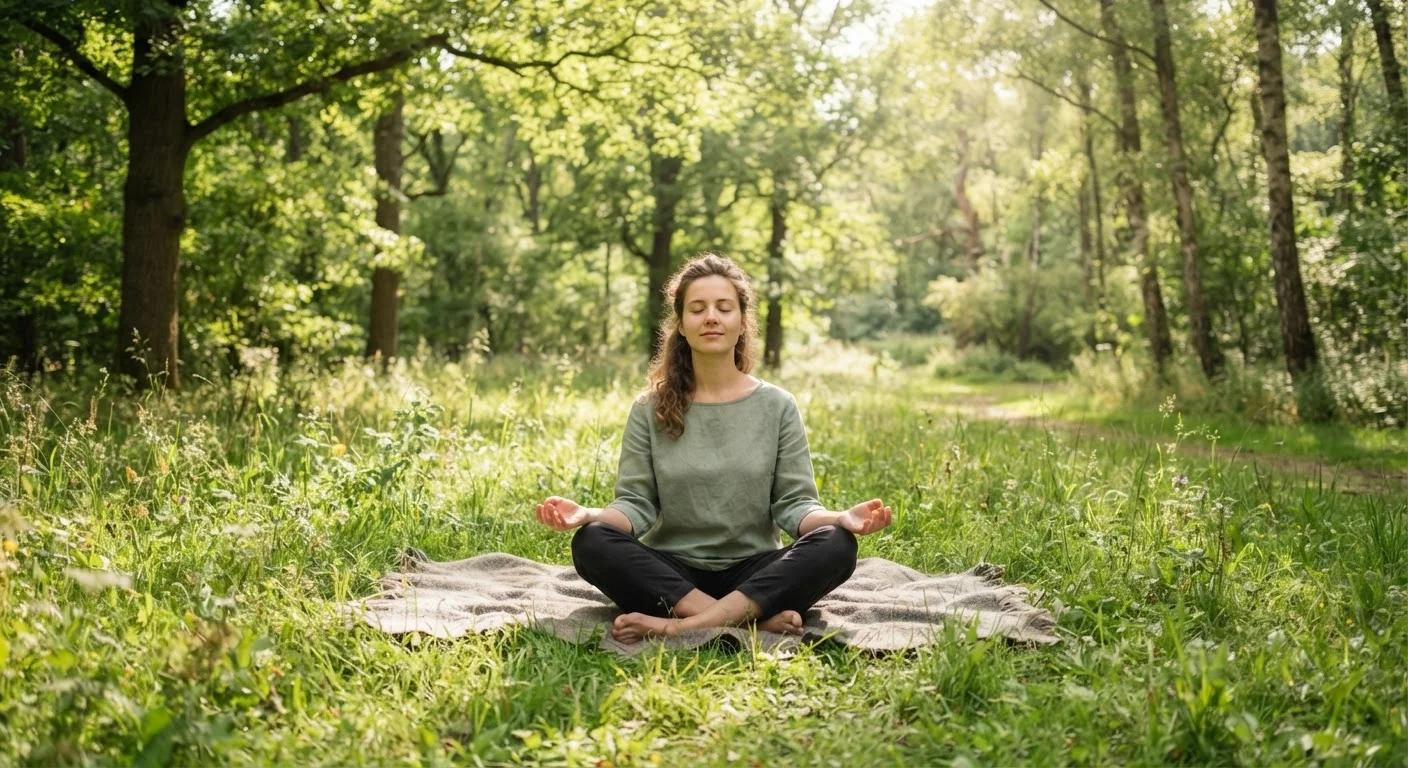
Photo credit: ArticlesHaven.net
Grounding exercises help redirect attention away from anxious thoughts toward the present moment. Here are several approaches and how they're used.
Key Takeaways
- Grounding techniques work by shifting attention from anxious thoughts to present-moment sensory experience.
- Several different approaches exist - sensory, physical, cognitive - so there's likely one that fits your situation.
- These tools are generally accessible and require no equipment, though they are not a substitute for professional mental health care.
- Regular practice tends to make grounding techniques more effective when stress actually hits.
- If anxiety or overwhelm is persistent or severe, consulting a qualified mental health professional is strongly recommended.
Why Grounding Can Help During Overwhelm
When anxiety spikes or emotions feel unmanageable, the mind often latches onto worry loops - replaying past events or rehearsing imagined future problems. Grounding exercises are a category of coping strategies designed to interrupt that cycle by redirecting attention toward concrete, present-moment experience.
The basic idea is straightforward: when your senses are engaged with something real and immediate - a texture, a temperature, a sound - it becomes harder for the mind to sustain abstract, ruminative thinking at the same time. Therapists and mental health researchers have described grounding as a component of approaches like Dialectical Behavior Therapy (DBT) and trauma-informed care, though it's also widely used as a general self-help tool.
These techniques vary considerably in style. Some are sensory and physical; others are more cognitive or breath-focused. That variety matters, because what works depends on the person, the setting, and the intensity of the moment. If you're exploring breath-focused approaches alongside grounding, breathing exercises for the nervous system covers several well-documented techniques worth knowing.
This article is for general informational purposes only and is not a substitute for professional mental health advice, diagnosis, or treatment. If you are experiencing persistent or severe anxiety, please consult a qualified mental health professional.
The 5-4-3-2-1 Sensory Scan
One of the most widely referenced grounding exercises, the 5-4-3-2-1 technique moves through each of the five senses in sequence. You identify five things you can see, four you can physically feel (the chair beneath you, clothing against your skin), three you can hear, two you can smell, and one you can taste.
The deliberate count gives your mind a structured task to complete, which occupies attention in a focused, non-threatening way. Because it requires no materials and can be done silently, it's usable in most public settings - on a train, in a waiting room, or at a desk.
The structured count gives anxious attention a concrete, manageable task to complete.
Focused Breathing With a Physical Anchor
Controlled breathing is arguably the most accessible grounding tool available. Slowing and deepening the breath activates the parasympathetic nervous system - the body's calming response - which can reduce the physical symptoms of anxiety like rapid heart rate and shallow breathing.
Adding a physical anchor makes breathing exercises more grounding. For example, placing one hand flat on a surface and focusing on the pressure, temperature, and texture while breathing slowly keeps attention tethered to the body rather than drifting back to anxious thinking. Breathwork basics offers a solid overview of what the research suggests about these practices.
Adding a physical anchor keeps attention tethered to the body during breathwork.
Cold Water or Temperature Contrast
Running cold water over your wrists or hands, or briefly holding an ice cube, is a physical grounding technique that works by introducing a strong, neutral sensory signal. The sensation is immediate and difficult to ignore, which can interrupt an anxiety spiral quickly.
This approach is sometimes associated with distress tolerance skills in therapeutic contexts. It's not suitable for every situation, but for moments of acute overwhelm at home or near a bathroom, it can be an effective reset. As with all grounding tools, it's intended to help manage distress in the moment - not to address its underlying causes.
A strong physical sensation can interrupt an anxiety spiral more quickly than mental effort alone.
The Body Scan
A body scan involves slowly directing attention through different parts of the body - starting at the feet and moving upward - noticing physical sensations without trying to change them. Heaviness, warmth, tension, or tingling are all simply observed.
This technique is common in mindfulness-based practices and is useful for situations where anxiety manifests physically: tight chest, tense shoulders, clenched jaw. By naming and observing sensations rather than reacting to them, people often report that the urgency of those sensations decreases. A structured self-check-in can incorporate this kind of body awareness into a regular practice.
Observing physical sensations without judgment often reduces their urgency.
Cognitive Grounding: Categories and Counting
Cognitive grounding techniques use mental tasks - rather than sensory input - to redirect attention. Common examples include mentally listing all the items you can recall in a specific category (types of fruit, states that start with a particular letter, movie titles), or counting backward from a number like 100 by sevens.
These tasks require just enough cognitive effort to crowd out ruminative thinking without being so difficult they cause additional frustration. They're particularly useful in situations where physical techniques aren't practical - during a meeting, in conversation, or in a social setting where drawing attention to yourself isn't ideal.
Mental tasks require enough focus to crowd out rumination without adding new stress.
Engaging a Single Sense Deliberately
Rather than cycling through multiple senses, this approach involves fully focusing on one sensory experience for a sustained period. Listening carefully to ambient sound - traffic, birds, an air conditioning hum - and trying to identify and separate individual layers is one version. Slowly examining an ordinary object in your hand and describing its texture, weight, color, and edges to yourself is another.
The slower pace makes this technique more suitable for moderate stress than acute crisis. Some people find it useful as a wind-down tool before sleep or as a transition ritual between demanding parts of the day. For those interested in how sound environments can support focus and calm, choosing the right headphone mode touches on when blocking out versus tuning into sound makes sense.
Fully attending to a single sensory experience slows anxious thinking more gently than multi-step techniques.
Making Grounding Part of a Broader Routine
Grounding techniques tend to work better when they're practiced before you need them - not just reached for in crisis. Familiarity lowers the barrier to actually using a technique when stress is high and executive function feels compromised.
Practice Before You Need It
Try a grounding technique during a calm moment - not just when stress peaks. Running through the 5-4-3-2-1 scan or a breathing anchor a few times in low-stakes situations makes it easier to access the technique reliably when you actually need it. Familiarity reduces the friction of getting started when concentration is already compromised.
Consider pairing grounding with a broader mental wellness habit. Building a daily mental wellness routine covers how small, consistent habits tend to outperform occasional big efforts. And if you're new to practices like mindfulness that often complement grounding, starting a mindfulness practice is a practical starting point. Grounding also has situational uses - for instance, those who experience travel anxiety may find these tools useful during flights or in crowded terminals, as explored in managing travel anxiety.
These Tools Have Limits
Grounding techniques are general coping strategies, not clinical treatments. They can be useful for managing everyday stress and mild-to-moderate anxiety, but they are not a replacement for professional support. If overwhelm is frequent, intense, or interfering with daily functioning, speaking with a licensed mental health professional is the appropriate next step.

Author
Articles Haven Editorial Contributor
Articles Haven Editorial Team is the collective byline for our editorial team and contributor network. Articles published under this byline or an editorial pen name are researched, written, and reviewed according to our editorial standards for clarity, consistency, and independence before publication.
View all articles →