
LCD vs. OLED: What the Display Tech Difference Actually Means for You
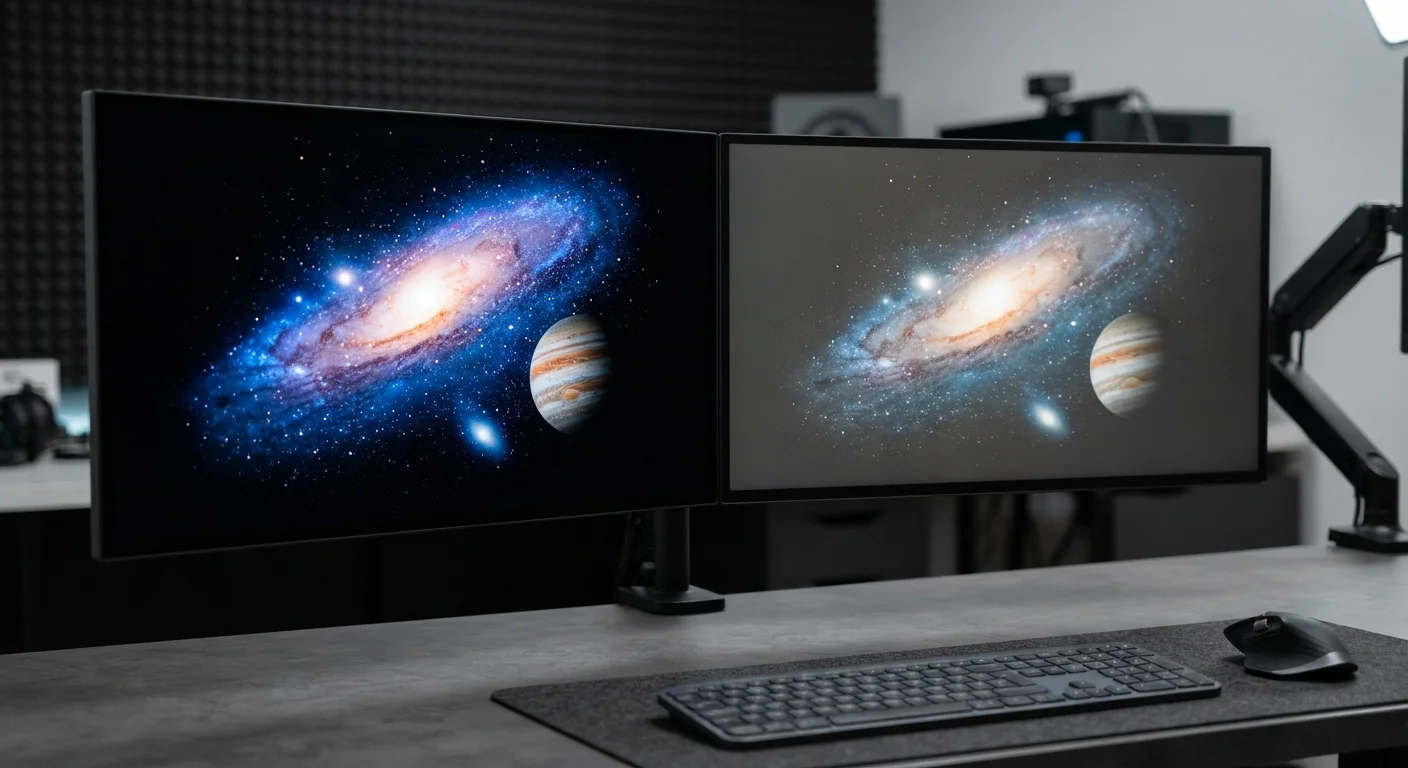
Photo credit: ArticlesHaven.net
In this article
Confused by screen specs? Here's what LCD and OLED actually mean for picture quality, longevity, and everyday use.
Key Takeaways
- LCD uses a backlight behind liquid crystals; OLED pixels generate their own light individually.
- OLED delivers truer blacks and better contrast, while LCD generally reaches higher peak brightness.
- LCD panels typically cost less and carry no burn-in risk, making them lower-maintenance over time.
- OLED screens tend to perform better in dark rooms; LCD holds up better in bright, sunlit spaces.
- Both technologies have matured significantly - the right choice depends on your environment and habits.
How Each Technology Actually Works
Understanding the real-world difference between LCD and OLED starts with knowing how each type of display creates an image - because the underlying mechanism explains nearly every trade-off that follows.
LCD panels use a backlight - typically LED-based - that shines through a layer of liquid crystals. Those crystals act like tiny shutters, blocking or allowing light to pass through color filters to create the image you see. The backlight is always on to some degree, which creates a practical ceiling on how dark any part of the screen can actually get.
OLED panels work differently at the pixel level. Each individual pixel contains organic compounds that emit light on their own when an electrical current passes through. That means any pixel can be switched completely off, producing what's effectively a true black rather than a dark gray approximation. No backlight is involved.
This structural difference - centralized backlight versus self-emitting pixels - is the root cause of every performance gap between the two technologies. For a broader look at how display specs interact with each other, see our guide to TV specs that actually matter.
| Criterion | LCD | OLED |
|---|---|---|
| How light is produced | LED backlight + liquid crystals | Self-emitting pixels |
| Black level quality | Dark gray (backlight always on) | True black (pixels switch off) |
| Peak brightness | Generally higher | Lower sustained brightness |
| Viewing angles | Varies by panel type (IPS best) | Consistent off-angle performance |
| Burn-in risk | None | Possible with prolonged static images |
| Typical price range | Budget to premium | Mid to premium |
| Best room type | Bright or mixed-light rooms | Dark or controlled-light rooms |
Picture Quality: Where Each Technology Wins and Loses
Neither LCD nor OLED dominates on every picture quality metric. The outcome depends on which qualities you weight most heavily.
Contrast and Black Levels
This is OLED's clearest advantage. Because pixels switch off completely, the contrast ratio in dark scenes is genuinely superior. LCD manufacturers have developed local dimming - where sections of the backlight dim independently - to close the gap, but blooming (a halo of light around bright objects on a dark background) remains a visible artifact on most LCD panels under careful scrutiny.
Peak Brightness
LCD typically wins here. Because the backlight operates independently of the pixel layer, LCD panels can sustain higher overall brightness levels. This matters most in HDR content, where highlights on LCD screens can appear more intense, and in bright viewing environments where you need the image to punch through ambient light.
Viewing Angles
OLED maintains consistent color and contrast when viewed from off-center angles. Standard LCD panels - particularly those using VA (Vertical Alignment) panel types - can shift color or wash out noticeably when viewed from the side. IPS-type LCD panels handle off-angle viewing better, but typically at the cost of contrast.
∞:1
Theoretical contrast ratio of OLED panels
Because individual OLED pixels can turn completely off, the measured contrast ratio is effectively infinite - a benchmark LCD cannot match due to backlight bleed.
1,000-2,000+ nits
Peak brightness range for high-end LCD TVs
High-end LCD TVs with full-array local dimming can reach sustained peak brightness levels that many current OLED panels cannot match, particularly important for HDR highlights.
0.1 ms
Typical OLED pixel response time
OLED pixel response times are significantly faster than most LCD panels, reducing motion blur in fast-moving content - though high-refresh-rate LCDs have narrowed this gap.
Motion and Response Time
OLED pixels switch states extremely quickly, which benefits fast-motion content like sports. Most modern LCD panels have also improved significantly here, though high-quality OLED response times remain a benchmark reference point.
Longevity, Burn-In, and Practical Durability
One concern that comes up consistently with OLED is burn-in - a form of permanent image retention that occurs when a static image is displayed for extended periods. The organic compounds in OLED pixels degrade at different rates depending on use, and areas that display the same bright element repeatedly (a channel logo, a game's health bar, a navigation overlay) can develop a ghost of that image over time.
LCD panels do not experience burn-in. Their backlights do dim over thousands of hours of use, but this happens uniformly and gradually rather than as a localized artifact.
Burn-In Risk in Context
OLED burn-in is a real phenomenon, but its likelihood depends heavily on use patterns. Varied content viewing - switching between streaming, cable, and gaming - distributes pixel stress more evenly and reduces risk. Users who primarily display one type of content (such as a static desktop background or a single video game for many hours daily) face a higher cumulative risk. Modern OLED panels include built-in compensation features that have meaningfully reduced but not eliminated this concern.
In typical varied-content use - streaming movies, general TV watching - most users do not encounter noticeable OLED burn-in within several years of normal use. The risk is more significant for users who leave static images on screen for hours at a time or play the same video game for extended sessions daily.
Worth noting: manufacturers have implemented software mitigations (pixel shifting, screen savers, brightness limits for static areas) that have reduced burn-in incidence compared to earlier OLED generations. But the underlying risk differential between the two technologies remains.
Cost, Availability, and the Decision That Makes Sense for You
LCD remains the dominant display technology by volume - it's used in the vast majority of televisions, monitors, and laptops across all price tiers. That scale keeps manufacturing costs lower, which generally translates to lower retail prices, especially at larger screen sizes.
OLED is concentrated in the mid-to-upper portion of the market. The production process is more complex, yields have historically been lower, and the organic materials involved add cost. Prices have come down meaningfully over time, but a comparable screen size in OLED still typically costs more than a mid-range LCD.
It's also worth being cautious about how displays are marketed. Terms like "QLED" or "NanoCell" are LCD technologies with enhancement layers - not OLED. The naming can blur the lines in ways that don't help shoppers. Our guide on misleading consumer specs covers how to read through that kind of language more critically. And if you're weighing a large-screen TV against a projector setup entirely, this comparison of projectors and TVs may also be useful context.
If you're trying to understand what you actually gain at different price points within either technology category, our piece on price tiers in consumer electronics breaks that down. The short version: match the technology to your room and viewing habits first, then let budget set the ceiling from there.

Author
Articles Haven Editorial Contributor
Articles Haven Editorial Team is the collective byline for our editorial team and contributor network. Articles published under this byline or an editorial pen name are researched, written, and reviewed according to our editorial standards for clarity, consistency, and independence before publication.
View all articles →