
Front-Load vs. Top-Load Washers: A Real-World Performance Breakdown
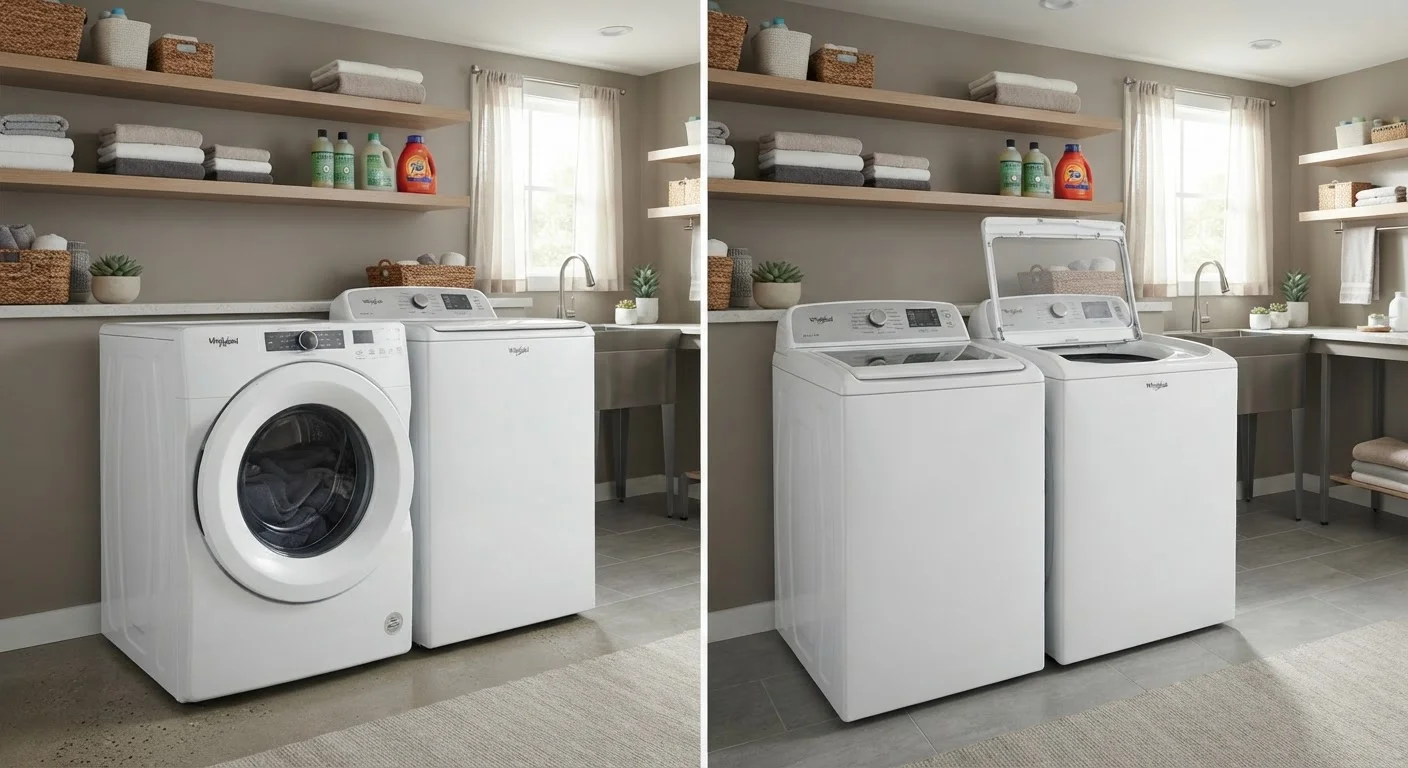
Photo credit: ArticlesHaven.net
In this article
Learn how front-load and top-load washing machines differ in water use, cleaning power, space, and long-term maintenance.
Key Takeaways
- Front-load washers typically use less water and energy than top-load models.
- Top-load washers with agitators are generally faster and easier to load for most people.
- Front-loaders tend to clean more gently, making them better for delicate fabrics.
- Mold and odor buildup is a more common maintenance concern with front-load machines.
- High-efficiency top-loaders (no agitator) split the difference but can have longer cycle times.
- Your laundry space, budget, and physical comfort all factor into which type makes sense.
How Each Machine Actually Cleans
The core difference between front-load and top-load washers is mechanical: front-loaders tumble clothes through a small pool of water, while top-loaders - particularly those with a central agitator - push and pull garments through a fuller tub of water. Both approaches get clothes clean, but they handle fabrics differently.
Front-load machines generally produce less friction on fabric, which translates to less wear on clothes over time. They also extract more water during the spin cycle, which can shorten drying times. Top-load agitator models clean quickly and handle heavily soiled loads well - the mechanical action is more aggressive, which is useful for work clothes or kids' gear but harder on finer fabrics.
High-efficiency (HE) top-loaders skip the agitator and use an impeller plate instead. They use less water than traditional top-loaders but often run longer cycles. Some users find they don't clean as thoroughly with very soiled items.
| Front-Load Washer | Top-Load (Agitator) | Top-Load HE (No Agitator) | |
|---|---|---|---|
| Water use per cycle | Low (10-15 gallons typical) | High (30-45 gallons typical) | Moderate (15-25 gallons typical) |
| Cleaning effectiveness | Excellent on most loads | Strong, especially heavy soil | Good; less effective on heavy soil |
| Cycle time | Moderate to long (60-90 min) | Shorter (45-60 min) | Long (60-80 min) |
| Fabric gentleness | Gentle tumble action | More aggressive on fabrics | Moderate, varies by model |
| Stackable option | Yes | No | No |
| Mold/odor risk | Higher - door gasket traps moisture | Lower - open-top design | Low to moderate |
| Typical upfront cost | Higher | Lower | Mid-range |
| Accessibility (loading) | Requires bending; pedestal helps | Easy upright access | Easy upright access |
Water Use, Energy, and Operating Costs
Water consumption is one of the clearest separators between these two types. Front-load washers typically use significantly less water per cycle - some estimates put the savings at roughly 40-50% compared to traditional top-loaders. In areas with higher water costs or drought restrictions, that gap matters over time.
Energy use tracks similarly: front-loaders generally carry ENERGY STAR certifications more readily, and their higher spin speeds reduce the energy your dryer needs to finish the job. That said, the efficiency gap has narrowed as HE top-loaders have become more common.
~40%
Water saved per cycle (front-load vs. agitator top-load)
The U.S. Department of Energy has noted that ENERGY STAR-certified front-load washers use significantly less water than standard top-load models.
25%
Less energy used by ENERGY STAR washers
According to the EPA's ENERGY STAR program, certified clothes washers use about 25% less energy than conventional models meeting minimum federal standards.
If you're also thinking about connected utility decisions in your home, our comparison of tankless vs. traditional water heaters covers a similar upfront-cost-versus-long-term-savings trade-off worth reading alongside this one.
Space, Installation, and Accessibility
Front-load washers can be stacked with a compatible dryer, which is a meaningful advantage in apartments, closets, or compact laundry nooks. If your laundry area is side-by-side only, top-loaders fit the same footprint - but you'll need vertical clearance to open the lid fully.
Accessibility is worth taking seriously. Loading a front-loader requires bending at the waist; many users add a pedestal drawer underneath to raise the door height, though that adds cost. Top-loaders are easier to use for people who find bending uncomfortable or who have back or hip concerns - though very tall users sometimes find top-loaders awkward to reach the bottom of the drum.
Pedestal Drawers: Worth the Cost?
Raising a front-load washer on a pedestal can make loading significantly more comfortable - especially for users who find floor-level bending difficult. Pedestals often include a storage drawer, which adds utility in tight laundry spaces. That said, they add $150-$300 or more to your total outlay, so factor that into your budget comparison from the start rather than as an afterthought.
For renters, stackability often tips the decision. For households with multiple family members doing laundry, the convenience of tossing in a forgotten sock mid-cycle (possible with top-loaders, not front-loaders once the cycle starts) is a real quality-of-life consideration.
Maintenance: Where Front-Loaders Demand More Attention
Front-load washers have a documented tendency to develop mold and musty odors around the rubber door gasket - especially if the door is kept closed between uses or damp laundry sits inside. This isn't universal, but it's common enough to be a well-known user complaint. Running a cleaning cycle regularly, wiping the gasket after each wash, and leaving the door ajar when not in use all help - but they add to your routine.
Front-Loader Mold: Prevention Is Key
If you own or are considering a front-load washer, the door gasket requires consistent attention. After each cycle, wipe down the rubber seal and leave the door slightly open to allow airflow. Run a drum-cleaning cycle monthly with a washer cleaner or diluted white vinegar. Ignoring this maintenance can lead to persistent musty odors that transfer to clothing - and removing established mold from the gasket can be difficult.
Top-load washers are generally more forgiving here. The open-top design allows more airflow, and there's no door seal to trap moisture. The drum and agitator can accumulate detergent buildup, but routine maintenance is typically simpler.
Both machine types benefit from using the correct detergent in the right quantity - HE machines (both front- and top-load HE models) require low-sudsing HE detergent. Oversudsing is a common issue that can affect cleaning performance and machine longevity. For more on building laundry habits that reduce long-term effort, see laundry routines that prevent the never-ending pile.
Upfront Cost and Long-Term Value
As a general rule, front-load washers carry a higher purchase price than comparable top-load models. HE top-loaders sit in the middle of the price range. Budget-oriented top-load agitator models remain among the most affordable washing machines on the market.
When evaluating total cost, factor in: water and energy bills over years of use, the cost of pedestals if you go front-load, potential repair costs (front-loaders can have more complex seals and bearings), and expected machine lifespan. Long-term operating savings from efficiency can offset a higher purchase price - but how quickly depends on your household's usage volume and local utility rates.
It's also worth noting that drum capacity has expanded across both types in recent years, so comparing models side by side on drum size (measured in cubic feet) is worthwhile, especially for larger households. If you're making several appliance decisions at once, our guide on countertop vs. built-in dishwashers applies a similar framework to kitchen appliances.

Author
Articles Haven Editorial Contributor
Articles Haven Editorial Team is the collective byline for our editorial team and contributor network. Articles published under this byline or an editorial pen name are researched, written, and reviewed according to our editorial standards for clarity, consistency, and independence before publication.
View all articles →