
Laundry Routines That Prevent the Never-Ending Pile
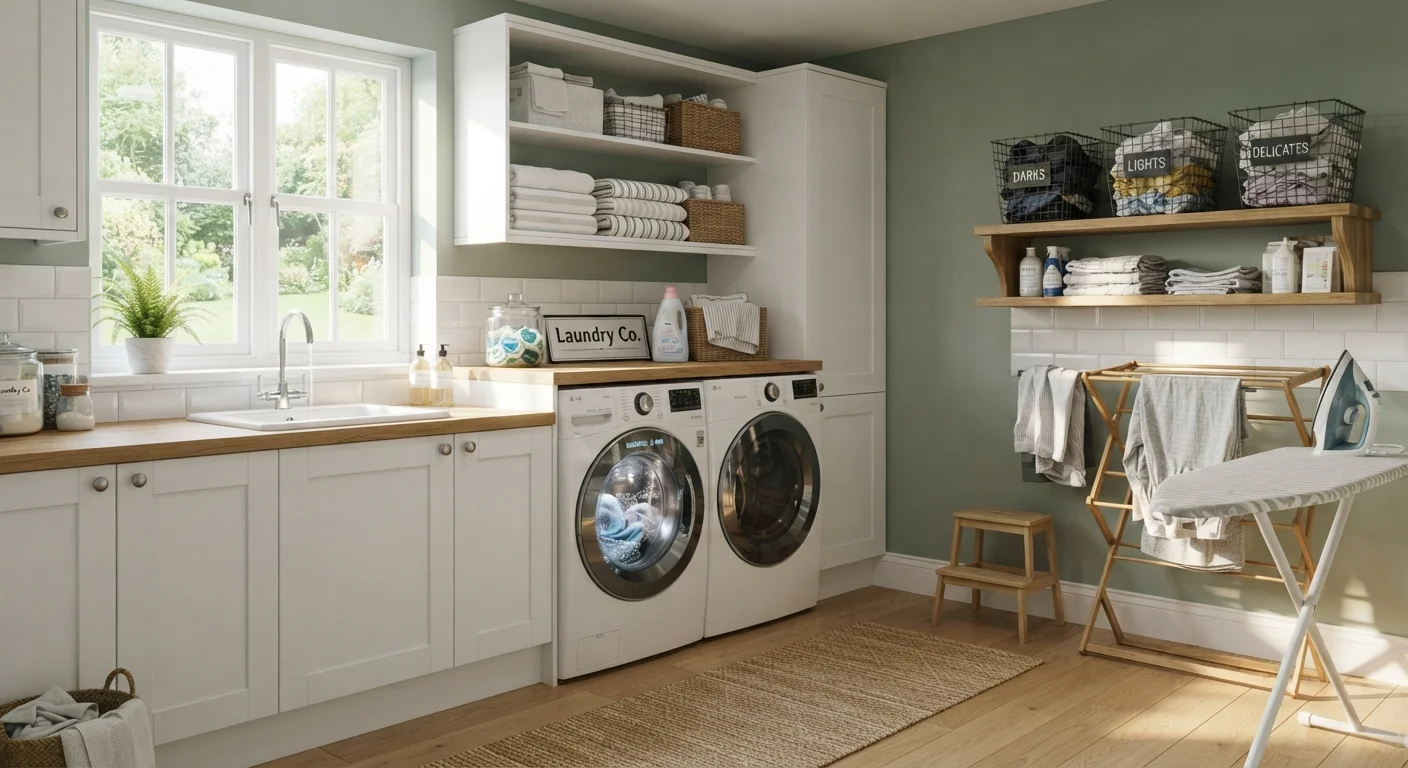
Photo credit: ArticlesHaven.net
In this article
Small structural changes to when and how you do laundry can stop the backlog from forming. Here's how to build a routine that sticks.
Key Takeaways
- Doing smaller, more frequent loads prevents the backlog more effectively than marathon laundry sessions.
- Assigning laundry to a specific day or time slot removes the decision fatigue that causes avoidance.
- A designated sorting system at the hamper level saves significant time each cycle.
- Folding and putting away immediately after drying is the step most people skip, causing pile-up.
- Pairing laundry tasks with existing habits dramatically improves long-term follow-through.
Why Laundry Piles Up in the First Place
The never-ending laundry pile isn't usually a motivation problem - it's a structure problem. Most households treat laundry as a reactive task: you do it when you run out of something, or when the hamper overflows. That approach guarantees a backlog because the trigger is always too late.
The other common failure point is treating laundry as one task when it's actually four: sorting, washing, drying, and putting away. Stopping after the dryer cycle - the most common stopping point - means clean clothes pile up on surfaces, which feels just as chaotic as dirty ones. The fix isn't working harder; it's redesigning the task so each step flows into the next with as little friction as possible.
What you will need
Understanding your specific failure point matters before making changes. For most households, the problem is either starting (avoidance until the pile is overwhelming) or finishing (washing and drying reliably but skipping folding and put-away). These require different solutions.
What You'll Need
Divided laundry sorter
Separates darks, lights, and delicates at the point of deposit so you never have to sort before washing.
Mesh laundry bags
Protect delicates and small items like socks from tangling or damage during the wash cycle.
Laundry timer or smart plug
Alerts you when a cycle finishes so clothes don't sit wet in the drum and need rewashing.
Collapsible folding table or flat surface
Provides a dedicated spot for folding, which reduces the likelihood of clothes landing on a bed or chair indefinitely.
None of these tools are expensive, and you likely already have some of them. The divided sorter is the highest-impact change for households that struggle with sorting friction before wash day.
How to Build the Routine
Audit your current laundry pattern
Before changing anything, observe what's actually happening. How many loads accumulate before you start? Where do clean clothes end up - folded and away, or on a chair? Identifying your specific failure point (starting, folding, or putting away) lets you target the fix rather than overhauling everything at once.
Set a fixed laundry day and time
Choose one or two specific days per week and a time of day that fits your natural schedule - Saturday morning, Wednesday evening, or Sunday after dinner. Put it on your calendar like any other recurring commitment. The goal is to remove the daily decision of when to do laundry, which is often what causes indefinite delay.
Set up a sort-at-the-hamper system
Replace a single hamper with a divided sorter that has at least two compartments - typically darks and lights, or colors and whites. Train everyone in the household to sort as they undress. When laundry day arrives, one section is already a ready-to-wash load. This eliminates the pre-wash sorting step that many people find tedious enough to avoid entirely.
Start the washer during an anchor activity
Link starting the wash to something you already do consistently - brewing morning coffee, starting dinner, or sitting down to watch TV. This is the core principle behind habit stacking: attaching a new behavior to an established one increases follow-through significantly. See how habit stacking works for the underlying logic.
Move clothes to the dryer immediately
The transition from washer to dryer is a common break point where laundry stalls. As soon as the wash cycle ends, move the load. If you use a drying rack for delicates, set it up in advance so there's no friction - items go straight from the drum to the rack without searching for a place to put them.
Fold and put away before the next load starts
This is the step most routines skip, and it's the primary reason clean laundry accumulates on surfaces. Make it a rule: the previous load gets folded and returned to drawers or closets before the next load goes into the washer. This keeps the system moving and prevents the classic 'clean clothes mountain' from forming on a bed or chair.
Do a weekly five-minute reset
At the end of each week, do a quick check: Are all clean clothes put away? Is the sorter manageable? Does anything need spot-treating before the next cycle? This brief review prevents small slippages from compounding into a full backlog. It fits naturally into a broader household rhythm - see how to structure a whole-home cleaning schedule for a framework that includes laundry alongside other tasks.
Small Changes Compound Over Time
You don't need a perfect system on day one. Starting with just one structural change - a divided sorter or a fixed laundry day - and building from there tends to work better than attempting a complete overhaul. Incremental changes often outperform dramatic ones when it comes to lasting household habits.
Keeping the Routine From Collapsing
Even a well-designed laundry routine will slip occasionally - travel, illness, or a busy week can break the cycle. The key is recovery speed. When you miss a session, the goal isn't to catch up in one exhausting marathon but to restart the normal cycle as soon as possible and accept that one extra load this week is fine.
Don't Skip the Put-Away Step
Leaving clean laundry in a basket or on a surface - even briefly - is where most routines break down permanently. Once 'clean but not away' becomes the norm, the pile grows and the routine loses its structure. Treating put-away as a non-negotiable final step is what separates a functional routine from a recurring backlog.
If you find the routine consistently breaking down at the same point, treat that as a design signal rather than a discipline failure. Adjust the anchor activity, move the laundry day, or simplify the sorting system. A routine that works imperfectly but consistently is far more effective than a perfect system you abandon after two weeks. This principle - that small, consistent actions outperform sporadic large efforts - applies broadly to household management and is worth keeping in mind as you build other home routines. Room-by-room cleaning follows the same logic: regular light attention beats infrequent overhauls.
Washer Type Affects Your Routine
Front-load and top-load washers differ in cycle times, capacity, and how they handle different fabric types - all of which can affect how you structure your laundry days. If your current machine frequently requires rewashing or takes unusually long cycles, that friction may be undermining your routine. See a real-world breakdown of washer types before assuming the issue is habit alone.

Author
Articles Haven Editorial Contributor
Articles Haven Editorial Team is the collective byline for our editorial team and contributor network. Articles published under this byline or an editorial pen name are researched, written, and reviewed according to our editorial standards for clarity, consistency, and independence before publication.
View all articles →