
Down vs. Synthetic Insulation in Jackets: Warmth, Weight, and Weather Resistance
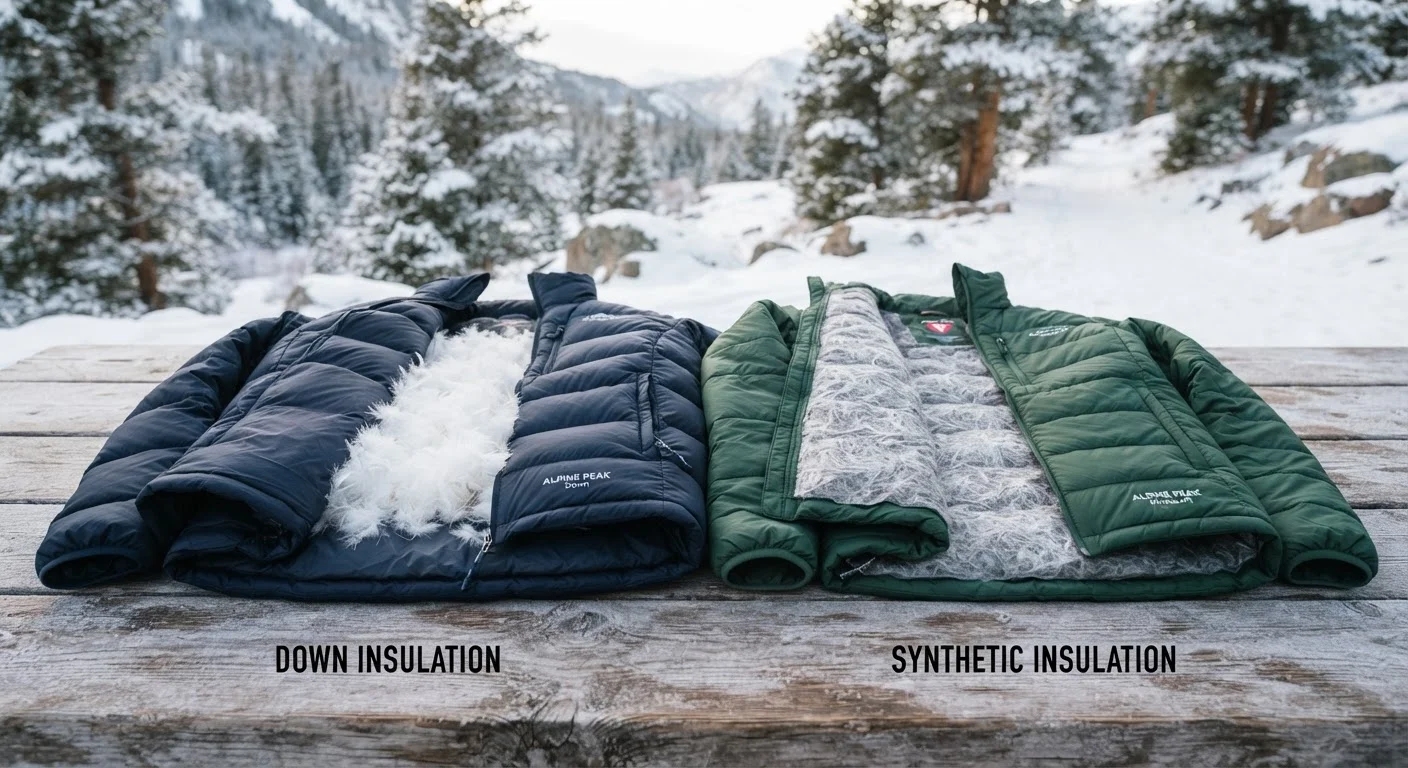
Photo credit: ArticlesHaven.net
In this article
Down is warmer by weight, but synthetic wins in wet conditions. See how insulation types compare for different climates and activities.
Key Takeaways
- Down insulation offers a superior warmth-to-weight ratio but loses effectiveness when wet.
- Synthetic insulation retains warmth even when damp and generally costs less upfront.
- Fill power (for down) and fiber technology (for synthetic) are the key specs to understand.
- Your typical climate and activity type should drive which insulation you choose.
- Treated down (water-resistant down) narrows the performance gap in wet conditions.
How Each Insulation Type Actually Works
Down insulation is made from the soft clusters found beneath the feathers of waterfowl, typically geese or ducks. These clusters trap air exceptionally well, creating warmth without much bulk. The key spec to look for is fill power - a number typically ranging from 400 to 900+ that measures how much space one ounce of down occupies. Higher fill power means more trapped air per ounce, which means a warmer, lighter jacket.
Synthetic insulation uses man-made polyester fibers engineered to mimic down's lofting structure. Manufacturers have developed increasingly fine and complex fiber arrangements over the years, improving performance considerably. Unlike down clusters, synthetic fibers don't collapse completely when wet - they maintain some loft and continue to provide insulation even when damp.
Understanding insulation performance is somewhat analogous to understanding R-value in home insulation. For a broader look at how thermal resistance works, see how R-value measures thermal resistance - the principle of trapping air to slow heat loss applies in both contexts.
Warmth and Weight: Where Down Has the Edge
For pure warmth relative to weight, down has a clear advantage. A high fill-power down jacket can be dramatically lighter and more compressible than a synthetic jacket offering comparable warmth. This makes down the conventional choice for mountaineering, long-distance hiking, and any activity where pack weight matters.
That compressibility also matters day-to-day - down jackets typically pack down to a much smaller size, fitting into a stuff sack or even their own pocket.
800+
Fill power of premium down
Down rated 800 fill power or higher is considered premium and offers the highest warmth-to-weight performance available in consumer jackets.
~30-40%
Warmth loss for wet untreated down
Industry testing and gear reviews consistently show untreated down can lose a substantial portion of its insulating value when saturated with moisture.
Synthetic jackets tend to be heavier and bulkier for the same rated warmth level. However, advances in synthetic fiber technology have closed this gap, and in the mid-weight range, the difference is less dramatic than it once was.
Wet Weather and Moisture: The Critical Trade-Off
This is where the comparison becomes most consequential. Down clusters lose their loft when wet - and a collapsed cluster traps very little air, meaning it provides very little warmth. In sustained rain or high humidity, an untreated down jacket can lose a significant portion of its insulating ability.
Wet Down Can Become Dangerously Cold
In outdoor or cold-weather settings, a soaked untreated down jacket doesn't just feel uncomfortable - it can contribute to rapid heat loss. If you're relying on a down layer in conditions where rain or immersion is a real possibility, always carry a waterproof shell as an outer layer. Don't assume a down jacket alone will keep you warm if it gets fully wet.
Synthetic insulation handles moisture far better. Its fibers don't absorb water the way down clusters do, so the jacket continues to provide meaningful warmth even when damp. Drying time is also faster with synthetic fills.
Treated down (commonly marketed with terms like "hydrophobic" or "DWR-treated" down) has water-resistant coatings applied to the clusters. This significantly improves performance in light rain and damp conditions, but it isn't fully waterproof and will still lose performance in sustained, heavy precipitation.
If your usual environment involves unpredictable or consistently wet weather, synthetic insulation offers more reliable everyday performance. For layering strategies, also consider how mid-layers factor in - comparing fleece vs. wool as layering fabrics can help you build a complete system.
Side-by-Side Comparison
The table below summarizes how down and synthetic insulation stack up across the criteria that matter most to jacket shoppers.
| Down Insulation | Synthetic Insulation | Treated Down | |
|---|---|---|---|
| Warmth-to-weight ratio | Excellent | Good | Excellent |
| Wet-weather performance | Poor (untreated) | Good | Moderate |
| Compressibility | Very high | Moderate | Very high |
| Typical cost | Higher | Lower to mid | Highest |
| Care requirements | More involved | Easier | More involved |
| Drying speed when wet | Slow | Faster | Moderate |
| Best climate fit | Cold, dry | Wet, variable | Mixed conditions |
Match Insulation to Your Climate First
Before looking at fill power specs or fiber types, identify where and how you'll actually wear the jacket. If you live somewhere with frequent rain or snow-contact activity, lean synthetic or treated down. If you're in a cold, dry climate or packing light for winter travel, high fill-power down is hard to beat. No single jacket is ideal for every scenario.
Cost, Care, and Longevity
Down jackets generally carry a higher price tag, and high fill-power options sit at the upper end. Synthetic jackets cover a wider price range and tend to be more accessible for everyday budgets.
Care requirements differ too. Down jackets require more careful washing - typically a gentle cycle with a down-specific detergent and tumble drying with tennis balls to re-loft the clusters. Synthetic jackets are generally easier to wash and dry at home without special steps.
On durability, down clusters can break down over many wash cycles, gradually reducing loft. Synthetic fills are less sensitive to repeated washing but can lose some loft over years of compression. Both types have reasonable service lives when properly cared for.
If you find yourself thinking about insulation materials more broadly - for instance when outfitting a bedroom or a home - the principles of warmth retention and material behavior carry over. See our comparison of wool vs. cotton bedding for seasonal comfort for a related look at how material choice shapes everyday warmth.

Author
Articles Haven Editorial Contributor
Articles Haven Editorial Team is the collective byline for our editorial team and contributor network. Articles published under this byline or an editorial pen name are researched, written, and reviewed according to our editorial standards for clarity, consistency, and independence before publication.
View all articles →