
Understanding R-Value: The Number Behind Insulation Performance
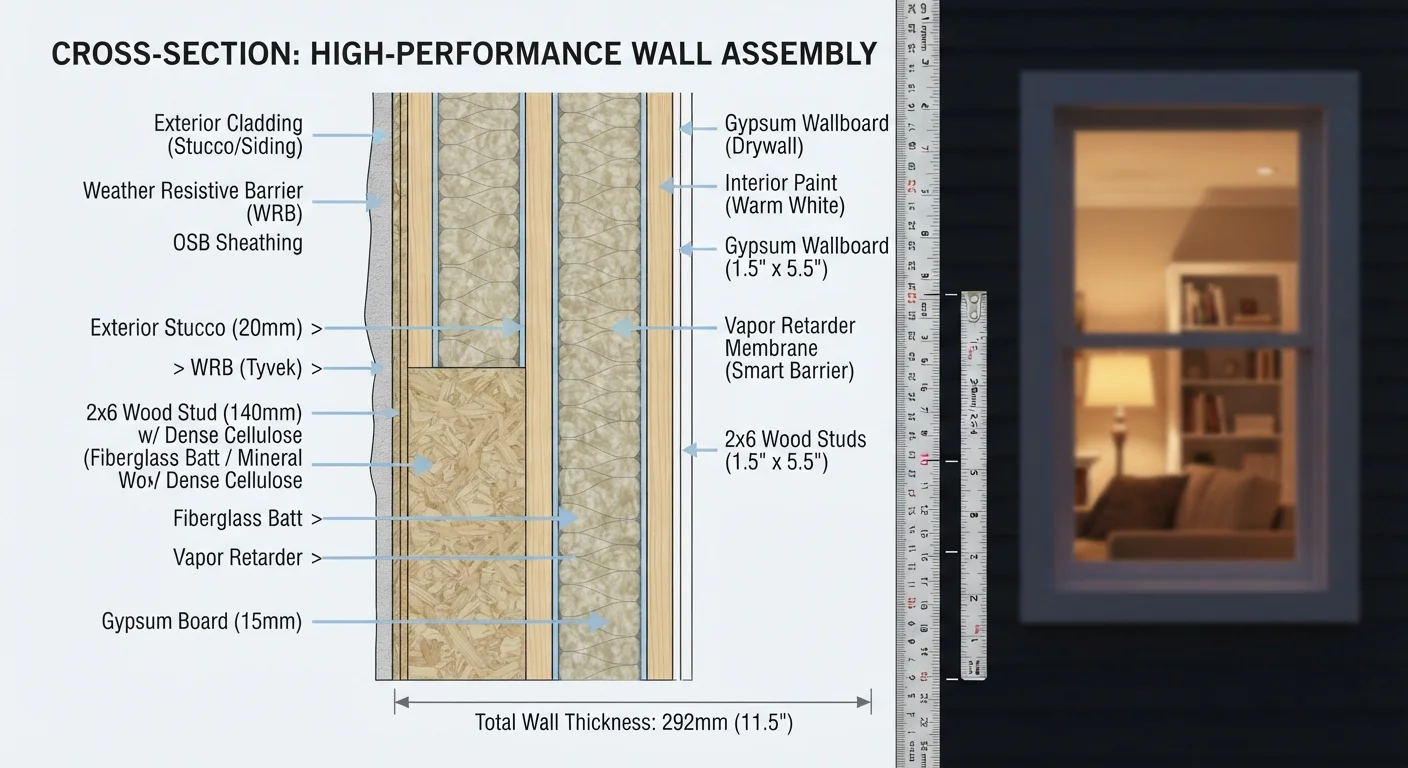
Photo credit: ArticlesHaven.net
In this article
R-value measures thermal resistance, but it's not the only factor in insulation effectiveness. Learn what it means and its limits.
Key Takeaways
- R-value measures thermal resistance; higher numbers mean better heat-flow resistance.
- Recommended R-values vary by climate zone, home location, and building component.
- R-value alone does not account for air leaks, moisture, or installation quality.
- Installing insulation incorrectly can significantly reduce its effective R-value.
- Some projects benefit from professional installation to achieve rated performance.
What R-Value Actually Measures
When you shop for insulation or read a building code requirement, R-value is the number you'll encounter most often. It quantifies thermal resistance - specifically, how much a material slows the movement of heat from one side to the other. A wall section rated R-15 resists heat flow more than one rated R-10, all else being equal.
R-value is additive within a wall assembly. If you have R-13 batt insulation in a stud cavity and add R-5 rigid foam to the exterior, the combined value approaches R-18 - though real-world performance involves more variables. This stacking principle is why building scientists and contractors pay attention to the whole wall, not just the cavity fill.
R-30 to R-60
Recommended attic insulation range
According to the U.S. Department of Energy, recommended attic R-values vary by climate zone across the country.
8 zones
U.S. climate zones for insulation guidance
The DOE's Building America climate zone map divides the U.S. into zones that inform minimum insulation recommendations.
Up to 20%
Heat loss through an uninsulated attic
The EPA estimates that air sealing and proper insulation together can meaningfully reduce heating and cooling costs in many homes.
Where R-Value Requirements Come From
The U.S. Department of Energy divides the country into climate zones - numbered 1 through 8, from hot-humid to subarctic. Each zone carries minimum recommended R-values for attics, walls, floors over unconditioned spaces, and crawlspaces. These recommendations inform model building codes, which states and municipalities then adopt and sometimes modify.
What this means practically: a home in Minnesota requires substantially more insulation than the same house built in Florida. If you're evaluating your current insulation or planning an upgrade, checking your climate zone first tells you whether you're under-insulated by modern standards. The DOE's online zone map is freely available and easy to use.
Building Codes and Recommendations Differ
DOE recommendations represent best practice for energy efficiency, while local building codes set the legal minimum. In some regions, the code minimum is lower than what DOE recommends. When renovating or building new, it's worth verifying both - meeting the minimum may still leave efficiency gains on the table.
The Limits of R-Value as a Metric
R-value is useful but incomplete. It measures heat conduction through a material under controlled lab conditions - it does not capture how insulation performs when:
- Air moves through gaps. Convection and air infiltration can short-circuit even well-rated insulation. A home with a high-R wall assembly but numerous air leaks can still lose significant energy.
- Moisture is present. Wet insulation conducts heat more readily. Fiberglass batts, in particular, lose effective R-value when damp.
- Installation is poor. Compressed batts, gaps around wiring, or voids around plumbing dramatically reduce real-world performance. Studies have found that improperly installed insulation can perform far below its rated value.
This is why energy-efficient home upgrades like air sealing are typically addressed alongside insulation - they solve different parts of the thermal control problem.
Test for Air Leaks Before Adding Insulation
Before purchasing additional insulation, consider having a blower door test performed. This diagnostic identifies where air is escaping your home's envelope. Sealing those leaks first makes any insulation upgrade more effective and may reduce the total R-value needed to hit your efficiency goals.
DIY vs. Professional Installation: Where It Matters
Some insulation work is straightforward enough for a careful DIYer. Unfaced fiberglass batts in an open attic floor, for example, are relatively forgiving to install and don't require specialized equipment. However, achieving the rated R-value depends on proper fit: batts should fill their cavity fully, without compression or gaps.
Other situations call for professional installation. Spray foam requires mixing equipment and appropriate protective gear; improper application creates both performance problems and potential indoor air quality concerns. Blown-in insulation in finished wall cavities requires drilling and equipment most homeowners don't own. For attic upgrades specifically, understanding your insulation type options before you start helps you gauge the complexity involved.
If you're comparing materials side by side, spray foam vs. batt insulation involves different trade-offs around R-value per inch, installation difficulty, and cost - all worth reviewing before committing to a method.
“Insulation's rated R-value assumes perfect installation. In practice, gaps, compression, and thermal bridging through studs mean the wall system as a whole often performs noticeably below the cavity insulation's label value.”
— Building Science Corporation, Applied building science research and education organization
This article is for general informational purposes only. Always verify local building codes and consult a licensed contractor before undertaking insulation work that may require permits or professional installation.
Frequently Asked Questions

Author
Articles Haven Editorial Contributor
Articles Haven Editorial Team is the collective byline for our editorial team and contributor network. Articles published under this byline or an editorial pen name are researched, written, and reviewed according to our editorial standards for clarity, consistency, and independence before publication.
View all articles →