
Wool vs. Cotton Bedding: Seasonal Comfort and Care Requirements Compared
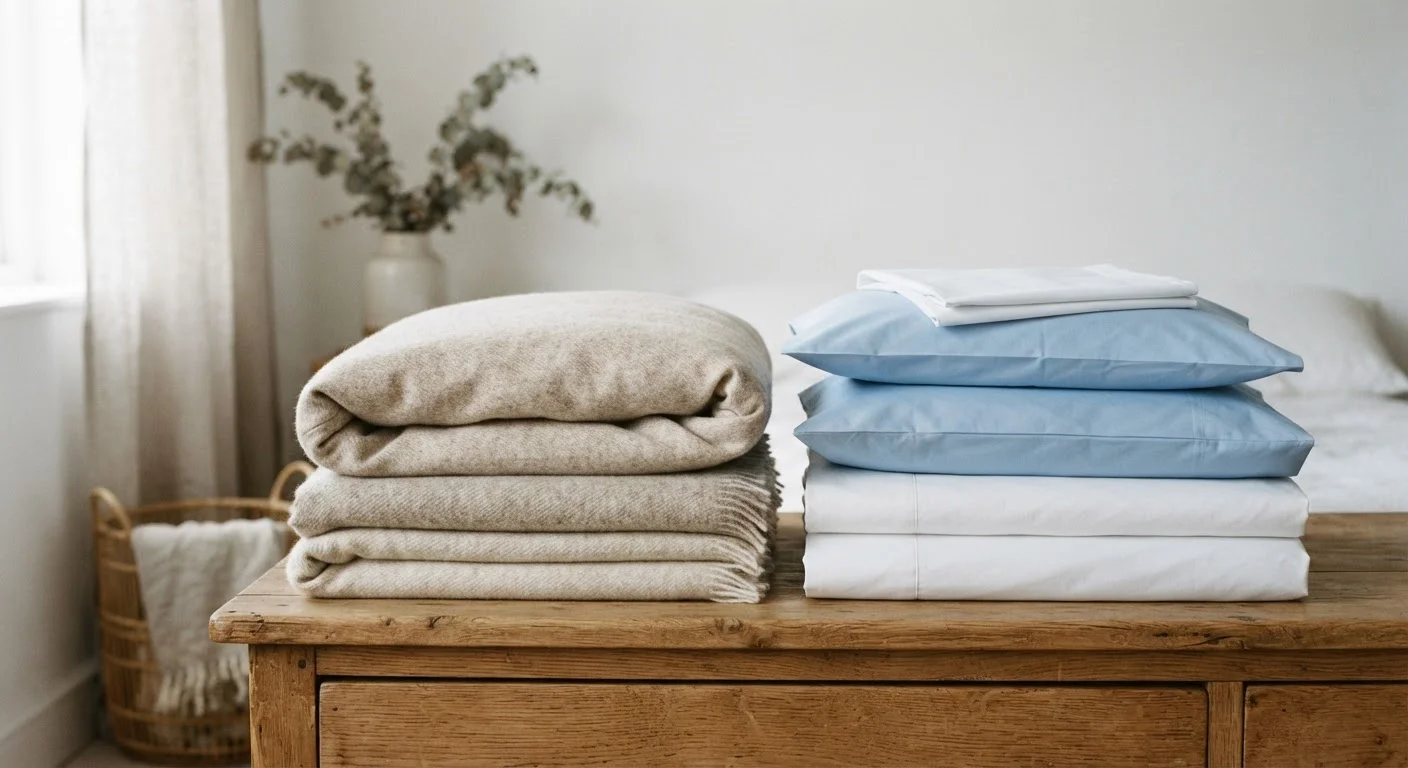
Photo credit: ArticlesHaven.net
In this article
Temperature regulation and breathability differ significantly between wool and cotton. See which fabric suits your sleep environment.
Key Takeaways
- Wool regulates temperature in both warm and cold climates, making it a strong year-round option.
- Cotton breathes well in heat but provides less insulation in colder sleeping environments.
- Wool requires more careful laundering; most cotton bedding is machine-washable.
- Cotton is generally more affordable upfront; wool costs more but can last longer with proper care.
- Hot sleepers and humid climates may benefit most from cotton; cold climates favor wool.
How Each Fabric Handles Temperature
Wool is a natural insulator with a unique ability to buffer temperature in both directions. Its crimped fiber structure traps air, providing warmth in cool conditions, while its moisture-wicking properties draw perspiration away from the body during warmer nights. This makes wool bedding a practical option across seasons rather than just winter.
Cotton works differently. It's a highly breathable fabric that allows airflow and dissipates heat effectively, making it a go-to choice in warm or humid climates. However, cotton doesn't insulate as well in the cold - a lightweight cotton sheet provides little warmth on its own without additional blanket layers.
If your bedroom temperature fluctuates significantly between seasons, wool's adaptability gives it an edge. For consistently warm sleeping environments, cotton's breathability is hard to beat. Pairing either fabric with the right mattress also matters - see our comparison of memory foam and innerspring mattresses to understand how your sleep surface affects comfort too.
| Wool | Cotton | |
|---|---|---|
| Temperature regulation | Year-round; insulates and wicks | Best in warm climates; less insulating |
| Moisture wicking | Excellent; absorbs without feeling wet | Good; can feel clammy when saturated |
| Breathability | Moderate to high | High, especially in lighter weaves |
| Care requirements | Delicate; often hand-wash or dry-clean | Machine-washable; dryer-safe |
| Upfront cost | Higher | Lower to moderate |
| Durability | Long-lasting with proper care | Varies by quality; may thin over time |
| Odor resistance | Natural antimicrobial properties | Absorbs odors; needs regular washing |
Moisture Management and Breathability
Wool can absorb a significant amount of moisture vapor - up to roughly 30% of its weight - without feeling wet against the skin. This property is particularly useful for people who tend to sweat at night, as it helps keep the sleeping environment drier and more comfortable. Wool also has natural antimicrobial properties that reduce odor over time.
Cotton absorbs moisture readily too, but it holds that moisture rather than wicking it away as efficiently. In humid climates or for heavy sweaters, a damp cotton sheet can feel clammy. Higher thread count cotton tends to hold heat more than lighter weaves like percale, so fabric construction matters as much as fiber type.
Choose Weave, Not Just Fiber
Within both wool and cotton, construction matters. Percale cotton weaves are cooler and crisper than sateen; loosely woven wool blankets breathe more than dense felted styles. Always check the weave or knit type alongside the fiber content when comparing bedding options. A tightly woven cotton can actually retain more heat than a light merino wool layer.
For an interesting parallel in outerwear performance, the fleece vs. wool comparison illustrates how wool's moisture management holds up in active contexts as well.
Care and Maintenance Differences
This is where the two fabrics diverge most sharply for everyday consumers. Most cotton bedding is machine-washable and dryer-safe, making routine laundering straightforward. Cotton holds up well to frequent washing, though high heat can cause shrinkage, so following care labels is worthwhile.
Wool bedding requires more attention. Many wool items are dry-clean only or require a gentle cold-water cycle with a wool-safe detergent. Agitation and heat can cause felting - a process where wool fibers mat together irreversibly. Proper drying (flat, away from direct heat) is also important. The higher care burden is a real trade-off to weigh against wool's durability and performance benefits.
Avoid Heat When Washing Wool
Hot water and tumble dryers are the most common causes of irreversible wool shrinkage and felting. Even products labeled 'washable wool' should be treated carefully - use cool water, a gentle cycle, and air-dry flat. When in doubt, check the manufacturer's care label rather than assuming standard laundry settings are safe.
One upside: wool's natural odor resistance means it generally doesn't need washing as frequently as cotton, which can offset the inconvenience of more careful washing when it does occur.
Cost, Durability, and Long-Term Value
Cotton bedding spans a wide price range depending on thread count, weave, and origin. It's broadly accessible and easy to replace. That said, lower-quality cotton can pill or thin after repeated washings, shortening its useful lifespan.
Wool bedding typically carries a higher upfront price. However, quality wool products are known for durability - with appropriate care, a wool duvet or blanket can outlast several rounds of cotton replacements. Viewed over a longer horizon, the cost-per-year comparison narrows.
~30%
Moisture wool can absorb before feeling wet
Wool fiber can absorb up to approximately 30% of its weight in moisture vapor, a property widely cited in textile science literature.
2-3x
Typical price difference between wool and cotton bedding
Wool duvets and blankets commonly retail at two to three times the price of comparable cotton products, depending on grade and origin.
For families with young children, bedding material decisions intersect with safety considerations. While this article focuses on adult bedding, our crib mattress safety guide covers how material choices factor into infant sleep environments.

Author
Articles Haven Editorial Contributor
Articles Haven Editorial Team is the collective byline for our editorial team and contributor network. Articles published under this byline or an editorial pen name are researched, written, and reviewed according to our editorial standards for clarity, consistency, and independence before publication.
View all articles →