
Corded vs. Cordless Power Tools: When the Trade-Off in Portability Is Worth It
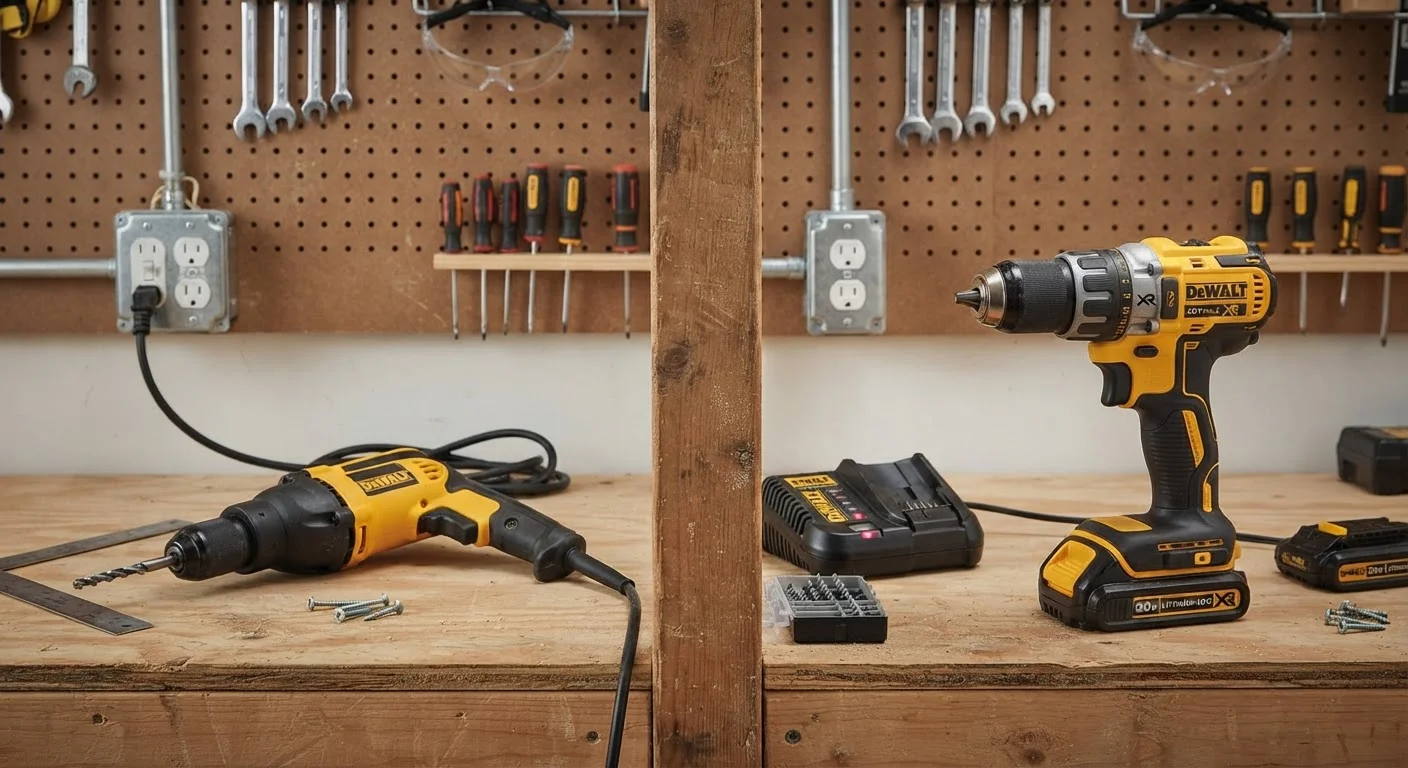
Photo credit: ArticlesHaven.net
In this article
Battery tech has closed the gap between corded and cordless tools—but not entirely. See which makes more sense for DIY vs. pro use.
Key Takeaways
- Corded tools deliver consistent power without battery fade, making them reliable for sustained, heavy-duty tasks.
- Modern cordless tools with 20V-60V battery platforms can handle most DIY and light-to-mid-level professional work.
- Cordless tools cost more upfront when factoring in batteries and chargers; corded tools have a lower entry price.
- For remote job sites or tight spaces, portability is often the deciding factor regardless of power rating.
- Mixing platforms means buying multiple batteries - a practical cost consideration for anyone building a tool collection.
What's Actually Changed - and What Hasn't
The corded-vs-cordless debate used to be simple: corded tools were for serious work, cordless for convenience jobs. That line has blurred considerably. Lithium-ion battery platforms - many now running at 20V, 40V, or even 60V - have made cordless tools capable of tasks that would have required a cord a decade ago.
But physics hasn't changed. A corded tool draws continuous power from the grid. A cordless tool draws from a finite battery that drains under load. For repetitive, high-demand tasks - ripping hardwood with a circular saw, driving hundreds of screws in a day, or running a shop vacuum for hours - cordless tools still struggle to match sustained corded performance without battery swaps or downtime.
For context on how the power vs. convenience trade-off plays out across other product categories, see the wired vs. wireless earbuds comparison - the decision pattern is surprisingly similar.
| Corded | Cordless | |
|---|---|---|
| Sustained power output | Consistent, no degradation | Drops as battery depletes |
| Portability | Limited by cord and outlet access | Full mobility, anywhere |
| Upfront cost | Lower - no battery overhead | Higher - batteries and charger add cost |
| Best use environment | Fixed shop or stationary work | Job sites, outdoors, tight spaces |
| Maintenance | No consumable power source | Battery replacement every few years |
| Ideal user | Heavy-use or budget-focused buyers | DIYers and mobile professionals |
Power and Performance: Where Corded Still Leads
Corded tools win on consistent output. There's no voltage sag as the battery depletes, no waiting for a second battery to charge, and no performance drop halfway through a cut. For stationary power tools - table saws, bench grinders, drill presses - corded is essentially the default because these tools are never meant to move.
Sustained amperage also matters for specialty tasks. Corded rotary hammers, angle grinders, and heavy-duty sanders are often rated significantly higher in watts than their cordless counterparts, which translates directly to material removal rate and the ability to handle tougher substrates like concrete or masonry.
40V-60V
Voltage range of pro-grade cordless platforms
Major tool manufacturers now offer high-voltage cordless lines designed to match corded performance in many applications.
3-5 years
Typical lithium-ion battery lifespan under regular use
Battery degradation under frequent charge cycles is a real long-term cost factor for cordless tool owners.
That said, for the typical homeowner drilling shelf holes, assembling furniture, or driving deck screws on a weekend project, a quality cordless drill is more than adequate. The gap is meaningful in professional contexts; for DIY, it's often irrelevant.
Portability and Job-Site Reality
Extension cords solve many portability problems - until they don't. On a multi-story renovation, rooftop work, outdoor landscaping, or any site without accessible outlets, cords become a genuine liability: trip hazards, voltage drop over long runs, and the logistics of finding an outlet at all.
This is where cordless genuinely earns its premium. Modern job-site cordless tools from established platforms can power through framing, finish carpentry, and electrical rough-in work across a full shift if you carry spare batteries. The DIY vs. hiring a contractor guide has useful framing on which home projects realistically require professional-grade sustained power versus what a well-equipped DIYer can handle.
Maximize Your Battery Platform
Before buying a cordless tool, check whether it shares a battery platform with tools you already own. Many manufacturers offer drills, saws, and outdoor equipment on the same battery system. Staying within one platform can save you hundreds of dollars over time and reduces the number of chargers cluttering your workspace.
For gardening and outdoor tasks specifically, the portability advantage is even sharper. The hand tools vs. power tools for gardening comparison covers situations where neither a cord nor even a battery is always the right call.
Cost Considerations: The Battery Tax
Corded tools are almost always cheaper to buy. A corded drill costs meaningfully less than a comparable cordless model, and there's no battery or charger cost on top. For someone who uses a drill twice a year, this matters.
Cordless tools flip this equation over time - but only if you stay within one battery platform. A 20V battery that works across your drill, circular saw, and reciprocating saw spreads the battery cost across multiple tools. Buy into two different platforms, and you're paying that battery tax twice. This is one of the most common and avoidable mistakes new tool buyers make.
Platform Lock-In Is a Real Risk
Battery platforms are not cross-compatible between manufacturers, and some brands have discontinued older voltages, leaving tool owners with orphaned batteries. Before committing to a cordless ecosystem, check that the platform is actively supported and that replacement batteries are available at reasonable prices. Buying into a platform purely on a sale price can cost more in the long run.
Battery replacement is also a long-term cost factor. Lithium-ion cells degrade with charge cycles, and replacement battery packs can cost nearly as much as a budget corded tool. Corded tools, by contrast, have no consumable power component. When weighing lifetime cost, factor in roughly 3-5 years of heavy use before a battery pack may need replacing.
For more decision frameworks around making confident purchases - tools included - the Shopping Smarter hub covers how to cut through marketing noise across product categories.

Author
Articles Haven Editorial Contributor
Articles Haven Editorial Team is the collective byline for our editorial team and contributor network. Articles published under this byline or an editorial pen name are researched, written, and reviewed according to our editorial standards for clarity, consistency, and independence before publication.
View all articles →