
Short-Term Traveler SIM Options for Visitors to the US
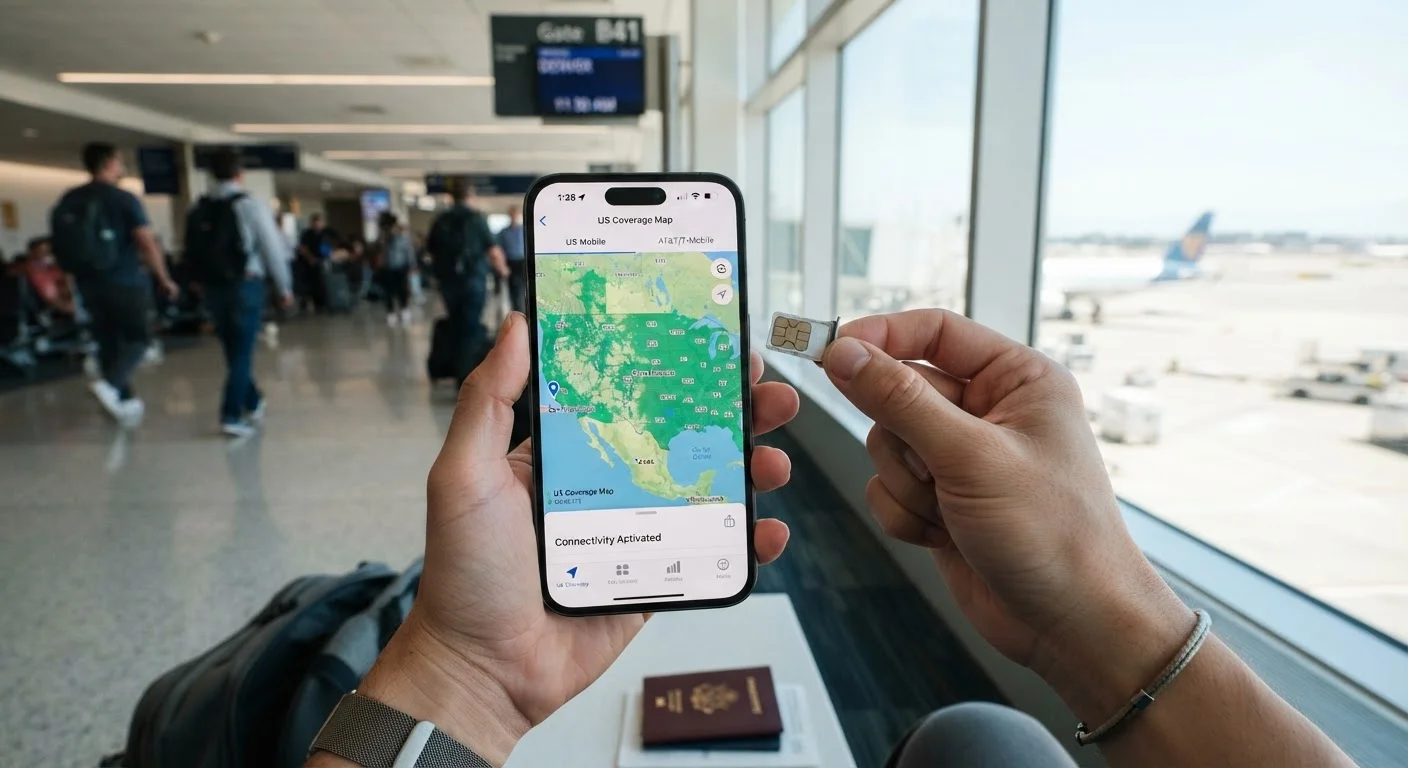
Photo credit: ArticlesHaven.net
In this article
Visitors to the US have several temporary SIM options. Learn how prepaid tourist plans and travel SIMs generally work and what to compare.
Key Takeaways
- Traveler SIMs offer temporary prepaid service without contracts or credit checks.
- Coverage quality depends on which US network the SIM uses, not the reseller brand.
- eSIM versions are widely available for compatible unlocked devices.
- Data speed throttling after a threshold is common on tourist plans - check the fine print.
- Buying online before arrival often offers more plan choices than airport kiosks.
- An unlocked phone is required; a carrier-locked device may not accept a foreign SIM.
Why Visitors Often Skip Their Home SIM
Using your home carrier's international roaming while visiting the US is technically straightforward, but it can be expensive. Roaming rates vary significantly by provider and destination country, and data allowances are often limited. For visitors planning a stay of a week or more, the math frequently favors picking up a local prepaid option instead.
A US traveler SIM gives you a local number, local data rates, and predictable costs from the start. There's no surprise bill waiting when you return home. For a deeper look at how roaming from your home plan compares, see our overview of staying connected internationally.
~100M
International visitors to the US annually
According to the US National Travel and Tourism Office, the US receives tens of millions of international visitors each year, all of whom face connectivity decisions on arrival.
30+ days
Maximum validity on many tourist SIM plans
Several prepaid traveler SIM providers offer validity windows up to 30 days, covering typical long-stay visitors without requiring a contract.
3
Major US nationwide networks underlying most MVNOs
The majority of traveler SIM resellers use one of three major US carrier networks, making network identification a key comparison point for coverage.
How US Traveler SIMs Generally Work
A traveler SIM is a prepaid plan tied to a US carrier's network, sold without a contract. You pay upfront for a set amount of data, calling minutes, and a validity window. When the period ends - or your data runs out - service stops unless you top up or repurchase.
Most tourist SIMs operate as MVNO products, meaning a reseller company buys wholesale access to one of the major US networks and packages it for visitors. The underlying coverage is the same as that network's, but the brand name on the packaging may be unfamiliar. Understanding this distinction matters because coverage in rural areas, national parks, or less-populated states depends entirely on which network sits underneath. See how network sharing agreements between US carriers can affect service quality in areas where one carrier has limited infrastructure.
Always Check the Underlying Network
The brand name on a traveler SIM package tells you little about actual coverage. Before buying, identify which major US carrier the MVNO uses and check that carrier's official coverage map for your planned destinations. This single step can prevent connectivity gaps during your trip.
Physical SIM vs. eSIM: What to Know
Traditional traveler SIMs come as a physical card you insert into your phone. eSIMs are digital equivalents - a profile downloaded directly to your device without swapping hardware. Both accomplish the same goal; the right format depends on your phone.
eSIMs are increasingly common on flagship and mid-range smartphones. If your device supports eSIM and is unlocked, purchasing an eSIM plan online before departure can be the most convenient path. You activate it digitally, sometimes before you even board the plane. Physical SIMs remain the fallback for older devices or travelers who prefer something tangible. Our article on how SIMs and eSIMs are evolving covers the technical differences in more detail.
eSIM Requires an Unlocked, Compatible Device
Not all phones support eSIM, and even eSIM-capable phones may be carrier-locked, preventing activation of a foreign profile. Before purchasing an eSIM plan, verify your device model supports eSIM and that your home carrier has unlocked it. Some carriers only unlock devices after a minimum usage period or full payment.
What to Compare When Evaluating Plans
Not all tourist SIMs are equal. Before purchasing, compare these key factors:
- Data allowance and speed policy: How many gigabytes are included at full speed, and what happens after? Many plans throttle to slower speeds once you pass a threshold.
- Validity period: Plans commonly run 7, 14, or 30 days from activation. Match the plan length to your trip, not just your arrival date.
- Voice and SMS inclusion: Some data-focused plans omit traditional calling. Confirm whether domestic calls and texts are included if you need them.
- Network coverage: Identify which major US carrier the SIM uses and check that carrier's coverage map for the regions you'll visit.
- International calling: Calls back to your home country may cost extra or require an add-on.
- Where to buy: Airport kiosks offer convenience but sometimes fewer plan options. Online purchases before travel often provide more variety and comparable pricing.
Practical Tips Before You Land
A little preparation before your flight avoids scrambling at the airport. First, confirm your phone is unlocked - contact your home carrier if you're unsure. Second, decide between a physical SIM and an eSIM based on your device. Third, check coverage maps for the specific cities, regions, or rural areas you plan to visit, since coverage varies significantly across the US.
If your trip involves significant travel beyond major cities - think road trips through the Southwest or visits to national parks - pay particular attention to which network the SIM uses, as rural coverage gaps are real. For travelers building a broader pre-departure checklist, key steps before an international trip covers logistics well beyond connectivity.
This article provides general information about mobile SIM options for visitors to the US. Plan features, pricing, and availability change frequently. Always verify current plan terms directly with the provider before purchasing.
Frequently Asked Questions

Author
Articles Haven Editorial Contributor
Articles Haven Editorial Team is the collective byline for our editorial team and contributor network. Articles published under this byline or an editorial pen name are researched, written, and reviewed according to our editorial standards for clarity, consistency, and independence before publication.
View all articles →