
Reading Your Wireless Bill: What Each Charge Actually Represents
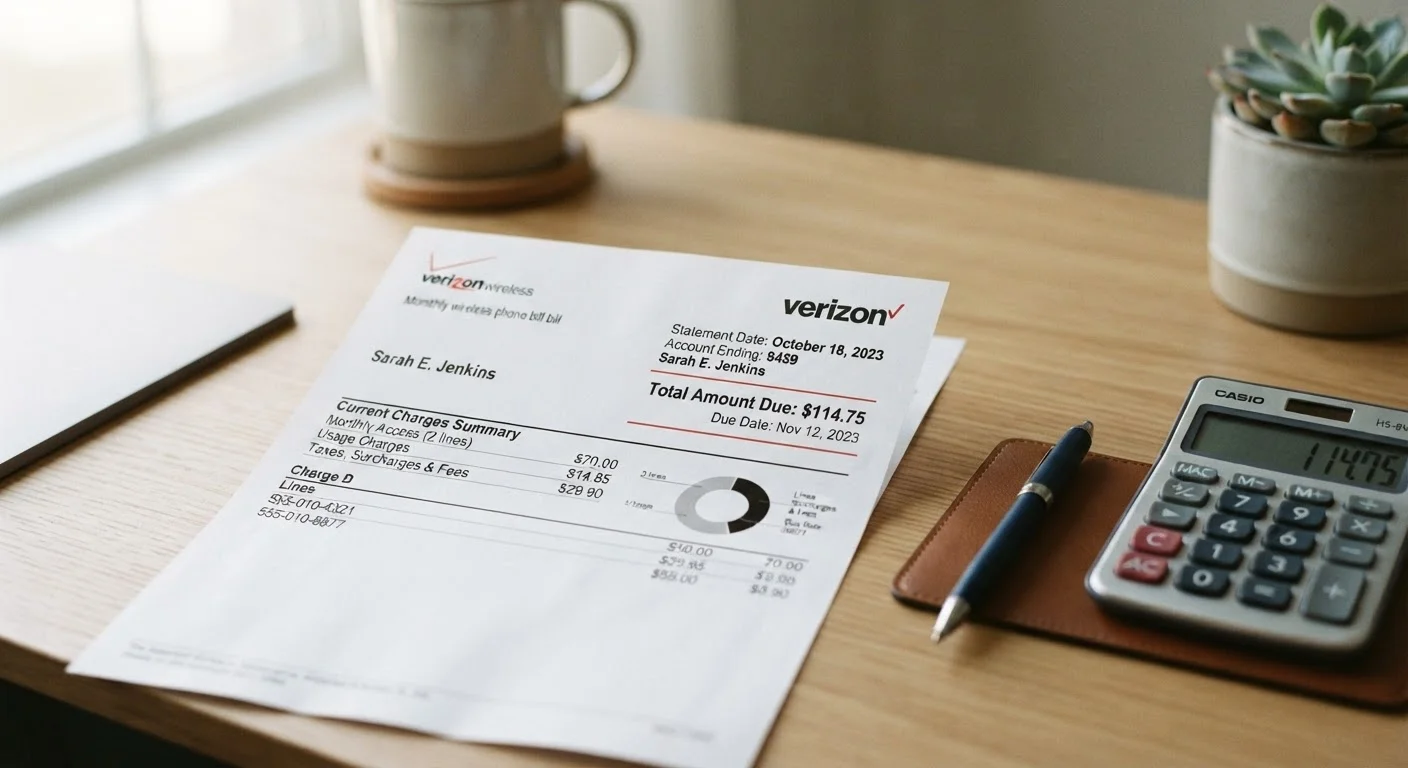
Photo credit: ArticlesHaven.net
In this article
Taxes, surcharges, regulatory fees—wireless bills have a lot of line items. This guide decodes what you're actually paying for each month.
Why Your Wireless Bill Looks Nothing Like the Advertised Price
You signed up for a $45/month plan, but your first bill came in closer to $60. Sound familiar? Wireless carriers advertise their base plan rates prominently - but several layers of fees, taxes, and surcharges sit on top of that number. Understanding what each line item represents helps you evaluate what you're actually paying and makes it easier to compare carriers on a level playing field.
See our guide to calculating your actual monthly cost for a step-by-step breakdown of how to stack all these charges and compare plans accurately.
| Typical fee categories on a wireless bill | 4-6 distinct charge types |
| Government-mandated fees | Include federal excise tax, USF, and 911 fees (FCC and state telecom regulations) |
| Carrier surcharges | Discretionary - vary by carrier |
| Device financing term (typical) | 24-36 months (Common carrier financing structures) |
| State and local tax variation | Significant - differs by state and municipality (Tax Foundation, telecom tax research) |
Decoding the Main Line Items on a Wireless Bill
Most wireless bills organize charges into a few broad categories. Here's what each one typically covers:
Base Plan Charge
This is the advertised monthly rate for your service tier - the price that covers your voice minutes, texts, and data allotment. It's the foundation of your bill but rarely the final number.
Device Payment
If you financed a phone through your carrier, this is a separate monthly installment, typically spread over 24 or 36 months. It's not part of your plan cost, even though it appears on the same bill. When comparing plans, keep device payments separate to avoid distorting the comparison.
Line Access Fee
On some account structures - particularly family or shared plans - carriers charge a per-line fee in addition to the plan base cost. This fee covers having that number active on the network.
International or Roaming Charges
Usage outside your plan's coverage area, or calls and texts to international numbers, are typically billed separately. If you travel frequently, this line deserves close attention. Understanding how fee structures work at checkout - whether on a hotel folio or a phone bill - follows similar logic.
Base Plan Rate
The advertised monthly price for a wireless plan, covering voice, text, and data. Does not include taxes, fees, or device payments.
Universal Service Fund (USF)
A federal program that subsidizes telecom access in underserved areas, schools, and low-income households. Carriers collect a USF contribution from customers each month.
Carrier Surcharge
A fee set and collected by the wireless carrier itself, separate from government-mandated taxes. Despite regulatory-sounding names, these fees go to the carrier, not a government agency.
Line Access Fee
A per-number fee charged on some plans, in addition to the base plan cost, for keeping a phone line active on the network.
Promotional Credit
A temporary discount applied to your bill - often tied to a trade-in, contract, or promotion. These credits expire, and your total will increase when they do.
Device Payment
A monthly installment for a financed phone, billed separately from the service plan. Typically runs 24-36 months and is independent of the plan rate.
Taxes, Government Fees, and Carrier Surcharges - What's the Difference?
This is where most of the confusion lives. Bills lump together charges that are legally mandated with ones that are entirely at the carrier's discretion.
Government Fee vs. Carrier Surcharge: Why It Matters
Fee names on wireless bills are often written to sound official, but not all of them go to a government entity. A "regulatory recovery fee" or "administrative charge" is typically a carrier-set cost, not a legally mandated tax. If you're comparing two plans and one carrier itemizes more surcharges, that doesn't automatically mean you pay more to the government - it may simply reflect how that carrier structures its pricing. Always look at the total monthly cost, not just the plan rate.
Government-Mandated Taxes and Fees
These are set by federal, state, or local authorities and carriers are required to collect them. Common examples include:
- Federal Excise Tax: A longstanding federal tax applied to voice services.
- State and Local Sales Taxes: Vary significantly by state and municipality.
- Universal Service Fund (USF) Fee: Funds programs that extend telecom access to rural areas, schools, and low-income households. Carriers pass this cost to consumers.
- 911 / Emergency Services Fee: Collected by state or local governments to fund emergency dispatch infrastructure.
Carrier-Imposed Surcharges
These are fees the carrier chooses to charge separately rather than bake into the plan price. They're legal but discretionary - and they vary between carriers. Examples include "administrative fees," "regulatory recovery fees," and "network access fees." Despite names that suggest government origin, these typically go directly to the carrier. This practice is worth understanding when comparing advertised rates - similar to how internet bills carry their own mix of mandatory and negotiable charges.
~24%
Average wireless tax and fee burden on top of base rate
According to Tax Foundation research on wireless taxation, combined federal, state, and local taxes and fees can add roughly 24% above the advertised plan price on average, though this varies substantially by state.
Top 5
States with highest wireless tax rates
States including Washington, Nebraska, New York, Illinois, and Pennsylvania have historically ranked among the highest for combined wireless tax and fee burdens, per Tax Foundation analysis.
Add-Ons, Credits, and One-Time Charges
The bottom section of most wireless bills contains items that vary month to month:
- Premium features: Hotspot upgrades, international day passes, or device protection plans appear as recurring add-ons.
- Promotional credits: Trade-in credits, plan discounts, or promotional offer credits show as negative line items. These can mask the true base cost - if a credit expires, your bill will rise without the plan changing.
- One-time charges: Activation fees (for new lines), SIM fees, or upgrade fees typically appear once and then disappear.
Promotional credits in particular deserve scrutiny. When a 24-month credit expires midway through your device payment plan, you can face a meaningful jump in your monthly total. For a fuller picture of how bundled pricing structures can mask real costs over time, see how bundle pricing often obscures the true monthly rate.

Author
Articles Haven Editorial Contributor
Articles Haven Editorial Team is the collective byline for our editorial team and contributor network. Articles published under this byline or an editorial pen name are researched, written, and reviewed according to our editorial standards for clarity, consistency, and independence before publication.
View all articles →