
Everything That Goes Into a Home Internet Bill (And What's Actually Negotiable)
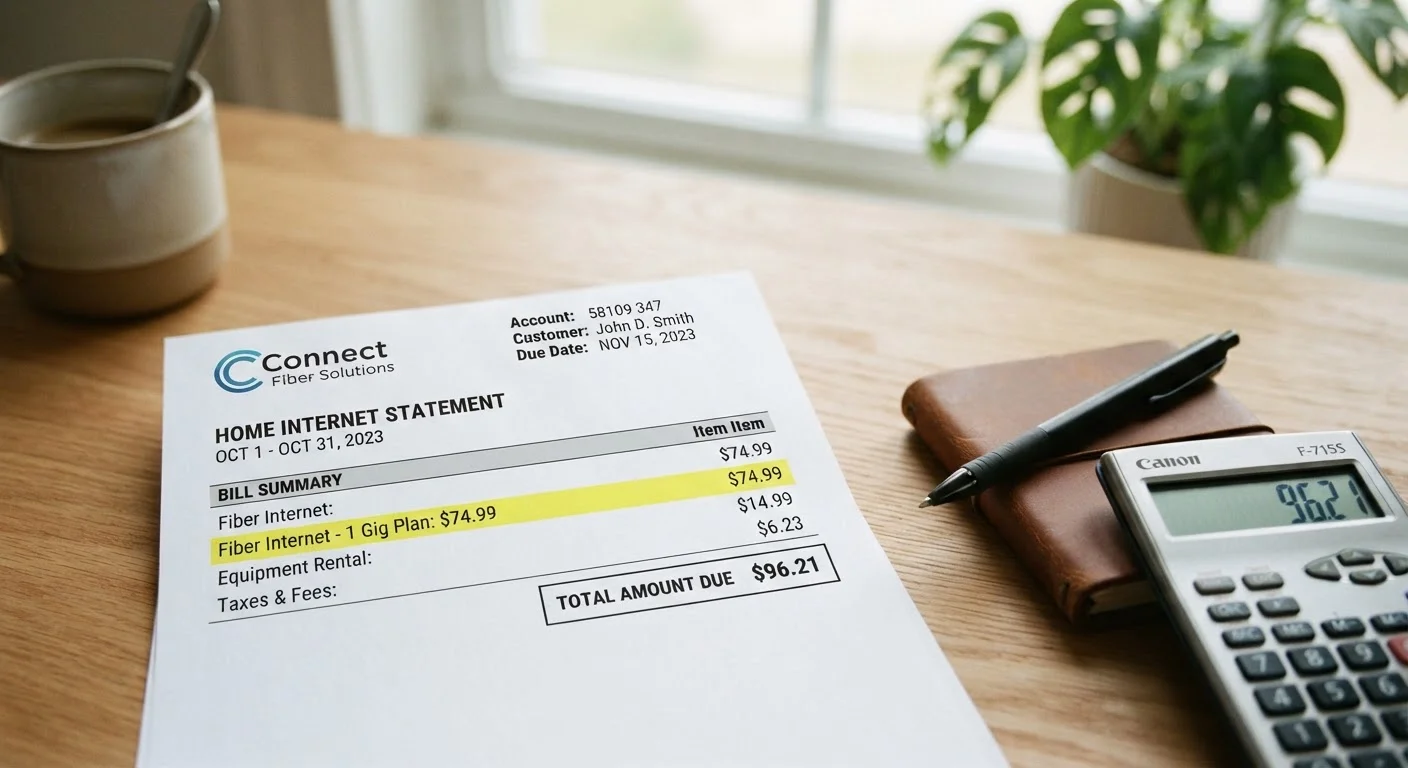
Photo credit: ArticlesHaven.net
In this article
Equipment rental, installation, taxes, and more — here's what each line item on a typical internet bill represents.
Key Takeaways
- The advertised monthly rate rarely reflects what you'll actually pay after fees and equipment charges.
- Equipment rental fees are often optional - owning your own modem or router can reduce monthly costs.
- Taxes and regulatory surcharges are largely non-negotiable, but promotional credits and equipment fees often are.
- Installation fees can sometimes be waived, especially for new customers or during promotional periods.
- Reading the full pricing breakdown before signing prevents surprises when the first bill arrives.
The Base Service Rate: What It Does (and Doesn't) Cover
The number advertised in bold - say, $49.99/month - is the base service rate. It covers access to the network at a stated speed tier, nothing more. What it typically does not include is the equipment you need to actually use that connection, the government taxes applied to telecom services, or any one-time setup costs.
Many providers also offer an introductory rate that applies for the first 12 to 24 months of service. After the promotional period ends, the rate steps up - sometimes by $20 to $30 per month or more. This step-up is disclosed in the terms but is easy to overlook when the headline price dominates the marketing. The true cost of internet over time becomes much clearer once you factor in when the promo expires and what the standard rate will be.
$10-$20
Typical monthly equipment rental fee
Most major US internet providers charge this range per month to rent a modem or gateway device.
$5-$15+
Monthly taxes and surcharges
The exact amount varies by state and provider, and is not included in advertised plan rates.
$50-$100+
Typical professional installation fee
One-time charges for technician visits vary by provider, connection type, and whether a promotion is applied.
Equipment Rental Fees: Modem, Router, and Gateway Charges
Most providers charge a monthly rental fee - commonly between $10 and $20 - for the modem, router, or combined gateway device they supply. This charge appears as a separate line item and is charged indefinitely for as long as you rent the equipment. Over two years, that adds up to $240 to $480 on top of your base rate.
The alternative is to purchase a compatible device outright. Many modems and routers are available for a one-time purchase, and the upfront cost is often recovered within the first year of avoiding rental fees. Before purchasing, you'll need to confirm the device is on your provider's approved compatibility list - not every modem works with every provider or technology type (cable vs. fiber vs. DSL). See the equipment fees inside bundles guide for a closer look at what these charges actually cover.
Before buying your own modem, call the provider and ask for their current approved device list - it changes more often than the provider's website reflects.
Using an unapproved device can result in service issues or denial of technical support, negating the savings from avoiding the rental fee.
When you call to negotiate, lead with a specific competing offer rather than a general complaint about price. Retention agents respond better to concrete alternatives.
Providers track competitor pricing and agents are more likely to apply a credit when they can see a plausible reason you'd switch.
Taxes, Regulatory Fees, and Surcharges
Below the service and equipment lines, you'll typically find a cluster of smaller charges with names like "Federal Universal Service Fund," "State Telecom Relay Service," or simply "taxes and surcharges." These fall into two broad groups:
- Government-mandated taxes: Applied by federal, state, and sometimes local authorities on telecom services. The amounts vary by location and are not set by the provider.
- Provider-assessed surcharges: Fees that providers add to recover costs - such as network maintenance or regulatory compliance expenses. Unlike taxes, these are set by the provider and can vary between companies.
Combined, these charges can add $5 to $15 or more per month, depending on where you live and which provider you use. They are not included in advertised rates. This is worth keeping in mind when comparing plans - a plan that looks $10 cheaper may close that gap once surcharges are added. The wireless bill breakdown guide covers similar fee structures if you're comparing across service types.
Provider Surcharges vs. Government Taxes
It's worth distinguishing between these two fee types on your bill. Government taxes are legally required and identical across all customers in the same jurisdiction. Provider-assessed surcharges, however, are chosen by the company and can differ between providers - making them a legitimate factor in comparing overall plan costs.
One-Time Charges: Installation and Activation
Depending on the provider and the type of connection, your first bill may include a one-time installation or activation fee. These typically fall into two categories:
- Professional installation fees
- Charged when a technician visits to set up or connect service. Fees range widely - from around $50 to over $100 in some cases - and are more common with fiber and cable connections that require physical work at the premises.
- Self-installation and activation fees
- Some providers charge a smaller fee even when you install the equipment yourself, covering the cost of shipping the kit and activating your account on their network.
These one-time charges are worth asking about before you sign up. Some providers waive them for new customers as part of a promotion, or as a concession during a retention conversation. Installation lead times and setup costs are among the most commonly overlooked factors when comparing plans.
Watch for Contract-Based Early Termination Fees
Some providers bundle installation fee waivers or promotional rates into contract terms that carry early termination fees (ETFs) - often $10 to $15 per remaining month of the contract. If you accept a promotion in exchange for a 12- or 24-month commitment, confirm the ETF amount in writing before agreeing. Switching providers mid-contract can cost more than the savings you expected.
What's Actually Negotiable on Your Bill
Not everything on your bill is fixed. Providers have meaningful latitude on several line items, and customers who ask - especially those who have been with a provider for a year or more, or are willing to reference a competing offer - often have more leverage than they expect.
- Equipment rental fees: If you switch to your own compatible device, this line item disappears entirely.
- Installation fees: Often waived for new customers or during promotional periods. Asking directly before signing is the clearest path to getting this removed.
- Promotional credits: Retention teams at most providers have access to credits or rate reductions that aren't advertised. Calling to cancel or citing a competitor's rate is typically the trigger.
- Base rate after promo expires: When your introductory rate ends, calling to negotiate or threaten to switch can sometimes result in a new promotional period or a modest reduction.
What is not negotiable: government taxes and most regulatory surcharges. These are applied uniformly and providers cannot waive them.
“Consumers who call and ask a straightforward question - 'what can you do for me on price?' - are often surprised to find there's room to move. Providers would rather retain a customer at a slight discount than lose them entirely.”
— Consumer Reports, Consumer advocacy and product testing organization
How to Read Your Bill Before Signing or Renewing
The most useful habit when evaluating a home internet plan is to look at the all-in monthly cost, not the advertised price. Before signing up or renewing, ask the provider for a full itemized breakdown that includes:
- The base service rate at both the promotional and standard (post-promo) price
- Monthly equipment rental fees, if any
- Estimated taxes and surcharges for your address
- Any one-time installation or activation charges
- Early termination fees if you're agreeing to a contract term
Many providers are required by the FCC to provide a "Broadband Nutrition Label" - a standardized summary of plan pricing and terms - which can make apples-to-apples comparisons easier. Reviewing this document alongside the full itemized bill gives you the clearest picture of what you're actually agreeing to pay. For a deeper comparison of what gets missed during plan evaluation, the overlooked factors in internet plan comparison article is worth reading before you commit.
Request an Itemized Estimate Before You Commit
Ask any provider to give you a written or emailed summary of all monthly charges - including post-promo rates, equipment fees, and estimated taxes - before you agree to service. This single step removes the most common source of bill shock and makes comparing competing offers straightforward.
If you're weighing a bundled TV and internet package, many of the same fee structures apply - but with additional equipment charges for set-top boxes stacked on top. See bundle and TV service trade-offs for a broader view of how bundle pricing works.

Author
Articles Haven Editorial Contributor
Articles Haven Editorial Team is the collective byline for our editorial team and contributor network. Articles published under this byline or an editorial pen name are researched, written, and reviewed according to our editorial standards for clarity, consistency, and independence before publication.
View all articles →