
Common Missteps When Comparing Bundle Offers
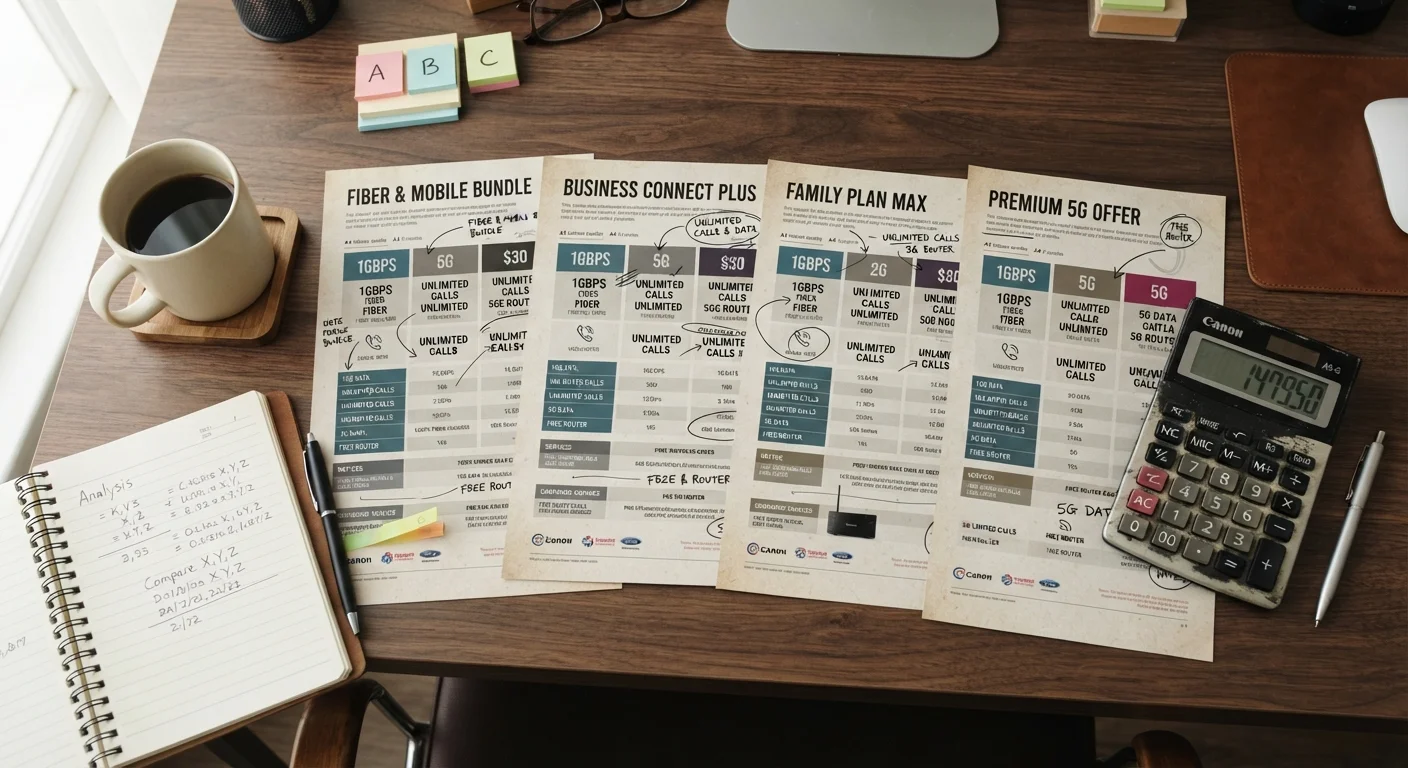
Photo credit: ArticlesHaven.net
Comparing bundles on monthly price alone leads to poor decisions. Avoid the errors that cause households to overpay or end up underserved.
Key Takeaways
- The advertised monthly price rarely reflects what you'll actually pay after fees and taxes.
- Promotional rates typically expire after 12-24 months, creating a significant price jump.
- Services bundled together may not all match your household's actual usage needs.
- Early termination fees and contract length can significantly affect a bundle's true total cost.
- Comparing bundles fairly requires looking at total cost over the full contract term.
Why Bundle Comparisons Go Wrong
Telecom bundles - packages that combine internet, TV, and phone service - are marketed heavily, and for good reason: they can simplify billing and occasionally lower costs. But the way they're advertised makes straightforward comparisons surprisingly difficult. Most households approach these decisions the same way they'd scan a menu, looking at the headline price and moving on. That approach consistently leads to poor outcomes.
The missteps outlined below aren't rare. They're the default behavior most providers quietly count on. Understanding where comparisons typically break down is the first step toward making a genuinely informed call. For a broader look at when bundling actually saves money versus when it doesn't, see this breakdown of bundle value.
Comparing offers solely on the advertised monthly rate.
Why it happens: Providers lead with the most attractive number, and consumers are conditioned to treat monthly cost as the primary metric.
Ignoring what happens when the promotional period expires.
Why it happens: Promotional pricing is front and center in ads; the post-promo rate is typically buried in the terms and conditions.
Paying for services bundled in that your household doesn't actually use.
Why it happens: Bundles are designed to feel like a deal - adding unused services appears to lower the cost per component, even when those services go untouched.
Overlooking early termination fees when evaluating flexibility.
Why it happens: Most consumers focus on what the service costs to start, not what it costs to leave, especially when a deal feels competitive.
Assuming bundled always means cheaper than buying services separately.
Why it happens: The bundling pitch implies built-in savings, and most consumers don't take the time to price out standalone alternatives.
Not accounting for equipment and installation costs in the comparison.
Why it happens: These charges are often listed separately or disclosed only during the checkout or sign-up process, making them easy to miss during initial comparison.
What a Careful Comparison Actually Looks Like
Once you know what to avoid, the comparison process becomes more structured. Instead of ranking offers by monthly rate, work out the total cost over the full contract term - including equipment rental, installation, and any fees disclosed in the fine print. This single shift in approach often reverses which offer looks most competitive.
~40%
Households that bundle internet and TV services
According to Leichtman Research Group, roughly 40% of U.S. households subscribe to bundled pay-TV and internet packages from the same provider.
12-24 months
Typical promotional pricing window for telecom bundles
Most telecom bundle promotions are structured on 12- or 24-month introductory periods, after which standard rates apply.
$10-$20/mo
Typical equipment rental fee per device
Industry observers note that set-top box and modem rental fees commonly range from $10 to $20 per month per device, adding meaningfully to total bundle cost.
It also helps to list the services your household actually uses before evaluating any offer. If your usage doesn't include live TV, a bundle that includes a large channel package may be padding the price, not adding value. Comparing bundles against standalone alternatives over a 24-month window frequently reveals that the bundle premium isn't justified for lighter users.
Promotional Rates Expire - Plan Accordingly
A bundle advertised at a low monthly rate often reflects a 12- or 24-month promotional price. When that period ends, the rate can increase substantially - sometimes by $30 to $50 per month or more. If you're comparing offers without accounting for the post-promotional rate, you may be making a decision based on a price that won't last.
Pay close attention to what happens when the promotional period ends. Contract length plays a larger role in bundle value than most people realize - understanding how term length shapes total cost can prevent a painful surprise at month 13. If you're already locked into a bundle that no longer fits, this checklist for evaluating your current package can help you decide whether to renegotiate or switch.
Read the Full Terms Before You Commit
Bundle contracts can include auto-renewal clauses, price-lock exceptions, and fee structures that aren't visible in the advertised summary. Request the full terms of service in writing before agreeing to any package. If a provider is reluctant to provide this, treat that as a signal worth taking seriously. Knowing what to check before any product comparison applies directly here.
Finally, the advertised rate is not a fixed floor. Providers often have more room on pricing than their marketing suggests. Knowing what's actually negotiable gives you a concrete next step once you've identified which offer comes closest to meeting your needs.

Author
Articles Haven Editorial Contributor
Articles Haven Editorial Team is the collective byline for our editorial team and contributor network. Articles published under this byline or an editorial pen name are researched, written, and reviewed according to our editorial standards for clarity, consistency, and independence before publication.
View all articles →