
Month-to-Month Bundles vs. Annual Contracts: Flexibility vs. Price
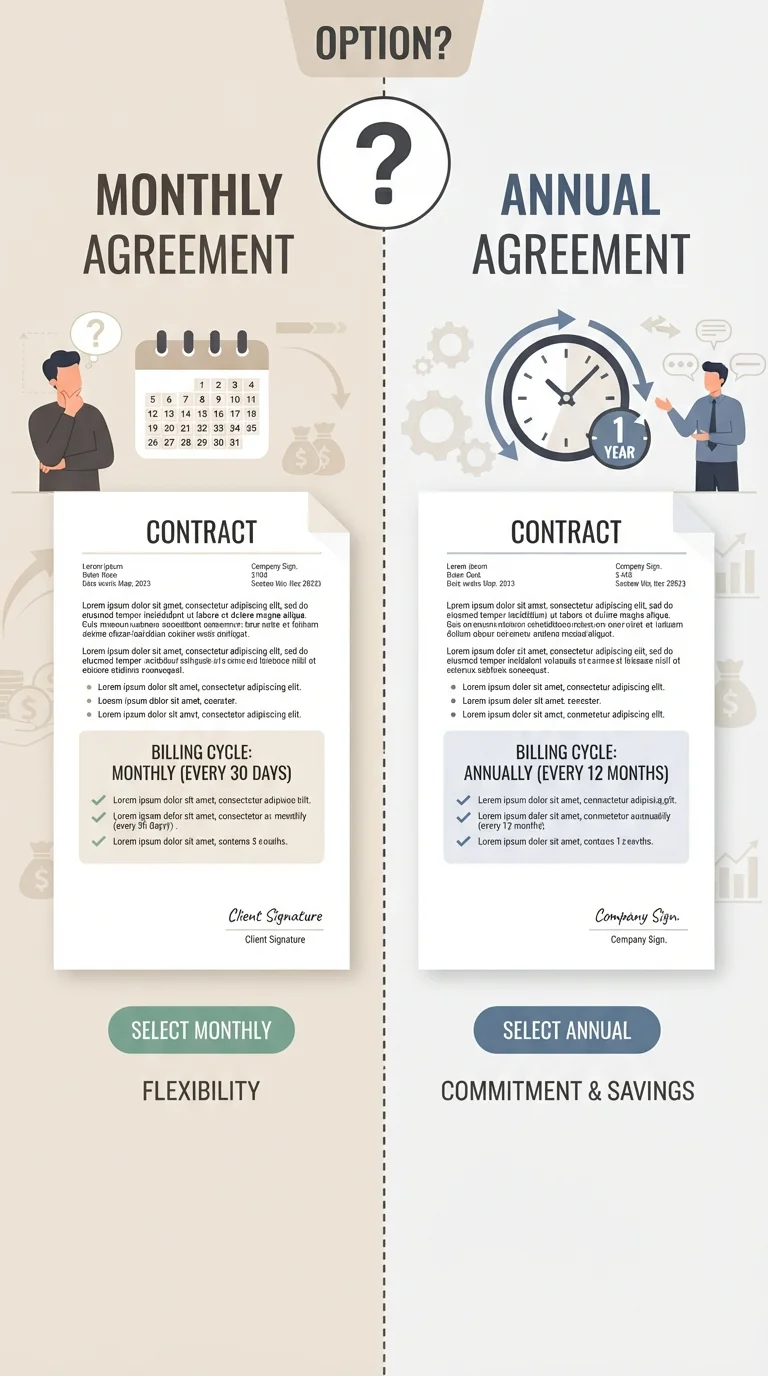
Photo credit: ArticlesHaven.net
In this article
No-contract bundles offer freedom; annual agreements typically offer lower rates. See which structure tends to work better for different situations.
Key Takeaways
- Month-to-month bundles generally cost more per month but allow cancellation without early termination fees.
- Annual contracts typically offer lower monthly rates in exchange for a defined commitment period.
- Early termination fees on annual contracts can range from modest flat fees to prorated charges covering remaining months.
- Promotional pricing on either structure often expires after an introductory window, raising the effective cost.
- Your likelihood of moving, changing needs, or switching providers within the year is the central variable to weigh.
What You're Actually Comparing
When telecom providers offer bundled services - internet, TV, and phone combined - they typically present two broad pricing structures. A month-to-month bundle lets you pay on a rolling basis with no minimum term. An annual contract commits you to a set period, usually 12 or 24 months, in exchange for a lower stated monthly rate.
The distinction sounds simple, but the real-world difference involves more than just price. It includes how much risk you absorb if your circumstances change, how promotional periods interact with rate changes, and whether the stated monthly figure reflects what you'll actually pay over time.
For a broader perspective on how bundled structures compare to buying services separately, see Bundled Services vs. Standalone Plans.
| Criterion | Month-to-Month Bundles | Annual Contracts |
|---|---|---|
| Typical monthly cost | Higher (flexibility premium) | Lower (commitment discount) |
| Minimum commitment | None - cancel anytime | 12 or 24 months typically |
| Early termination fee | None | Flat or prorated ETF |
| Rate stability | Rate may change with notice | Rate locked for contract term |
| Promotional pricing risk | Steps up after intro period | May step up mid-contract |
| Best for movers/renters | Yes | No |
| Best for settled households | Less so | Yes |
The Price Gap: How Real Is It?
Annual contracts consistently advertise lower monthly rates than month-to-month equivalents from the same provider. In general, the savings tend to run in the range of $10-$20 per month on comparable bundles, though this varies considerably by provider and market.
However, the stated monthly price is rarely the whole story on either structure. Both month-to-month and annual bundles frequently start with an introductory promotional rate that steps up after 12 months. On a two-year contract, this means you could be paying the promotional rate for only half your commitment period. Always ask what the rate becomes after any promotional window closes.
$10-$20
Typical monthly savings with annual vs. month-to-month
General industry range reported across major U.S. telecom markets; actual figures vary by provider and bundle tier.
~50%
Of 2-year contracts include a promotional rate that expires at month 12
Promotional pricing structures are a common bundling practice; always confirm the post-promotional rate before signing.
$100-$350
Typical early termination fee range for telecom bundles
ETF amounts depend on contract length and whether fees are flat or prorated per remaining month.
Understanding how contract length shapes the overall value calculation is covered in more depth in Understanding the Role of Contract Length in Bundle Value.
Early Termination Fees and the Flexibility Premium
The central cost of annual contracts isn't just the monthly rate - it's the early termination fee (ETF) if you need to exit early. ETFs vary widely: some providers charge a flat fee (often $100-$200), while others charge a prorated amount - meaning you pay for each remaining month on the contract. On a 24-month contract cancelled at month 8, a prorated ETF could easily exceed $300.
Month-to-month bundles effectively charge a flexibility premium - that higher monthly rate is the cost of being able to leave at any time. Whether that premium is worth paying depends almost entirely on the probability you'll actually need to exit. If you're confident you'll stay for at least 12 months, the math often favors the contract. If you're uncertain, the premium buys real protection.
Check Whether Equipment Fees Are Separate
Many bundle contracts include modem or router rental fees that appear as separate line items, not in the advertised monthly rate. On month-to-month plans, these fees are often the same or higher. Before comparing the two structures, confirm what equipment costs are included, and whether purchasing your own equipment is an option. This single line item can close a meaningful portion of the apparent price gap between contract types.
For a parallel look at how this trade-off plays out specifically with standalone internet plans, Month-to-Month vs. Annual Internet Contracts walks through the numbers in more detail.
How to Evaluate Which Structure Fits Your Situation
Before choosing, it helps to run a simple scenario check. Estimate your realistic probability of moving, switching providers, or significantly changing your service mix within the contract period. Then compare the total cost difference between the two structures against the worst-case ETF exposure.
- Stable household, same market: Annual contract savings likely outweigh the ETF risk.
- Renting, job in flux, or evaluating a new provider: Month-to-month flexibility is worth the premium.
- New to a provider: Consider starting month-to-month, then negotiating a contract once you've confirmed service quality.
Avoid comparing offers purely on advertised monthly price - promotional periods, equipment fees, and ETF structures can dramatically shift the real cost. Common Missteps When Comparing Bundle Offers covers the errors that most commonly lead households to overpay. You can also explore general options at the Internet Plans hub to compare what's available in your area.

Author
Articles Haven Editorial Contributor
Articles Haven Editorial Team is the collective byline for our editorial team and contributor network. Articles published under this byline or an editorial pen name are researched, written, and reviewed according to our editorial standards for clarity, consistency, and independence before publication.
View all articles →