
Why Your Deductible and Your Premium Move in Opposite Directions
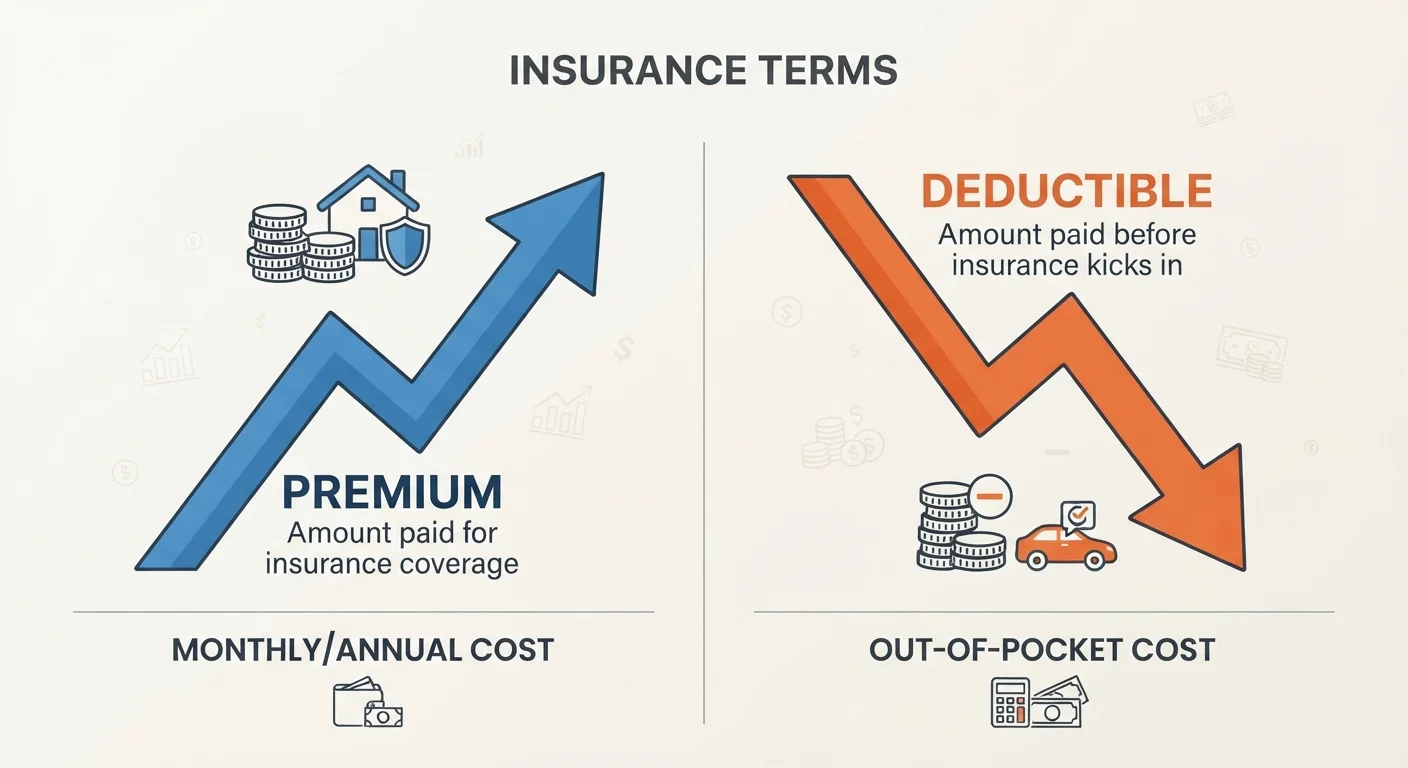
Photo credit: ArticlesHaven.net
In this article
Understand the trade-off between higher deductibles and lower premiums—and what that balance means for your out-of-pocket risk.
Key Takeaways
- Raising your deductible almost always lowers your monthly premium, while lowering it raises costs.
- A high-deductible plan saves money month-to-month but leaves you exposed to larger bills when a claim occurs.
- The right balance depends on your financial cushion, claims history, and tolerance for out-of-pocket risk.
- Premium savings from a high deductible are only a win if you rarely file claims or can comfortably cover the deductible.
- This trade-off applies across health, auto, and home insurance - though the specifics differ by policy type.
The Basic Mechanism: How the Trade-Off Works
Insurance is fundamentally about sharing risk. Your premium buys the insurer's promise to cover large, unexpected losses. Your deductible is your share of that loss when a claim actually happens. These two numbers are linked by a simple principle: the more risk you're willing to absorb yourself, the less the insurer needs to charge you to carry the rest.
Think of it as a sliding scale. Move the dial toward a higher deductible, and your monthly premium drops. Move it toward a lower deductible - meaning the insurer starts paying sooner - and they charge more each month to compensate for that broader protection.
Insurers calculate this relationship using claims data. A $500 deductible on an auto policy statistically means the insurer will pay out on more incidents than a $2,000 deductible would, so the lower-deductible policy costs more to maintain. For a deeper look at how these two figures interact across policy types, see this overview of the core trade-off.
~$1,735
Average individual HDHP deductible (employer plans)
According to KFF's 2023 Employer Health Benefits Survey, the average annual deductible for single coverage in high-deductible health plans was approximately $1,735.
$500-$2,000
Typical auto insurance deductible range
Most auto insurance policies offer deductible options in this range, with the premium differential varying by insurer and driver profile.
~27%
Workers enrolled in HDHPs with savings accounts
KFF's 2023 survey found that roughly 27% of covered workers were enrolled in a high-deductible plan paired with a health savings account.
The Real Question: When Does Each Side of the Trade-Off Make Sense?
Choosing a high deductible to save on premiums is only a financial win if you don't file many claims - or if, when you do, the cumulative premium savings still outweigh what you paid out of pocket. That calculation is personal and depends on three practical factors:
- Your liquid savings: A $3,000 deductible is manageable if you have $3,000 accessible. If you don't, a claim becomes a financial emergency on top of whatever event prompted it.
- Your expected claims frequency: Someone with a chronic health condition, a young driver on the policy, or a home in a region prone to storms faces a different probability of filing than someone with a clean record in a low-risk situation.
- The premium differential: The gap between a high-deductible and low-deductible plan matters. If switching to a higher deductible saves you $20 a month but raises your exposure by $2,000, you'd need more than eight years without a claim to break even.
Run the Break-Even Math Before Choosing
Divide the annual premium difference between two deductible options by the deductible increase to find your break-even period in years. For example, if a higher deductible saves $300 per year but adds $1,500 in potential out-of-pocket exposure, you'd need five claim-free years to come out ahead. If that seems realistic given your situation, the higher deductible may be worth considering.
For guidance on working through that decision, this decision framework walks through the key scenarios step by step.
Where This Shows Up Across Insurance Types
The deductible-premium trade-off appears in nearly every common insurance category, but it plays out differently depending on the policy structure.
In health insurance, the trade-off is complicated by additional cost-sharing features like copays, coinsurance, and out-of-pocket maximums. A high-deductible health plan (HDHP) often pairs with a Health Savings Account (HSA), which gives policyholders a tax-advantaged way to save for those out-of-pocket costs. For a fuller picture of how these pieces interact, this guide covers how deductibles, premiums, and copays fit together.
In auto and home insurance, deductibles tend to be simpler per-claim amounts without the layered cost-sharing of health plans. But the same logic applies: higher deductibles mean lower premiums, and the right choice depends on your financial cushion and realistic risk. How deductibles work differently across policy types explains the distinctions in more detail.
Health Insurance Adds Extra Layers of Cost-Sharing
Unlike auto or home insurance, health insurance deductibles interact with copays, coinsurance, and annual out-of-pocket maximums. Reaching your deductible doesn't mean all costs stop - coinsurance typically continues until you hit the out-of-pocket max. Reading all three numbers together gives a more accurate picture of your potential annual health costs.
The Hidden Risk of Optimizing Only for Premium
A low monthly premium can feel like a win - until a claim arrives and the deductible turns a manageable situation into a financial strain. Cheap premiums can mask high deductibles and coverage gaps that only become visible when you actually need the policy.
The flip side is also true: paying a low deductible on a policy you rarely use means you're subsidizing the insurer's risk more than necessary. Neither extreme is automatically correct. The goal is to find a deductible you could realistically pay in an emergency while keeping your premium at a level that fits your budget across months when no claim occurs.
Two numbers worth tracking alongside your deductible are your out-of-pocket maximum and your total annual premium cost. Comparing all three gives a more honest picture of your true exposure. Understanding how deductibles and out-of-pocket maximums work together can help you read any policy more clearly before committing.
This article is for general informational purposes only and does not constitute insurance, financial, or legal advice. Coverage terms, costs, and eligibility vary by insurer, policy, and state. Always review your actual policy documents and consult a licensed insurance professional for guidance specific to your situation.
Frequently Asked Questions

Author
Articles Haven Editorial Contributor
Articles Haven Editorial Team is the collective byline for our editorial team and contributor network. Articles published under this byline or an editorial pen name are researched, written, and reviewed according to our editorial standards for clarity, consistency, and independence before publication.
View all articles →