
How to Decide Between a High-Deductible and a Low-Deductible Plan
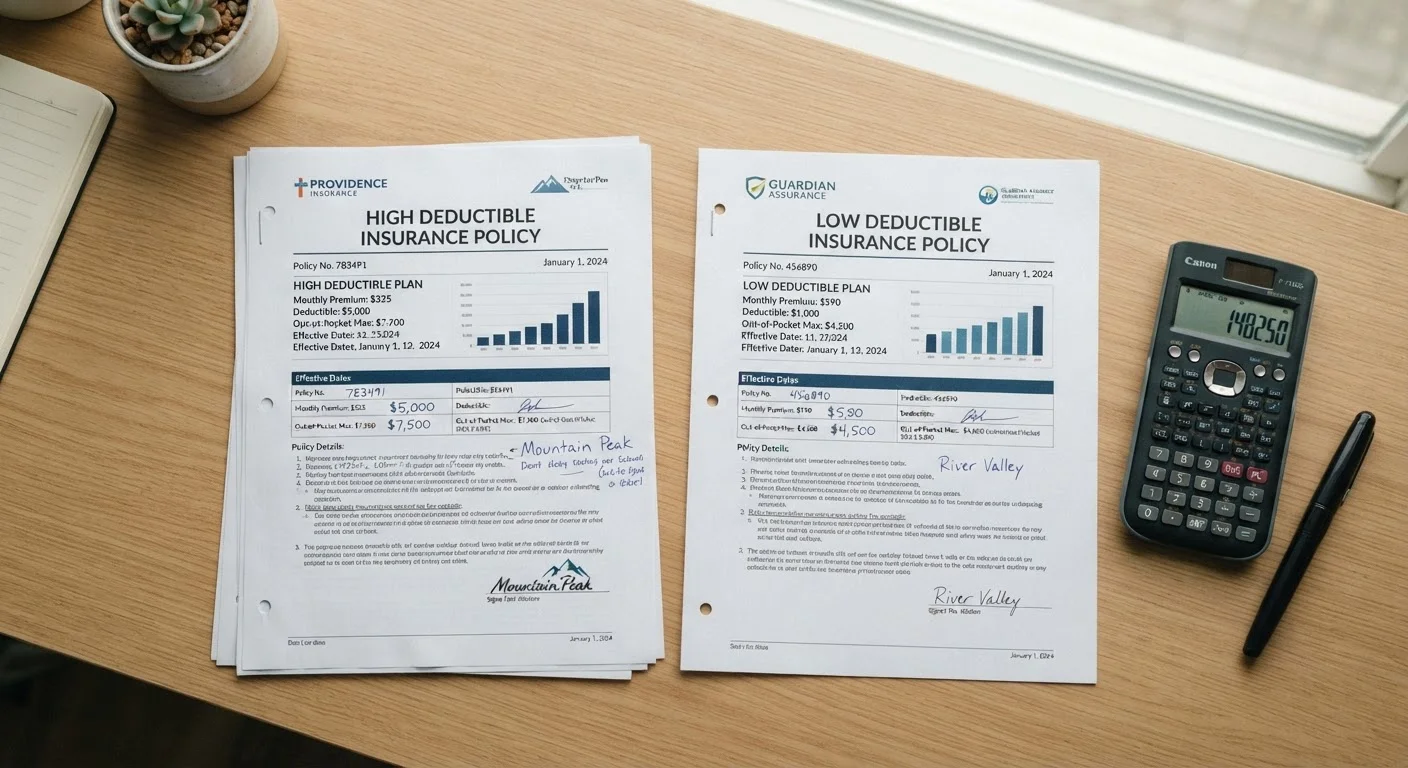
Photo credit: ArticlesHaven.net
The right deductible level depends on your financial cushion and likely claims. Walk through the decision framework here.
Key Takeaways
- A high-deductible plan lowers your monthly premium but increases your out-of-pocket cost when you file a claim.
- A low-deductible plan costs more each month but limits financial exposure when something goes wrong.
- Your emergency savings, health status, and expected claims frequency are the most important decision factors.
- High-deductible health plans can be paired with a Health Savings Account to soften out-of-pocket costs.
- Running a break-even calculation helps you compare the two options in concrete dollar terms.
What the Deductible Decision Actually Controls
A deductible is the amount you pay out of pocket for covered services before your insurer begins paying its share. Choosing a higher deductible lowers your monthly premium - but shifts more financial risk to you when a claim occurs. Choosing a lower deductible raises your monthly cost but reduces what you owe at the moment something goes wrong.
This trade-off exists across most insurance types - health, auto, and homeowners - though the specific mechanics differ. For health insurance, deductibles interact with co-pays, co-insurance, and out-of-pocket maximums in ways that make the comparison more layered than a simple premium comparison. Understanding those interactions is what separates a well-matched plan from one that looks affordable until you actually use it.
What you will need
The tools and records below will help you work through each step with real numbers rather than guesswork.
Plan Summary of Benefits
Provides the exact deductible, out-of-pocket maximum, and covered services for each plan you are comparing.
Spreadsheet or Calculator
Used to run a break-even calculation comparing annual premium differences against deductible differences.
Prior Year Explanation of Benefits (EOB)
Shows what you actually spent on claims last year, giving a realistic baseline for projecting future costs.
Walking Through the Decision Framework
The steps that follow are designed to be worked through in order. Each one builds on the previous, moving from raw data collection to a final, documented choice. They apply broadly across insurance types, though health plan examples are used throughout because that's where the stakes and complexity tend to be highest.
Gather the key numbers from each plan
Pull the summary of benefits for every plan you are considering. For each one, note four figures: the annual deductible, the monthly premium, the out-of-pocket maximum, and any co-pays or co-insurance that apply after the deductible. These numbers are the raw inputs for every comparison that follows. For broader context on what these terms mean, visit the Coverage & Costs hub.
Estimate your realistic annual claims
Review last year's explanation of benefits statements, medical bills, or insurance claim history. Add up the total you actually paid toward covered services. If this is your first time choosing a plan, use a conservative estimate based on your general health, any recurring prescriptions, and scheduled procedures. Be honest - underestimating claims is the most common reason people end up underinsured.
Run the break-even calculation
Subtract the higher-deductible plan's annual premium from the lower-deductible plan's annual premium. The result is how much you save per year by choosing the high-deductible option. Then subtract the low-deductible amount from the high-deductible amount to find your additional out-of-pocket exposure. If your premium savings exceed your additional deductible exposure - and you rarely file claims - the high-deductible plan may cost less overall. If you regularly hit your deductible, the math often flips.
Assess your savings cushion
A high-deductible plan is only financially sensible if you have accessible savings to cover that deductible when a claim hits. A common guideline is to have the full deductible amount - or close to it - sitting in a liquid account before enrolling. If your savings fall short, a low-deductible plan reduces the risk of a large unexpected bill derailing your budget.
Factor in your risk tolerance and health status
Beyond the numbers, consider how you personally handle financial uncertainty. Someone managing a chronic condition, expecting a major procedure, or supporting dependents with regular medical needs will typically benefit from the predictability of a low-deductible plan. Younger, generally healthy individuals with steady incomes and adequate savings may find a high-deductible plan more efficient. Neither choice is universally right - it depends on the full picture of your situation.
Make your decision and document your reasoning
Once you have worked through the numbers and your personal situation, write down the specific reasons you chose one plan over the other. This short record is useful at next year's open enrollment when you need to reassess. If your claims, income, or savings situation changes significantly, revisit the decision rather than auto-renewing. The Insurance Types hub can help you understand how deductible structures vary across health, auto, home, and other plan categories.
Don't Choose Based on Premium Alone
A low monthly premium can look attractive but may mask a very high deductible or significant coverage gaps. Before prioritizing cost, read the full summary of benefits. Our article on why cheap premiums sometimes lead to expensive surprises explains what to watch for.
HSAs Can Offset High-Deductible Costs
If you choose a qualifying high-deductible health plan, you may be eligible to open a Health Savings Account (HSA). Contributions go in pre-tax, grow tax-free, and can be withdrawn tax-free for qualified medical expenses. See how HSAs work alongside high-deductible plans for a full breakdown.
This Is General Information, Not Personalized Advice
The framework here is educational - it explains how deductible levels work and what factors to weigh. Your actual coverage needs, eligibility, and costs vary by insurer, plan type, and state. Always review full policy documents and consult a licensed insurance agent before making a coverage decision.
This article is for general informational purposes only and does not constitute personalized insurance, financial, or legal advice. Coverage terms, eligibility, and costs vary by plan, insurer, and state. Consult a licensed insurance agent or adviser before making coverage decisions.

Author
Articles Haven Editorial Contributor
Articles Haven Editorial Team is the collective byline for our editorial team and contributor network. Articles published under this byline or an editorial pen name are researched, written, and reviewed according to our editorial standards for clarity, consistency, and independence before publication.
View all articles →