
The Difference Between Being Insured and Being Adequately Insured
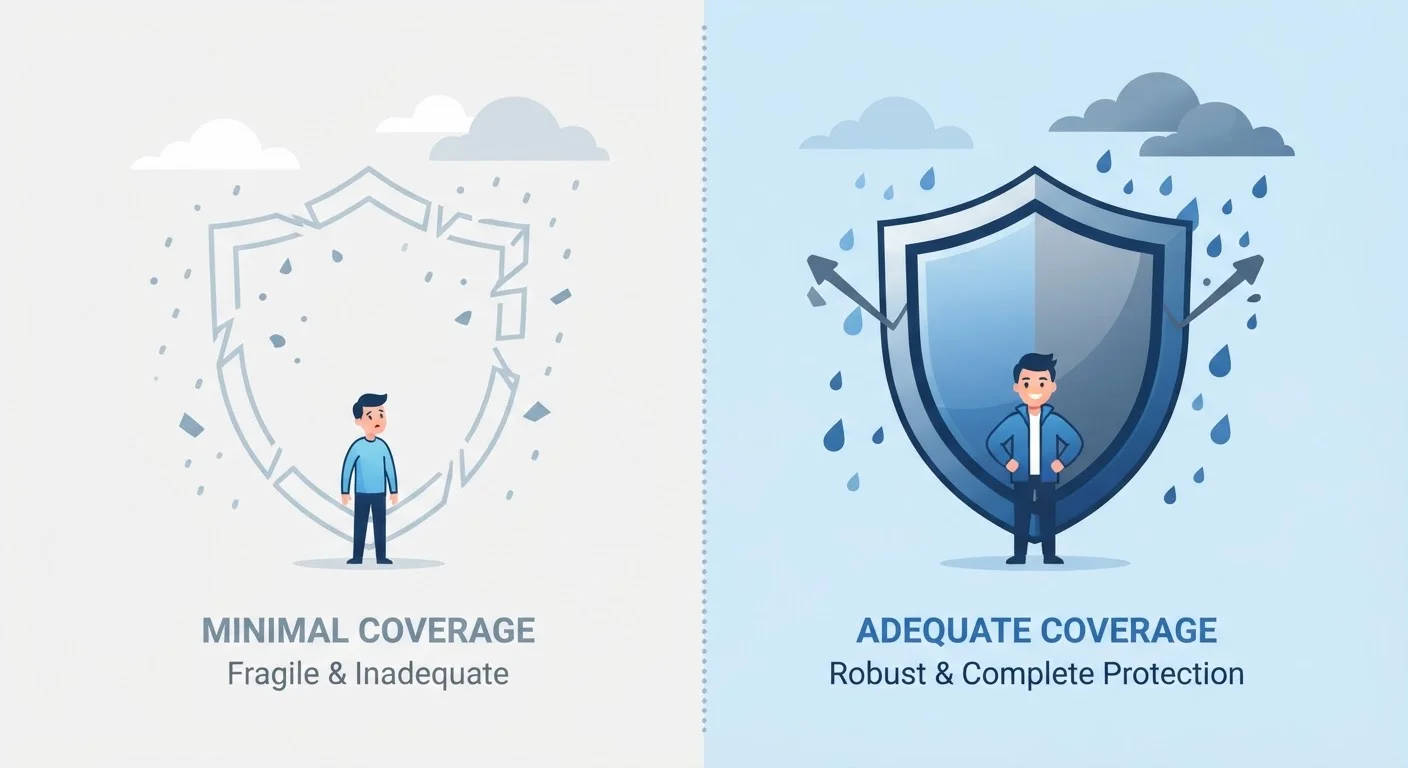
Photo credit: ArticlesHaven.net
In this article
Having a policy and having sufficient coverage are not the same thing. Learn how under-insurance happens and what it looks like in practice.
Key Takeaways
- Holding an active policy does not guarantee you have enough coverage to cover a real loss.
- Coverage limits, deductibles, and exclusions determine whether a policy is truly protective.
- Under-insurance often surfaces only at claim time, when it is too late to adjust.
- Regularly reviewing your coverage against your current assets and risks helps close gaps.
- A licensed agent or broker can help identify where your existing coverage may fall short.
Why Having a Policy Isn't Always Enough
There is a meaningful difference between checking the box that says 'insured' and actually being protected. Millions of Americans carry policies across home, auto, and health - yet they are one serious claim away from significant out-of-pocket costs because their coverage limits do not match their real-world exposure.
The gap is rarely obvious. Policies are written in dense language, premiums feel interchangeable, and most people only discover a shortfall when a claim is denied or partially paid. Understanding what adequate coverage actually means - and how to evaluate it - is one of the more practical financial literacy skills you can develop.
For a grounding in what these documents actually contain, see Insurance Policies Explained: What You're Actually Buying before diving into coverage levels.
~40%
Underinsured homeowners at claim time
Industry estimates from CoreLogic and others consistently suggest a substantial share of U.S. homes are insured below their actual rebuilding cost, leaving owners exposed to a significant shortfall after a total loss.
1 in 8
U.S. drivers uninsured on the road
According to the Insurance Research Council, roughly one in eight drivers nationwide carries no auto insurance, raising the risk that a collision leaves the insured party responsible for their own uncompensated losses.
$0
Flood losses covered by standard home policies
Standard homeowners insurance policies do not cover flood damage; separate flood coverage must be purchased, typically through the National Flood Insurance Program or a private insurer.
Where the Gap Between Insured and Adequately Insured Shows Up
Under-insurance tends to appear in predictable places. Here are the most common:
- Coverage limits too low: Your policy pays up to a set dollar amount. If a loss exceeds that ceiling, you pay the rest. A home insured for its purchase price rather than its rebuilding cost is a classic example.
- Deductibles too high to absorb: Choosing a $5,000 deductible to lower your premium makes sense only if you could genuinely cover that amount without hardship in a claim scenario.
- Missing policy types: Having health insurance but no disability coverage, or home insurance but no flood insurance in a flood-prone area, leaves specific risks entirely unaddressed.
- Outdated coverage amounts: Policies set years ago may not account for inflation, home renovations, new valuables, or rising medical costs.
For a broader look at how specific risks fall through the cracks, Insurance Coverage Gaps That Catch People Off Guard walks through scenarios across health, home, and auto.
How to Evaluate Whether Your Coverage Is Actually Sufficient
Evaluating adequacy requires moving past the premium amount and into the specifics of what your policy would actually pay. A few practical questions to ask:
- What is the replacement cost of what I am insuring? For property, this is the cost to rebuild or replace - not market value, not what you paid.
- What are my realistic liability exposures? If you own a home, have significant assets, or frequently drive, low liability limits can leave you personally responsible for judgments that exceed your coverage.
- What does my policy exclude? Exclusions are where coverage quietly disappears. Standard home policies, for example, typically do not cover flood or earthquake damage.
- Would my deductible be manageable? A deductible you cannot afford to pay is coverage you cannot effectively use.
The Most Common Ways People Underestimate How Much Coverage They Need covers the specific decisions - from low liability limits to skipped riders - that leave people exposed.
Do a Simple Coverage Audit Annually
Pull out your declarations pages - the summary page at the front of each policy - and check three things: your coverage limits, your deductibles, and any major exclusions listed. Compare those limits against what it would realistically cost to replace what you're insuring today, not when you first bought the policy. Doing this once a year, or after any major life change, is the most straightforward way to catch a gap before it becomes a problem.
Auto Insurance: A Common Case Study in Under-Coverage
Auto insurance is one of the clearest examples of the gap between being insured and being adequately insured. State minimum liability requirements exist to satisfy a legal obligation - they are not calibrated to protect you financially in a serious accident.
Minimum limits in many states are set below $30,000 per person for bodily injury. A single hospitalization can exhaust that quickly, leaving you personally liable for the remainder of a judgment. The situation becomes more complicated when the other driver carries little or no insurance themselves.
Understanding what separates liability-only from more comprehensive coverage tiers is a useful starting point - Liability-Only vs. Full Coverage Auto Insurance breaks down when each approach makes financial sense. Separately, Uninsured and Underinsured Motorist Coverage: Why It Matters explains what happens when the other driver's policy is insufficient to cover your losses.
“Insurance is not purchased for the accidents you expect - it is purchased for the ones that would financially ruin you if your coverage fell short. The limit on your policy is the number that matters most, not the premium.”
— Consumer Federation of America, Consumer advocacy organization focused on insurance market fairness
Getting Help Without Getting Sold To
Evaluating your own coverage adequacy is something most people can start on their own, but a professional can surface gaps that are easy to miss. The type of professional matters: an agent who represents a single insurer can only offer products from that company, while an independent broker works across multiple carriers and can compare options on your behalf.
For a clear breakdown of that distinction, The Role of an Insurance Agent vs. a Broker When Comparing Coverage is worth reading before you sit down with anyone. Whatever channel you use, go in with your current declarations pages, a sense of your asset picture, and specific questions about limits and exclusions - not just premium cost.
This article is for general informational purposes only and does not constitute insurance, financial, or legal advice. Coverage needs vary by individual and location. Always read your policy documents carefully and consult a licensed insurance professional for guidance specific to your situation.
Coverage Needs Change Over Time
A policy that was adequate when you first purchased it may no longer reflect your situation. Home renovations, rising construction costs, new valuables, a growing family, or increased assets can all widen the gap between what you have and what you need. Treating insurance as a set-and-forget purchase is one of the most common ways people end up underinsured.
Frequently Asked Questions

Author
Articles Haven Editorial Contributor
Articles Haven Editorial Team is the collective byline for our editorial team and contributor network. Articles published under this byline or an editorial pen name are researched, written, and reviewed according to our editorial standards for clarity, consistency, and independence before publication.
View all articles →