
Storage Solutions for Small Homes: Principles Over Products
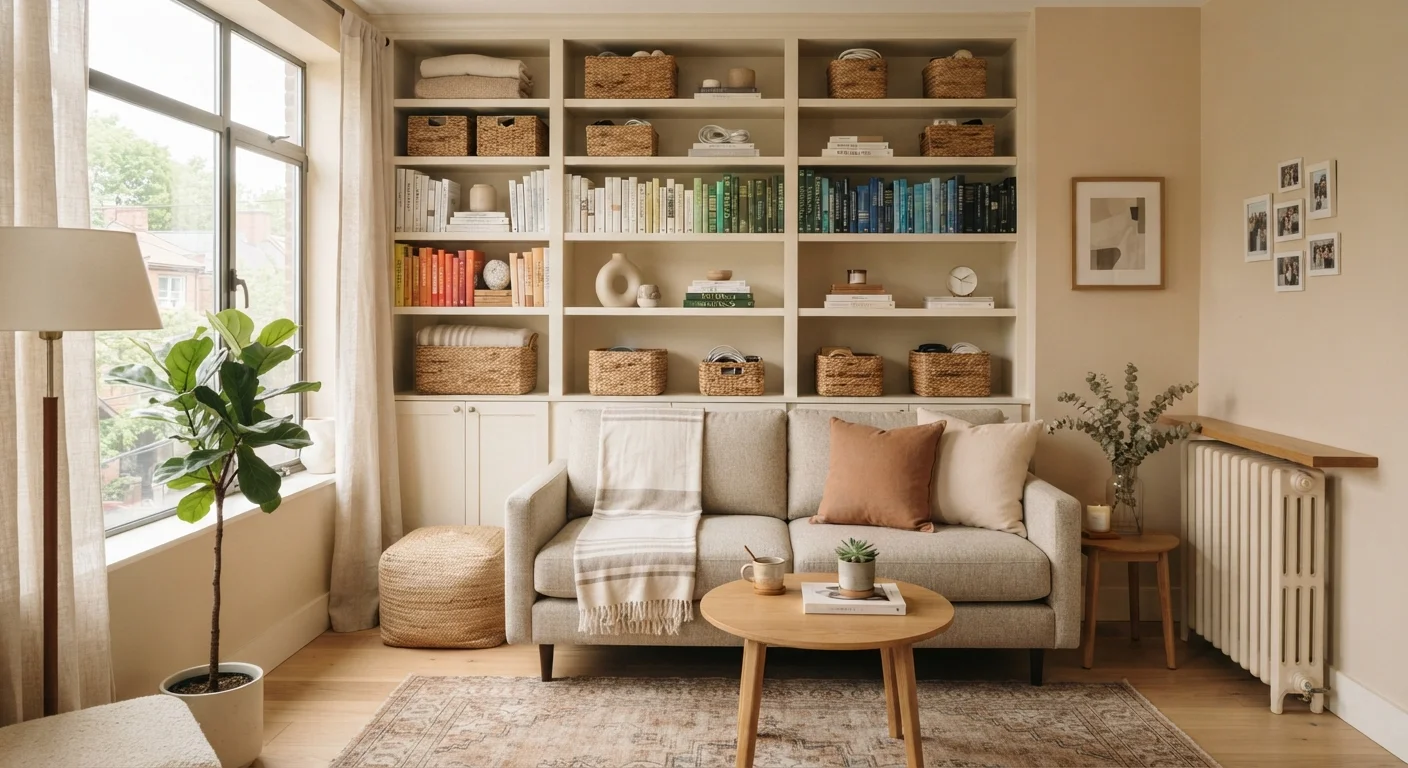
Photo credit: ArticlesHaven.net
In this article
Small-space storage is about strategy, not just buying containers. Explore the organizing principles that work regardless of square footage.
Key Takeaways
- Reducing what you own is more effective than buying more storage containers.
- Vertical space and multi-use furniture are the two highest-leverage moves in small homes.
- Consistent placement habits matter more than any organizational product you purchase.
- Storage systems only work long-term if they match your actual daily behavior.
- Audit your space before spending - most homes already have underused storage capacity.
The Core Problem: Buying Storage Instead of Solving It
Walk through any home goods store and you'll find entire aisles dedicated to bins, baskets, drawer dividers, and label makers. The implicit promise is that the right container will fix your clutter problem. In practice, buying storage before rethinking habits almost always makes things worse - you end up with organized-looking clutter instead of less of it.
Small homes require a different starting point: what do you actually need access to, and how often? Everything else is a candidate for removal, not reorganization. This principle-first approach means your storage decisions are driven by real use patterns rather than aspirational tidiness.
If you're also working with a tight budget, the gains here compound quickly. See how structural and behavioral shifts can outperform expensive systems without spending much at all.
A Note on Storage Products
This article deliberately avoids recommending specific bins, shelving brands, or organizational products. Storage hardware can support a good system, but it cannot create one. Once you've applied these principles and know exactly what you need to store and where, product selection becomes straightforward - and far less expensive.
Principle 1 - Own Less, Store Less
The most reliable storage solution in a small home is subtraction. Every item you remove eliminates a storage problem permanently. Before evaluating shelving, closet systems, or drawer organizers, do a honest pass through each category: clothing, kitchen tools, paper, hobby supplies, cleaning products.
The question isn't whether an item has sentimental value or cost money originally. The useful question is: would you replace this if it disappeared tomorrow? Items that don't pass that test are occupying space that costs you daily.
Declutter by category, not by room, to see the full scale of what you own.
When you gather all items of one type together - all clothing, all kitchen gadgets, all books - the total volume becomes visible in a way that room-by-room tidying never reveals. This prevents the common pattern of simply relocating clutter from one space to another.
Assign every item a fixed home and return it there after every use.
Clutter accumulates not because people are disorganized but because items lack designated locations. When placement is ambiguous, things settle wherever they were last used. Consistent fixed locations make tidying fast and reduce the mental load of deciding where things go.
Store items at the point of use, not in a central storage area.
Items stored far from where they're used get retrieved less often and returned less reliably. Proximity reduces friction for both retrieval and return, which sustains the system over time without requiring discipline.
Apply a one-in, one-out rule when bringing new items into the home.
Small homes have finite capacity, and without a mechanism to offset additions, storage pressure increases steadily over time. A consistent replacement habit prevents the gradual accumulation that eventually overwhelms any organizational system.
Use transparent or open-front storage for items you access frequently.
Opaque containers work well for items used occasionally, but frequently accessed items stored out of sight tend to get forgotten or double-purchased. Visibility reduces that friction and prevents the 'I didn't know we had one' problem.
Principle 2 - Go Vertical and Go Multi-Use
Floor space is the scarcest resource in a small home. Wall space and ceiling height are almost always underused. Shelving that runs to ceiling height, over-door organizers, and wall-mounted hooks all reclaim space that currently stores nothing.
Multi-use furniture follows the same logic. A bench with interior storage, a bed frame with drawers, or a dining table with fold-down leaves all do two jobs simultaneously. The payoff isn't just storage - it's that you reduce the total number of objects competing for space.
1 in 10
US households renting off-site storage
According to the Self Storage Association, roughly 1 in 10 American households rents a storage unit, suggesting that acquiring more space is often chosen over reducing volume.
~300 sq ft
Average size of a tiny home in the US
The American Tiny House Association estimates the average tiny home is under 400 square feet, making vertical and multi-use strategies essential rather than optional.
The same compression logic applies in other contexts - frequent travelers use it to pack everything into a carry-on. The carry-on packing framework offers a useful parallel for thinking about prioritization under tight constraints.
Principle 3 - Match Systems to Actual Behavior
The most common reason organizational systems fail is that they were designed for an idealized version of daily life rather than the real one. If you never actually fold and return items to labeled bins, a bin-based system will collapse within weeks regardless of how well it was designed.
Observe how items actually move through your space. Where do keys actually land? Where do groceries sit before they're put away? Storage systems that work with those natural drop zones maintain themselves; systems that fight them require constant effort to sustain.
Test Your System Before Committing
Before investing in shelving, closet organizers, or drawer systems, trial the arrangement using cardboard boxes or whatever you have on hand. Live with the layout for a week. If the placement works with your actual habits, then it's worth spending money to make it permanent. This saves significant time and money compared to installing a system and later realizing it doesn't fit how you actually move through the space.
This behavioral approach is especially relevant in kitchens and pantries, where daily routines are repetitive. The pantry organization principles that reduce cooking stress follow the same logic: match the system to the cook, not the other way around.
Principle 4 - Audit Before You Acquire
Most homes contain significant underused storage that gets overlooked because it's inconvenient, poorly lit, or simply forgotten. The back of closets, spaces under beds, the area above kitchen cabinets, and dead corners are common examples. A short audit - walking through each room and documenting what's there - often reveals capacity that doesn't require any new purchases.
Once you know what you're actually working with, any spending decisions become much more targeted. This is a different starting point than browsing storage products and working backward. For broader home improvement planning, the same audit-first principle applies: understand the existing structure before committing to changes.
Garages are a common place where this audit pays off dramatically. If that's a pressure point in your home, the garage organization planning steps cover how to convert an overwhelmed space into a functional one systematically.

Author
Articles Haven Editorial Contributor
Articles Haven Editorial Team is the collective byline for our editorial team and contributor network. Articles published under this byline or an editorial pen name are researched, written, and reviewed according to our editorial standards for clarity, consistency, and independence before publication.
View all articles →