
Pantry Organization Principles That Keep Cooking Stress-Free
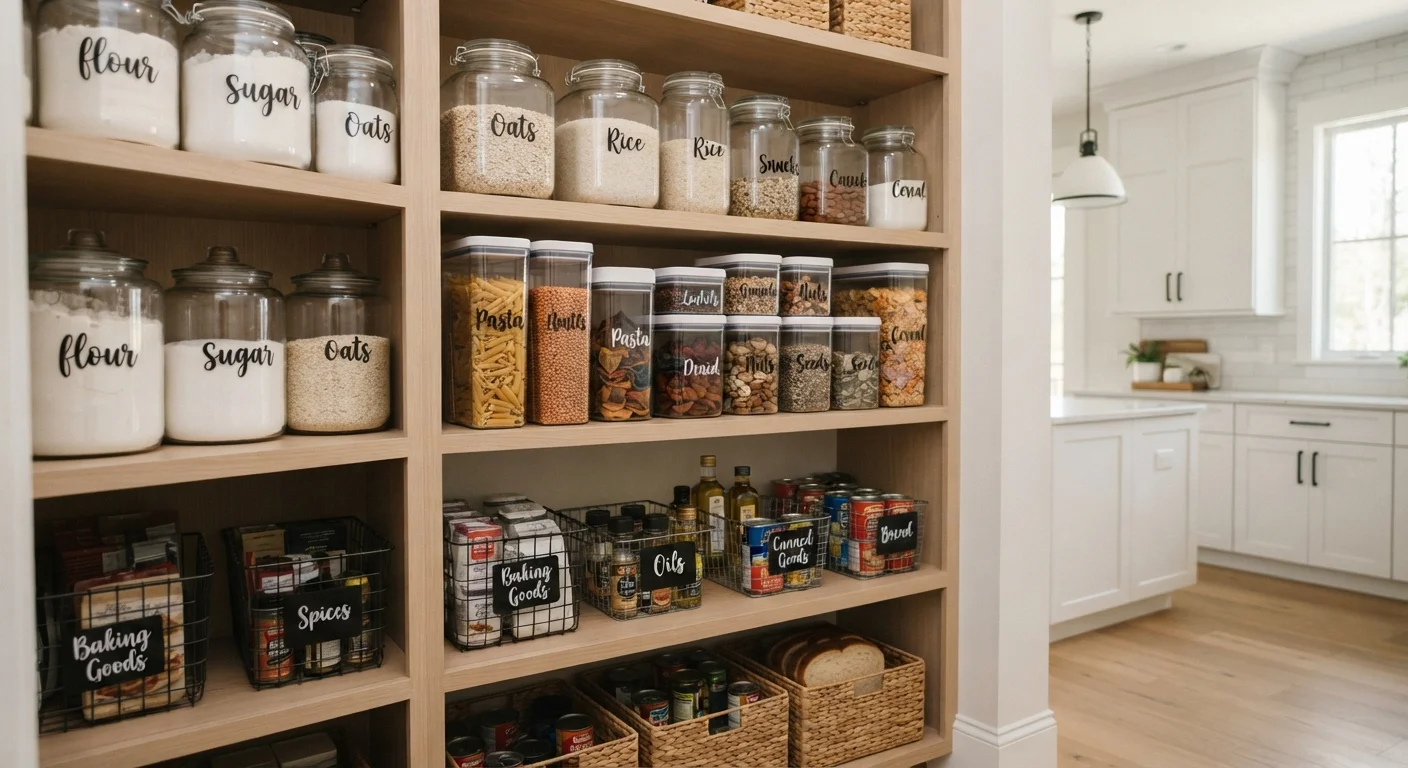
Photo credit: ArticlesHaven.net
In this article
Solid pantry organization reduces waste, saves time, and makes meal prep easier. Here are the principles that make it sustainable.
Key Takeaways
- Grouping items by category and frequency of use cuts time spent searching for ingredients.
- Visibility is the single biggest factor in reducing food waste in a home pantry.
- Consistent restocking habits matter more than the containers or labels you choose.
- A pantry system only works long-term if it fits how your household actually cooks.
Why Most Pantry Systems Fall Apart
The typical pantry starts organized and slowly collapses. Cans get shoved to the back. Half-opened bags multiply. You buy a second jar of cumin because you couldn't find the first. This isn't a willpower problem - it's a design problem.
Most organization attempts focus on aesthetics: matching containers, color-coded labels, Pinterest-worthy rows. These aren't bad, but they treat the symptom rather than the cause. What actually makes a pantry sustainable is a system built around how your household shops and cooks - not around how a pantry looks.
If you're also trying to reduce food spending, a well-organized pantry connects directly to smarter shopping habits. See practical grocery systems that reduce waste for a complementary approach.
Core Principles That Actually Stick
Good pantry organization comes down to a handful of durable principles - not specific products. These work whether you have a walk-in pantry, a single cabinet, or a few shelves in a small apartment. For more on adapting organization to limited space, storage principles for small homes covers the same logic applied more broadly.
Making It Work With Your Cooking Habits
The right pantry structure depends on how your household actually cooks. A single person batch-cooking on Sundays needs fast access to proteins and grains. A family cooking varied meals needs clear zones for different cuisine types. Neither approach is universally correct.
Pantry Systems Should Match Your Reality
A system designed for someone who cooks elaborate meals from scratch won't work well for a household that relies on quick weeknight assembly. Before reorganizing, spend a week noting which items you actually reach for repeatedly. Build your zone structure around those, not around what a 'well-stocked pantry' is supposed to contain.
If you're building or refining a meal planning approach alongside your pantry setup, meal planning approaches for different household types breaks down frameworks by household size and cooking style. A pantry organized around your actual meal rotation will stay organized far longer than one designed in the abstract.
“Organization is not about perfection; it's about efficiency, reducing stress and clutter, saving time and money, and improving your overall quality of life.”
— Christina Scalise, Author and professional organizer
Cooking at home more consistently - which a functional pantry supports - has real practical benefits, though it comes with its own learning curve. a realistic look at cooking at home more often covers what to expect.
The Low-Cost Path to a Better Pantry
You don't need to spend significantly to improve pantry function. The highest-impact changes are behavioral: moving items to eye level, enforcing a first-in-first-out rotation, and doing a five-minute reset after grocery runs. home organization changes that cost almost nothing outlines where effort pays off most without requiring new purchases.
30-40%
Share of US food supply lost or wasted
According to the USDA, roughly 30-40% of the US food supply is lost or wasted, with household storage being a significant contributor.
$1,500+
Estimated annual food waste per household
The Natural Resources Defense Council has estimated that the average US family of four discards over $1,500 worth of food per year, much of which spoils at home.
When you do invest in containers or shelf organizers, buy for your actual inventory - not an idealized version of it. A single clear bin for snacks beats six matching containers that are perpetually empty or overstuffed.
Finally, treat your pantry setup as adjustable rather than permanent. Households change, dietary preferences shift, and what works now may need tweaking in six months. The goal is a system that reduces daily friction - not one that requires maintenance to preserve its own appearance.

Author
Articles Haven Editorial Contributor
Articles Haven Editorial Team is the collective byline for our editorial team and contributor network. Articles published under this byline or an editorial pen name are researched, written, and reviewed according to our editorial standards for clarity, consistency, and independence before publication.
View all articles →