
Meal Planning Approaches for Different Household Types
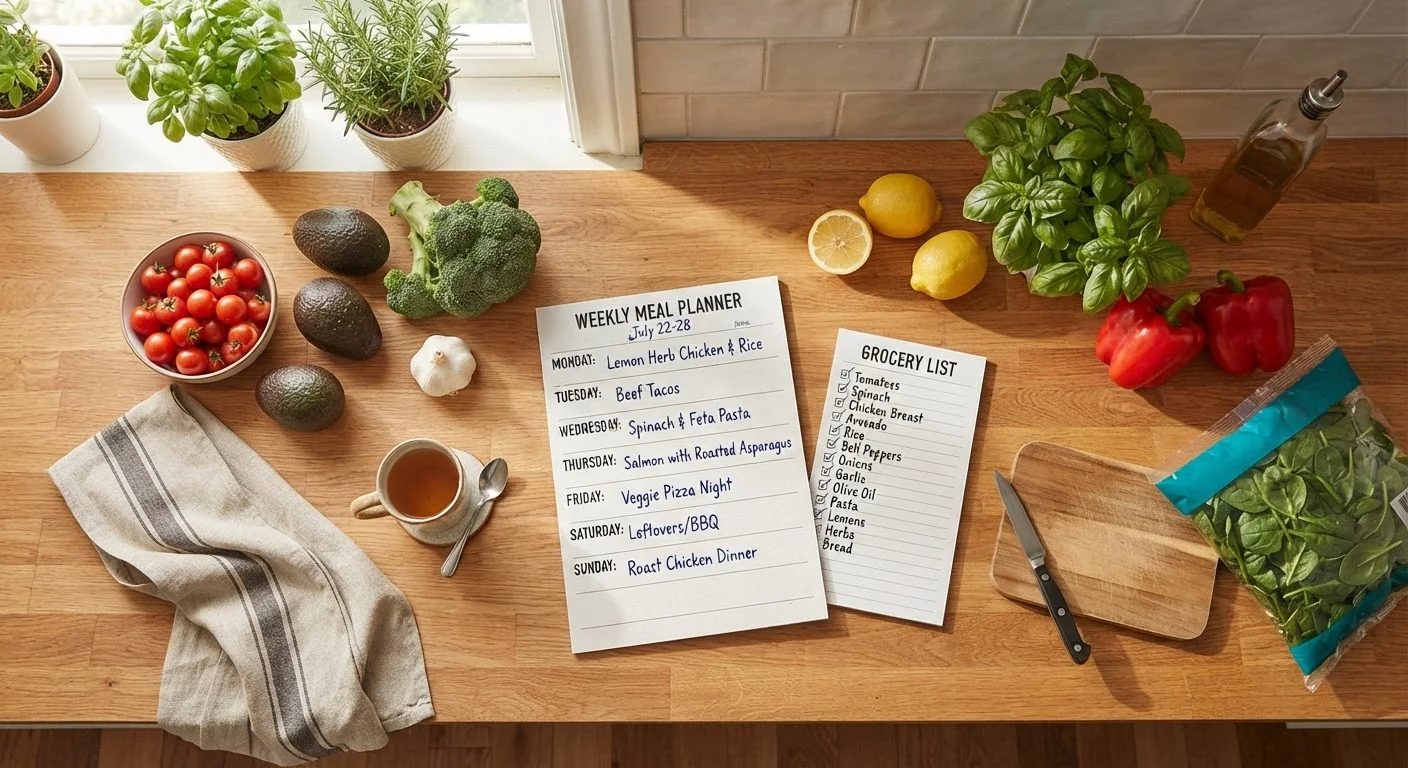
Photo credit: ArticlesHaven.net
In this article
From single-person households to large families with varied diets, explore meal planning frameworks that match real-life situations.
Key Takeaways
- Meal planning works best when the framework fits your actual household size and schedule.
- Solo planners benefit from batch cooking and flexible ingredient strategies to avoid waste.
- Families with varied dietary needs require modular meal designs rather than one-size-fits-all recipes.
- Shared households of unrelated adults need clear ownership rules and budget-splitting logic.
- Digital tools and shared grocery lists can reduce coordination friction across all household types.
Why household type determines the right planning approach
Meal planning advice tends to assume a generic household. In practice, the approach that works for a solo professional in a studio apartment is structurally different from what works for a family of five with a picky eight-year-old and a teenager who just went vegan. Matching the planning system to the household's actual composition - not a theoretical ideal - is what determines whether it sticks.
The five frameworks below cover the most common household types US consumers actually live in. Each identifies the core friction point and a practical model for addressing it. For a complementary look at how these choices connect to smarter grocery spending, shopping smarter frameworks are worth exploring alongside any planning system you adopt.
Solo households: batch cooking and flexible staples
Cooking for one presents a specific challenge: most recipes yield four to six servings, which means either repetitive meals or wasted food. The most practical fix is building a weekly plan around flexible staple ingredients - grains, proteins, and vegetables that work across multiple dishes rather than locking you into a single recipe.
Batch-cook one or two proteins and one grain at the start of the week. From there, the same roasted chicken breast can become a grain bowl Monday, a wrap Tuesday, and a quick soup Thursday. This approach cuts prep time and grocery spend without requiring you to eat identical meals three nights running.
For grocery shopping, sticking to smaller quantities of perishables - even if the per-unit price is slightly higher - often saves money overall by reducing spoilage. Frozen vegetables are a practical ally here: nutritionally comparable to fresh and available on demand.
Flexible staple ingredients eliminate the repetition problem without multiplying your grocery bill.
Couples: aligning preferences without over-complicating the plan
Two people with different taste preferences, schedules, or dietary goals can turn meal planning into a negotiation. The simplest approach is designating three to four shared dinners per week and leaving the rest as personal or flexible nights - takeout, leftovers, or individual cooking.
A shared digital grocery list (updated in real time by both people) prevents the classic problem of duplicate purchases or missing ingredients. Assigning one person ownership of each week's planning rotation, rather than deciding together every Sunday, removes low-stakes friction that tends to accumulate.
Couples dealing with one omnivore and one vegetarian or one with dietary restrictions can use a modular approach: build meals around a shared base (roasted vegetables, a grain, a sauce) and add a separate protein component so each person finishes their own plate. This strategy scales well and sidesteps the need to cook entirely separate meals.
Designating shared dinners and leaving flexibility nights prevents meal planning from becoming a weekly negotiation.
Families with children: structure, variety, and practical shortcuts
Families with kids typically need a more rigid weekly structure because school schedules, activities, and varying appetites create real constraints. A rotating four-week menu - where each week's plan cycles back roughly every month - reduces the mental load of planning from scratch while still providing enough variety.
Theme nights (pasta night, taco night, sheet-pan night) give children predictability they often respond well to while giving the cook a manageable framework. They also simplify grocery shopping, since the ingredient categories remain consistent even when specific recipes rotate.
Picky eaters are one of the most common friction points. A practical approach is the one-new-one-familiar rule: pair any unfamiliar dish with something the household already accepts. This introduces variety without creating mealtime conflict. For more on stocking a kitchen that supports this kind of cooking, pantry organization strategies can make weeknight execution significantly smoother.
A rotating four-week menu eliminates planning fatigue without sacrificing variety for the whole family.
Multi-dietary households: modular meal design
When a household includes someone managing a medical diet, a vegan, and a standard omnivore, trying to find recipes that satisfy everyone simultaneously is usually a losing strategy. Modular meal design is more realistic: build meals in components - a base, a protein, a sauce, a topping - where each element can be swapped independently.
A taco bar, a grain bowl station, or a build-your-own stir-fry all follow this logic naturally. The cook prepares shared components and each person assembles based on their needs. The grocery list becomes slightly longer, but cooking effort and conflict both decrease.
Labeling containers in shared refrigerators and keeping dedicated shelf space for dietary-specific ingredients also reduces confusion and accidental cross-contamination - an important consideration for households managing food allergies. Grocery shopping with nutrition in mind provides a useful starting framework for households trying to balance these varied needs at the store.
Modular meal design lets each household member customize their plate without requiring separate cooking sessions.
Shared households of unrelated adults: structure and financial clarity
Roommates or housemates sharing a kitchen face a different problem: coordination without a built-in authority structure. Attempting a fully shared meal plan often fails within a few weeks due to differing schedules, food preferences, and contribution imbalances.
A more durable model is partial pooling: share pantry staples (oils, spices, grains) and split their cost equally, while each person manages their own proteins and perishables. Two or three shared dinners per week can be arranged voluntarily, with cost and cooking split on a rotating schedule.
Agreeing on a shared grocery app or notes document for communal items prevents the passive frustration of an empty pantry or duplicate purchases. For households tackling broader coordination challenges - shared chores, bills, schedules - multi-person household coordination strategies addresses the wider picture beyond just food.
Partial pooling of pantry staples with individual ownership of perishables is the most durable model for roommate households.
Choosing a system you'll actually use
The most effective meal plan is the one that fits your real weekly rhythm, not the most elaborate spreadsheet or the most aspirational recipe list. Start with the framework that matches your household type, strip it down to its minimum viable version, and add complexity only where it genuinely reduces stress rather than adding to it.
Meal planning is general guidance, not nutrition advice
The frameworks described here are organizational approaches to managing food and grocery decisions. They are not dietary prescriptions or medical nutrition therapy. If you or a household member has a health condition requiring a specific diet - such as diabetes, celiac disease, or a food allergy - consult a registered dietitian or qualified healthcare professional for personalized guidance.
Start with a two-week trial before committing
Rather than overhauling your entire grocery and cooking routine at once, run any new planning framework as a two-week experiment. Track what worked, what created friction, and what you skipped entirely. That data is more useful than any generic recommendation for adjusting the system to fit your actual household.
Whatever your household looks like, a reliable pantry and a consistent grocery routine do more to simplify daily cooking than any single recipe or planning app. For households coordinating across multiple schedules and budgets, the same logic that applies to choosing between individual and family plans - matching the structure to the actual group - applies equally well here.

Author
Articles Haven Editorial Contributor
Articles Haven Editorial Team is the collective byline for our editorial team and contributor network. Articles published under this byline or an editorial pen name are researched, written, and reviewed according to our editorial standards for clarity, consistency, and independence before publication.
View all articles →