
Home Maintenance Log: What to Track and How to Keep It Current
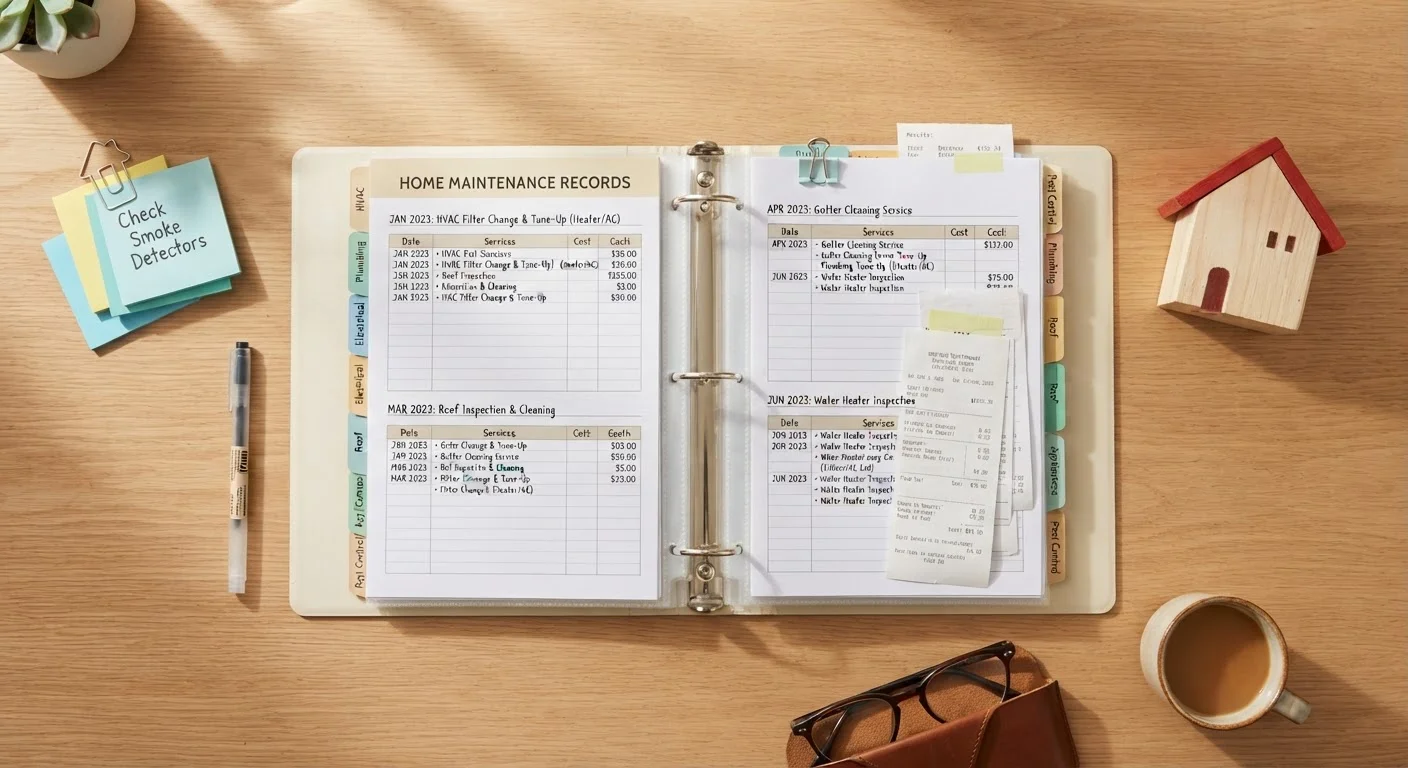
Photo credit: ArticlesHaven.net
A maintenance log helps homeowners track repairs, service dates, and warranty timelines. Here's how to set one up and sustain it.
Key Takeaways
- A home maintenance log tracks repairs, service dates, warranties, and contractor contacts in one place.
- Both digital spreadsheets and physical binders are effective - consistency matters more than format.
- Logging work immediately after it's done prevents gaps and keeps your records reliable.
- A complete log can support insurance claims, warranty disputes, and future resale documentation.
- Scheduling a quarterly review keeps the log current without requiring constant attention.
Why a Maintenance Log Is Worth the Setup Time
A home maintenance log is a running record of everything done to your property - repairs, inspections, appliance service, and system upgrades. It sounds administrative, but the practical payoff is significant. When an appliance breaks down, you can quickly confirm whether it's still under warranty. When you sell your home, documented service history signals to buyers that the property has been cared for. And when an insurance claim involves disputed repair history, a log gives you something concrete to reference.
The concept mirrors what a service history does for a vehicle. If you've ever tracked mileage and oil changes, the logic here is identical. Our vehicle maintenance log guide covers that parallel in more detail.
The barrier isn't complexity - it's consistency. Most homeowners start well and then let the log lapse. The steps below address both setup and the habits that keep it current.
What you will need
Setting Up and Sustaining Your Log
The tools you need are minimal. A spreadsheet, a binder, or a purpose-built home management app each work - your choice should reflect whatever you'll actually use. See the tool options below, then follow the steps to build and maintain your log.
Spreadsheet software (Google Sheets or Excel)
Create a searchable, sortable digital log that's accessible from multiple devices.
Physical binder with tabbed dividers
Store printed records, invoices, and manuals in a clearly organized offline format.
Home management app (e.g., HomeZada, Centriq)
Provides structured templates and reminder features specifically designed for home maintenance tracking.
Scanner or phone scanning app
Convert paper invoices and warranty documents into digital files for easy storage and retrieval.
Calendar app
Schedule recurring maintenance reminders tied to entries in your log.
Choose your format
Decide whether you'll maintain a digital log, a physical binder, or both. A spreadsheet gives you search and filter capabilities and can be shared with a co-owner or property manager. A physical binder keeps originals - warranties, receipts, appliance manuals - in one physical location. Many homeowners use a hybrid: a digital log for date tracking and notes, plus a labeled folder for paper originals.
Avoid overly complex tools early on. A simple two-tab spreadsheet (one tab for scheduled maintenance, one for completed work) is sufficient to start.
Define the categories you'll track
Structure your log around your home's major systems and components. Typical categories include:
- HVAC: filter changes, tune-ups, duct cleaning, refrigerant checks
- Plumbing: drain cleaning, water heater service, leak repairs
- Electrical: panel inspections, outlet replacements, smoke/CO detector tests
- Roofing and exterior: inspections, gutter cleaning, sealant applications
- Appliances: purchase date, model/serial numbers, warranty expiry, service visits
- Pest control: treatment dates, provider, products used
- Landscaping and outdoor: irrigation service, tree trimming, deck staining
Add a column for contractor name, contact information, and cost. This turns your log into a useful vendor reference over time.
Back-fill what you already know
Pull together any existing records: home inspection reports, closing documents, appliance manuals, and past service invoices. Enter each one into your log with as much detail as available. Estimate dates where exact records don't exist - a rough entry is more useful than no entry.
Note warranty expiration dates explicitly. Many homeowners miss out on warranty coverage simply because they don't know when the window closes.
Log work immediately after it's completed
The most common reason logs become unreliable is delayed entry. Set a habit: as soon as a repair is done or a service visit ends, open your log and record it before you do anything else. Note the date, what was done, who did it, the cost, and any follow-up items the contractor flagged.
If a contractor leaves a service summary or invoice, either scan it and attach it to the digital entry or file the original in the corresponding binder section.
Set recurring maintenance reminders
Use your calendar app to schedule routine tasks that recur on a predictable cycle - HVAC filter changes every 1-3 months, gutter cleaning each fall, water heater flushing annually. Link each reminder to the relevant log category so you know what to record when the task is done.
This transforms your log from a passive record into an active maintenance schedule, reducing the chance that routine tasks get skipped entirely.
Review and update the log quarterly
Block 20-30 minutes every quarter to review your log. Check for upcoming warranty expirations, overdue scheduled tasks, and any open follow-up items from previous service visits. Update contractor contact details if they've changed.
A quarterly review also lets you spot patterns - if the same system needs repeated attention, that's a signal worth investigating before it becomes a larger repair.
Start Small, Then Expand
You don't need a perfect system on day one. Begin with the two or three systems that cost the most to repair - typically HVAC, roofing, and water heater. Once logging those feels routine, add the remaining categories. A partial log maintained consistently is more useful than a comprehensive one that gets abandoned.
Don't Rely on Memory for Warranty Dates
Appliance and contractor warranties are easy to lose track of, especially when documentation is scattered. Record expiration dates explicitly in your log at the time of purchase or installation. A missed warranty window typically means absorbing the full cost of a repair that would otherwise have been covered.
For a broader look at organizing household records alongside your maintenance log - including warranty documents, utility contacts, and emergency numbers - see our guide on centralizing household information. And if you maintain outdoor equipment, the same logging discipline applies: our garden tool maintenance guide outlines a practical care routine for shovels, pruners, and similar gear.

Author
Articles Haven Editorial Contributor
Articles Haven Editorial Team is the collective byline for our editorial team and contributor network. Articles published under this byline or an editorial pen name are researched, written, and reviewed according to our editorial standards for clarity, consistency, and independence before publication.
View all articles →