
Flooring Options Side by Side: Hardwood, Laminate, LVP, and Tile
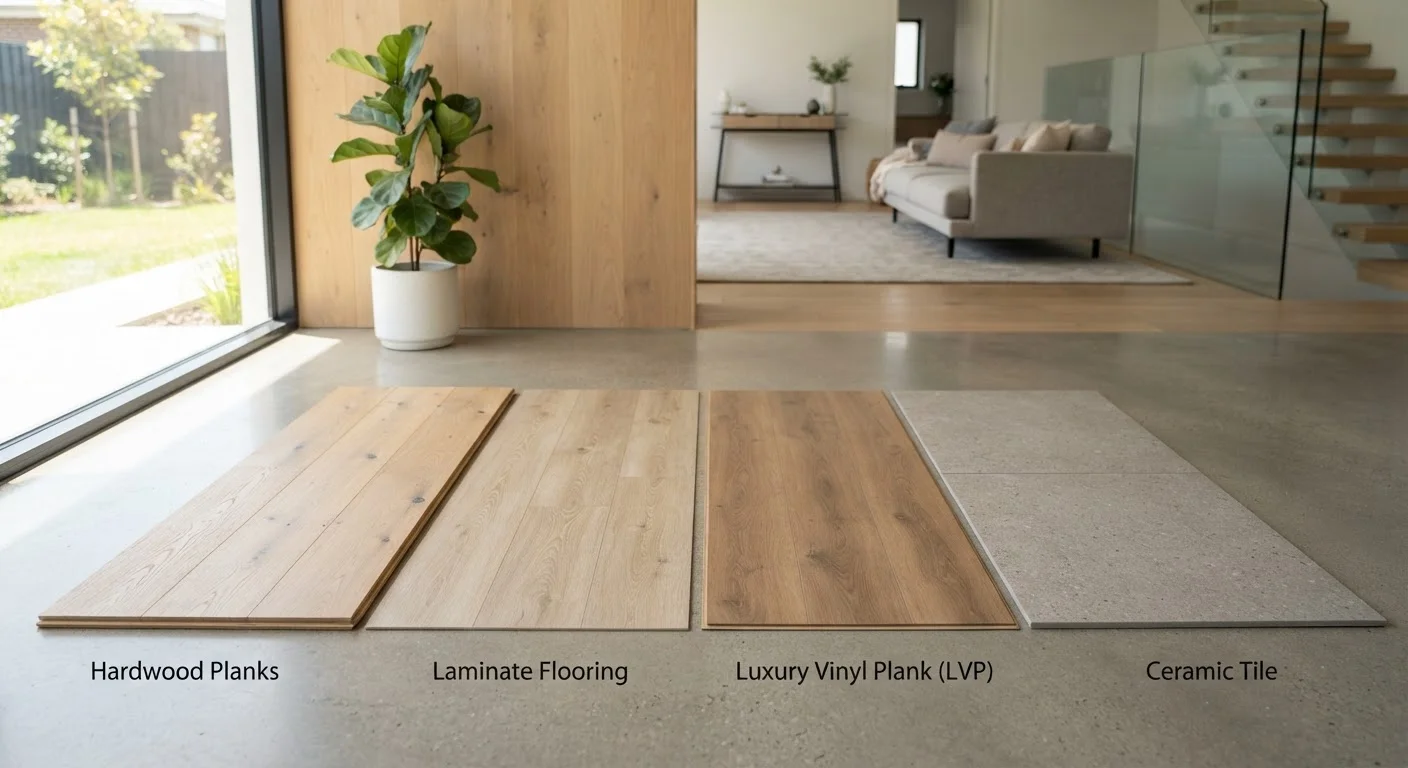
Photo credit: ArticlesHaven.net
In this article
A practical breakdown of popular flooring materials—comparing durability, moisture resistance, maintenance, and typical installation needs.
Key Takeaways
- Hardwood adds lasting value but is vulnerable to moisture and costs more to install professionally.
- Laminate mimics wood affordably but cannot be refinished and handles moisture poorly.
- Luxury vinyl plank (LVP) is waterproof, durable, and DIY-friendly, making it a versatile all-room option.
- Tile is the most moisture-resistant choice but requires more skilled installation and can feel cold underfoot.
- Room function, subfloor condition, and budget should drive your flooring decision more than aesthetics alone.
Why Flooring Material Choice Matters Beyond Looks
Flooring is one of the highest-impact decisions in a home improvement project - it affects comfort, maintenance load, resale appeal, and long-term cost. The four most common options - solid or engineered hardwood, laminate, luxury vinyl plank (LVP), and ceramic or porcelain tile - each occupy a different niche. Understanding their real-world trade-offs helps you match the right material to the right room rather than simply going with what looks good in a showroom.
This comparison focuses on durability, moisture resistance, maintenance demands, installation complexity, and general cost range. For similar side-by-side thinking applied to outdoor materials, see our exterior siding materials comparison or the patio and hardscape materials guide.
| Hardwood | Laminate | LVP | Tile | |
|---|---|---|---|---|
| Moisture Resistance | Low - avoid wet areas | Low - swells with water | High - fully waterproof | Very high - ideal for wet rooms |
| Durability | High; refinishable | Moderate; not refinishable | Moderate-high; not refinishable | Very high; grout is weaker point |
| Typical Cost Range | Higher upfront | Lower upfront | Mid-range | Mid to high with labor |
| DIY Friendliness | Low (solid); moderate (engineered) | High | High | Low to moderate |
| Comfort Underfoot | Warm and firm | Firm with slight give | Softer, warmer than tile | Hard and cold |
| Maintenance | Refinishable; needs care | Wipe clean; not repairable | Wipe clean; not repairable | Grout sealing required |
| Best Room Fit | Living rooms, bedrooms | Bedrooms, low-traffic areas | Kitchens, baths, basements | Bathrooms, kitchens, entries |
Hardwood: High Appeal, High Maintenance Commitment
Solid hardwood offers warmth and can be sanded and refinished multiple times over decades, which helps it hold or improve a home's value. Engineered hardwood - real wood veneer bonded over plywood - handles minor humidity swings better than solid planks but still cannot tolerate standing water.
Installation almost always requires a professional for solid hardwood, particularly because nailing or stapling to a subfloor and finishing in place demands precision. Engineered hardwood gives more DIY latitude with click-lock systems. Either way, hardwood is generally the most expensive flooring option upfront and is poorly suited to basements, bathrooms, or any room with high moisture exposure.
Acclimate Hardwood Before Installation
Solid and engineered hardwood should be left in the installation space for at least 48-72 hours before installation. This allows the planks to adjust to the room's humidity and temperature, reducing the risk of gaps or buckling after install. Skip this step and you risk boards moving after the job is done.
Laminate and LVP: Where the Two Diverge
Laminate is a photographic image layer over a fiberboard (HDF/MDF) core, sealed with a wear layer. It convincingly mimics wood grain or stone at a lower price point, installs quickly with a floating click system, and resists scratches reasonably well. Its critical weakness: water. The fiberboard core swells when exposed to moisture, and laminate cannot be refinished once the wear layer wears through.
Luxury vinyl plank (LVP) looks similar to laminate but uses a 100% synthetic core - typically rigid core (WPC or SPC) - that is genuinely waterproof throughout, not just water-resistant on the surface. LVP handles temperature swings and subfloor imperfections better than laminate, installs with the same floating method, and is comfortable underfoot with a softer feel than tile. Its main limitation is that it can be damaged by heavy concentrated loads (like piano legs) or sharp point impacts, and it cannot be refinished.
~80%
LVP share of vinyl flooring sales growth
Industry data from the North American flooring market indicates LVP has driven the majority of vinyl category growth over the past several years.
3-5×
Lifespan advantage of tile over laminate
Properly installed tile in low-impact areas can last 50 or more years; laminate wear layers typically perform reliably for 10-25 years depending on traffic.
Tile: The Wet-Room Standard With Trade-Offs
Ceramic and porcelain tile is unmatched for water resistance and longevity in bathrooms, kitchens, and entryways. Properly installed, tile can last for decades without replacement. Porcelain is denser and harder than ceramic, making it suitable for high-traffic areas and even outdoor use in some climates.
The trade-offs are real: tile is cold and hard underfoot, grout lines require periodic sealing and cleaning, and installation is the most labor-intensive of the four options here. Setting tile correctly - including proper subfloor preparation, backer board, mortar, and grouting - is a job most professionals handle faster and with better long-term results. DIY tile installation is possible for experienced homeowners, but mistakes in subfloor prep lead to cracked tiles and failed grout over time.
Subfloor Prep Is Non-Negotiable for Tile
Tile installed over a flexing or uneven subfloor will crack - sometimes within months. Most building codes and manufacturer warranties require a rigid backer (cement board or similar) under tile in wet areas. If you're considering DIY tile work over an older subfloor, have a professional assess the structure first. Skipping this step is one of the most common and costly flooring mistakes.
For broader home exterior material comparisons, the wood vs. composite decking guide applies similar trade-off thinking to outdoor surfaces. All flooring comparisons are also catalogued in our product comparisons hub.

Author
Articles Haven Editorial Contributor
Articles Haven Editorial Team is the collective byline for our editorial team and contributor network. Articles published under this byline or an editorial pen name are researched, written, and reviewed according to our editorial standards for clarity, consistency, and independence before publication.
View all articles →