
Lawn Weed Identification: A Visual Reference for Common US Weeds
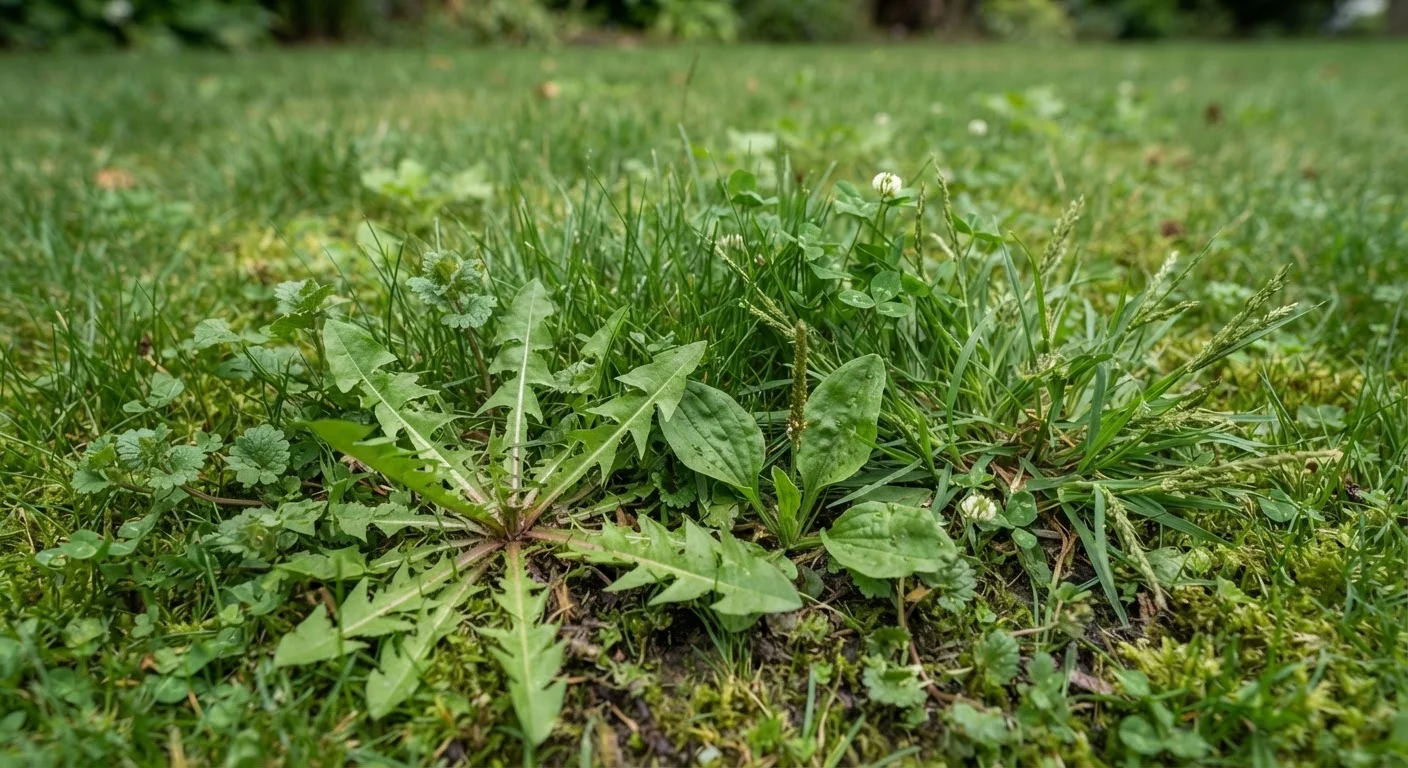
Photo credit: ArticlesHaven.net
In this article
Crabgrass, dandelion, clover, and more—a reference guide to identifying the most common lawn weeds across US regions by appearance and habit.
Why Weed Identification Matters Before You Act
Pulling out a weed without knowing what it is can be surprisingly counterproductive. Some weeds regrow from any root fragment left behind. Others spread by seed and pulling them while in bloom only scatters the problem further. Herbicides are formulated for specific weed types - broadleaf killers won't touch grassy weeds, and vice versa.
Getting the ID right also shapes your timing. Annual weeds need to be addressed before they set seed. Perennial weeds require strategies that attack the root system, not just the visible growth. This reference covers the most commonly encountered weeds across US lawns, grouped by growth habit so you can match the plant to the right approach.
For context on how your turf type affects weed pressure, see our guide to US lawn grass types.
| Weed types covered | Grassy, sedge, and broadleaf weeds |
| Most widespread US lawn weed | Dandelion (found in all 50 states) (USDA Plants Database) |
| Annual vs. perennial distinction | Critical - determines control strategy |
| Crabgrass germination threshold | Soil temperature ~55-60°F (University Cooperative Extension general guidance) |
| Nutsedge spreader | Underground tubers (nutlets) |
| White clover indicator | Often signals low soil nitrogen (General horticultural consensus) |
Common Grassy Weeds
Grassy weeds look like grass - which makes them harder to spot and harder to treat without harming the surrounding turf.
Annual weed
A weed that completes its entire life cycle - germination, growth, seed production, and death - within a single growing season. Control is most effective before seeds are set.
Perennial weed
A weed that regrows year after year from persistent root systems. Effective control typically requires eliminating the root, not just the above-ground growth.
Pre-emergent herbicide
A herbicide applied to soil before weed seeds germinate, forming a chemical barrier. It does not affect established weeds. Timing to soil temperature is critical.
Post-emergent herbicide
A herbicide applied to actively growing weeds after they have sprouted. Formulations are specific to broadleaf or grassy weeds - using the wrong type is ineffective.
Stolon
A horizontal stem that runs above ground from a parent plant and produces new roots and shoots at nodes. White clover spreads this way, making it hard to fully remove.
Basal rosette
A circular arrangement of leaves growing at ground level from a central root. Dandelion is a classic example. The shape allows plants to avoid mower blades effectively.
- Crabgrass (Digitaria spp.): A warm-season annual with coarse, wide blades that form a low, spreading rosette. It germinates in late spring when soil temps hit around 55-60°F and dies after the first frost. Its seed production is prolific - one plant can drop tens of thousands of seeds. Common across most of the continental US.
- Annual Bluegrass (Poa annua): Bright green and fine-textured, this cool-season annual thrives in moist, compacted areas. It goes to seed quickly - even when mowed - and is often the pale, clumpy growth visible in turf during spring and fall.
- Tall Fescue (as a weed): In fine-textured lawns, clumps of coarse tall fescue appear as a distinct, bunchy intrusion. It's a perennial and doesn't respond to most selective herbicides, so spot-treatment or hand removal is typically required.
- Nutsedge (Cyperus spp.): Technically a sedge, not a grass, but looks similar. Triangular stems and a bright yellow-green color (yellow nutsedge) or darker green (purple nutsedge) are the key identifiers. Spreads aggressively via underground tubers. Thrives in wet or poorly drained areas.
Lawn aeration can reduce compaction that favors annual bluegrass and nutsedge - worth considering if these appear repeatedly in the same spots.
Common Broadleaf Weeds
Broadleaf weeds are generally easier to distinguish from turf grass. Wide, flat leaves and varied flower shapes set them apart visually.
80+
Weed species commonly found in US lawns
According to Purdue University Extension research on turfgrass weed management.
150,000+
Seeds produced per crabgrass plant per season
Cited in multiple university cooperative extension publications on annual grassy weed control.
18 in
Typical dandelion taproot depth
General horticultural references indicate taproots can reach 6-18 inches, complicating hand removal.
- Dandelion (Taraxacum officinale): Deep taproot, toothed leaves in a basal rosette, and yellow flowers that mature into familiar white seed heads. A perennial found coast to coast. Leaves lie flat in mowed lawns. The taproot must be removed fully to prevent regrowth.
- White Clover (Trifolium repens): Three rounded leaflets (occasionally four) with a pale crescent marking and small white rounded flowers. A perennial that spreads by stolons. It fixes nitrogen and thrives in low-fertility lawns - its presence often signals nitrogen-deficient soil.
- Chickweed (Stellaria media): A cool-season annual with small oval leaves, a trailing growth habit, and tiny star-shaped white flowers. It favors moist, shaded areas and can form dense mats in early spring and fall.
- Plantain (Plantago spp.): Two common types - broadleaf plantain has wide oval leaves with parallel veins; buckhorn plantain has narrow, lance-shaped leaves. Both form rosettes with fibrous root systems and tolerate mowing well, making them persistent.
- Spurge (Euphorbia spp.): Low-growing summer annual with small oval leaves, often with a reddish center blotch. Stems exude a milky sap when broken. Spreads quickly in thin, dry, and hot lawn areas.
Regional Patterns and Seasonal Timing
Not every weed appears everywhere. Geography, climate, and turf type all influence which weeds are most likely to take hold in your lawn.
Weeds as Lawn Health Signals
Persistent weed pressure often points to an underlying lawn condition rather than bad luck. Compaction favors annual bluegrass and nutsedge. Poor drainage attracts dollarweed. Thin, underfed turf allows crabgrass to establish. Identifying the weed can help you diagnose what the lawn actually needs - whether that's improved drainage, aeration, overseeding, or adjusted fertilization.
- Southeast and Gulf Coast: Warm-season perennials like nutsedge, dollarweed (Hydrocotyle spp.), and Virginia buttonweed are prevalent due to heat and humidity. Dollarweed thrives in wet, overwatered lawns and has distinctive round, scalloped leaves.
- Pacific Northwest: Chickweed, moss, and creeping buttercup favor the cool, wet winters. Moss in particular indicates compaction, shade, or soil acidity rather than a traditional weed problem.
- Midwest and Northeast: Dandelion, plantain, and crabgrass are the most common complaints. Crabgrass pressure is highest in thin lawns with bare soil exposure in full sun.
- Southwest and Arid West: Spurge, puncturevine (Tribulus terrestris), and annual bluegrass appear in drier turfed areas. Puncturevine produces hard burrs that can cause injury and puncture bicycle tires.
Timing your weed management within a broader lawn care plan makes a real difference. The season-by-season lawn care calendar outlines when to target pre-emergent and post-emergent weed control by region.
Understanding what's native and what's invasive also matters - some plants that appear as lawn weeds in one context are ecologically valuable in others. Our article on native plants vs. exotic ornamentals provides useful context.

Author
Articles Haven Editorial Contributor
Articles Haven Editorial Team is the collective byline for our editorial team and contributor network. Articles published under this byline or an editorial pen name are researched, written, and reviewed according to our editorial standards for clarity, consistency, and independence before publication.
View all articles →