
Cold Frames and Row Covers: Extending Your Growing Season on a Budget
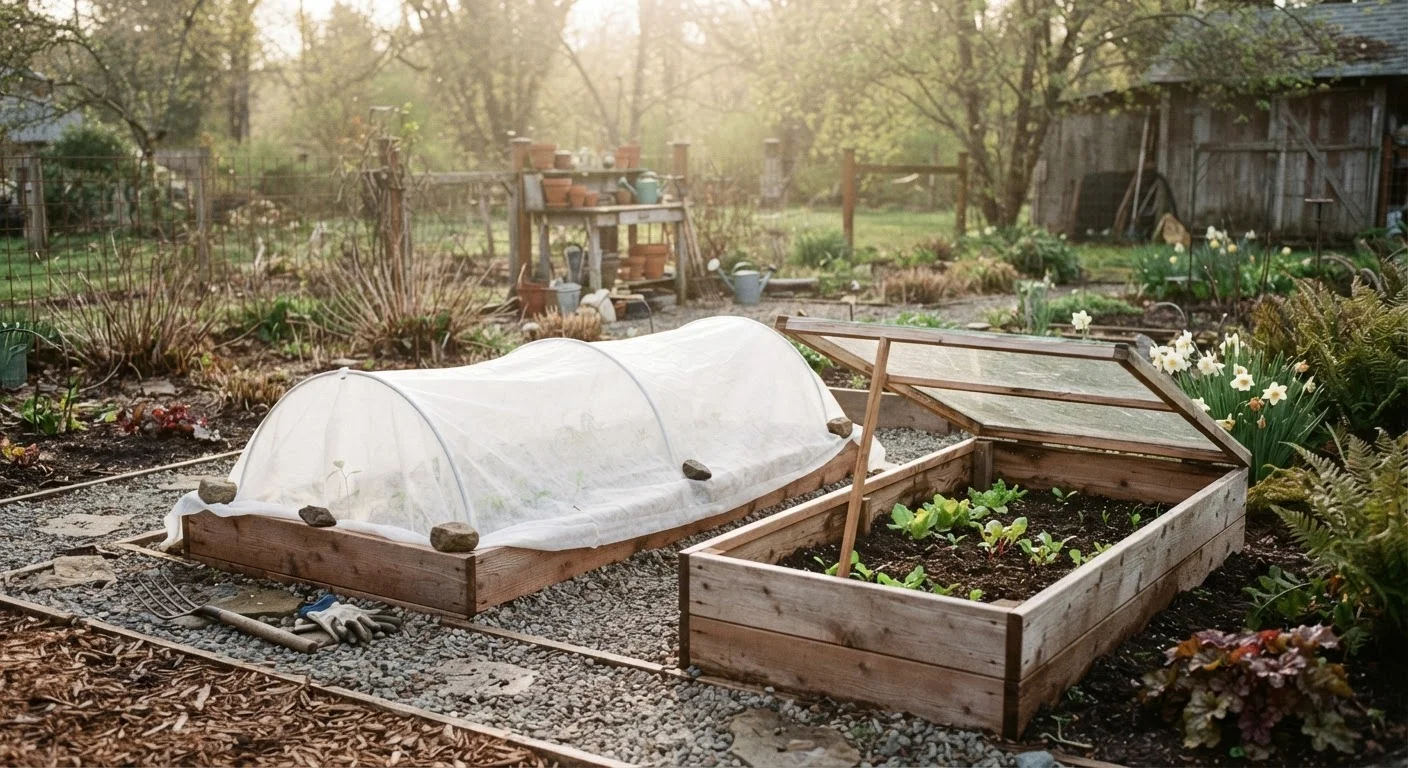
Photo credit: ArticlesHaven.net
In this article
Cold frames and row covers can add weeks to your growing season. Compare how each works, what they protect against, and how to set them up.
Key Takeaways
- Cold frames provide more protection and can add 4-6 weeks to both ends of the growing season.
- Row covers are lighter, more affordable, and easier to move across multiple beds quickly.
- Both tools protect against frost, but cold frames also buffer against wind and heavy rain.
- DIY cold frames can be built with salvaged windows and scrap lumber for minimal cost.
- Row covers come in different weights suited to light frost protection or pest exclusion.
What Each Tool Actually Does
Both cold frames and row covers create a slightly warmer microclimate around your plants, but the mechanisms and degree of protection differ considerably.
A cold frame is essentially a bottomless box - typically wood or rigid foam - topped with a transparent lid, often an old storm window or polycarbonate panel. It traps solar heat during the day and slows heat loss overnight, creating a stable environment that can stay 5-10°F warmer than the outside air, sometimes more on sunny days. Because the frame is rigid and enclosed, it also shields plants from wind and heavy rain.
A row cover (also called floating row cover or garden fabric) is a lightweight spun-bonded polypropylene fabric draped over plants or supported by wire hoops. It lets in light and moisture while trapping a thin layer of warmth. Depending on the fabric weight, row covers can protect against a few degrees of frost. The lightest grades are primarily used to block insects rather than cold.
If you're weighing whether either of these tools fits into a larger garden setup, see our garden layout planning guide for how to organize your beds around seasonal protection zones.
Side-by-Side Comparison
Here's how the two approaches stack up across the criteria that matter most to home gardeners.
| Cold Frame | Row Cover | |
|---|---|---|
| Frost protection | 5-10°F buffer, sometimes more | 2-5°F depending on fabric weight |
| Typical cost to start | $20-$200 (DIY to kit) | $15-$40 per roll |
| Setup effort | Moderate; build or assemble once | Low; drape and secure fabric |
| Mobility | Semi-permanent, movable with effort | Highly portable across beds |
| Pest exclusion | Yes, when lid is closed | Yes, with lightweight fabric grades |
| Ventilation required | Yes, on warm days | Minimal; fabric is breathable |
| Lifespan | Many years with basic upkeep | 2-4 seasons typically |
| Best seasonal use | Early spring and late fall/winter | Spring, fall, and in-season frost events |
One practical note: cold frames and row covers aren't mutually exclusive. Many gardeners use row covers for spring and fall frosts, then transition to cold frames for deep-winter crops like kale, spinach, and mâche.
Cost and DIY Options
Row covers are among the most affordable season-extension tools available. A roll of lightweight fabric wide enough for a standard 4-foot bed costs roughly $15-$40 depending on length and weight. Wire hoops to support it add a few dollars more. The fabric typically lasts 2-4 seasons with care.
Cold frames have a wider cost range. Purchased kits can run $60-$200 or more, but a DIY version built from salvaged lumber and an old storm window can cost under $20 - sometimes less if you're resourceful. Rigid foam insulation board is another cheap option for the sides. The lid is usually the key variable: glass transmits more light but breaks; twin-wall polycarbonate is lighter and more durable but costs more.
Salvage First, Buy Second
Before purchasing cold frame materials, check local salvage yards, Facebook Marketplace, or neighbors for old storm windows. A single salvaged window and four boards can produce a functional cold frame for next to nothing. Even cracked glass can be patched temporarily with greenhouse tape until a replacement is found.
For gardeners already doing container or small-space growing, cold frames pair naturally with that approach - see our container gardening guide for ideas on combining portable pots with seasonal protection.
What to Watch Out For
Neither tool is entirely hands-off.
Overheating Is a Real Risk
A closed cold frame in direct sun can reach damaging temperatures within an hour, even in early spring. If you can't vent it during the day, consider a shade cloth layer or an automatic vent opener. Row covers are less prone to this problem but should still be removed or opened during extended warm spells to prevent disease from moisture buildup.
Cold frames need venting on warm, sunny days. Temperatures inside can spike rapidly - even in early spring, a closed cold frame on a sunny afternoon can exceed 80°F, stressing or killing cool-season crops. Most gardeners prop the lid open during the day and close it at night. Automated vent openers (available for $20-$40) can help if you're not home during the day.
Row covers need to be secured at the edges so wind doesn't dislodge them. Rocks, sandbags, soil staples, or wooden boards all work. If you're using them for pest exclusion, they need to go on before pests arrive - draping fabric over an already-infested bed won't solve the problem.
If you're considering a more permanent or larger-scale structure, compare how these tools measure up against bigger investments in our greenhouse vs. grow tent comparison.
4-6 weeks
Season extension from a cold frame
University cooperative extension programs commonly cite cold frames as capable of adding roughly 4-6 weeks to both the spring and fall ends of the growing season in temperate climates.
70-85%
Light transmission through row cover
Most standard spun-bonded row cover fabrics transmit roughly 70-85% of available sunlight, allowing photosynthesis to continue normally under the fabric.

Author
Articles Haven Editorial Contributor
Articles Haven Editorial Team is the collective byline for our editorial team and contributor network. Articles published under this byline or an editorial pen name are researched, written, and reviewed according to our editorial standards for clarity, consistency, and independence before publication.
View all articles →