
Tracking Health Metrics: Benefits, Limitations, and When It Becomes Counterproductive
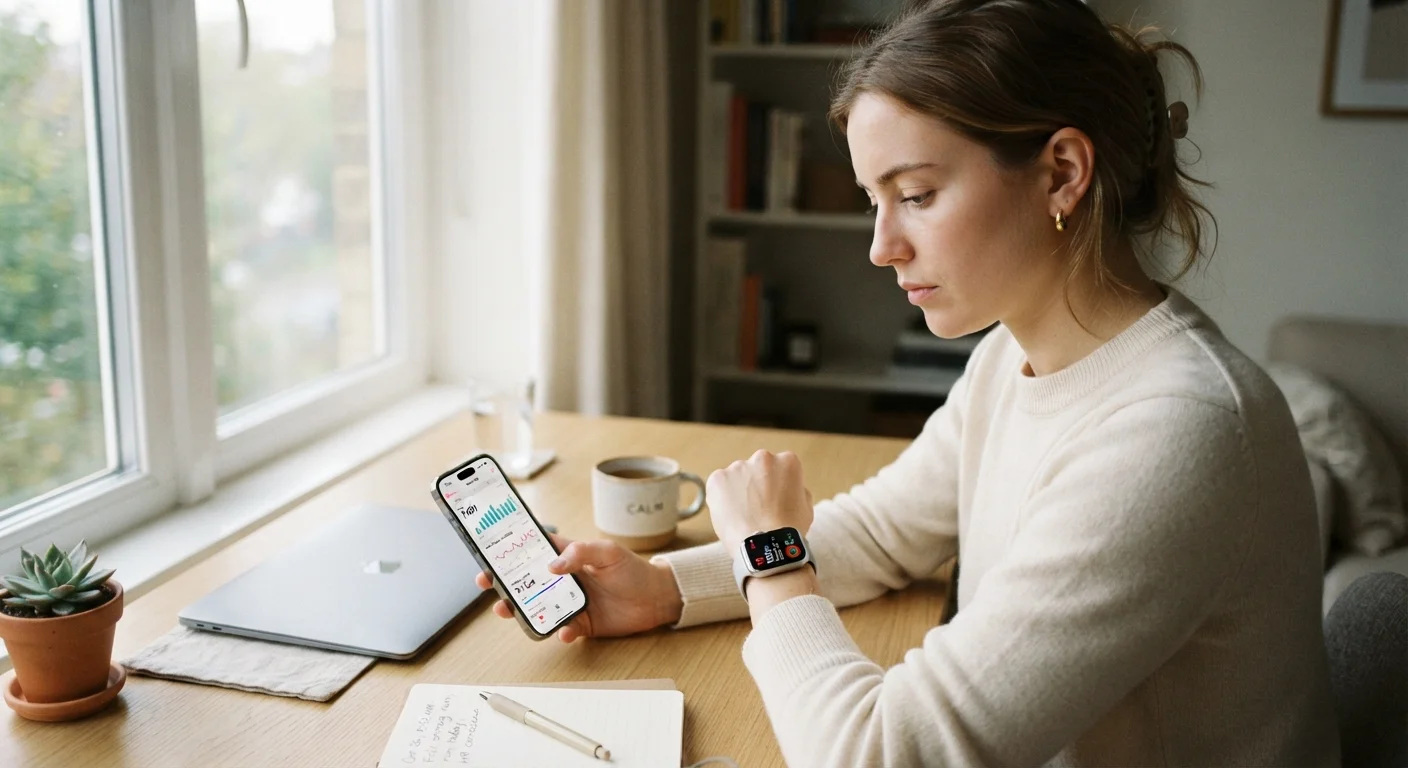
Photo credit: ArticlesHaven.net
In this article
Health tracking can motivate change — but it also has real downsides. Here's a balanced perspective.
Key Takeaways
- Health tracking can increase self-awareness and motivate consistent behavior change.
- Consumer-grade devices have meaningful accuracy limitations, especially for metrics like sleep stages and calorie burn.
- Obsessing over data can increase anxiety and undermine the habits tracking was meant to support.
- The value of tracking depends heavily on what you do with the data, not just collecting it.
- Consider periodic breaks from tracking to check whether it's helping or adding stress.
Increases awareness of daily patterns and behaviors
Seeing concrete data about steps, sleep, or heart rate often reveals habits people hadn't noticed, giving them a starting point for change.
Provides a behavioral feedback loop
Visible progress or shortfall can serve as a low-effort motivator - particularly useful in the early stages of building a new health habit.
Creates a longitudinal record for trend analysis
Tracking over weeks and months can surface gradual shifts in health patterns that are easy to miss without data.
Can support productive conversations with clinicians
Sharing tracked data - sleep quality, resting heart rate, activity levels - can give a healthcare provider useful context, particularly for managing chronic conditions.
Reinforces accountability without external pressure
Self-monitoring tends to support goal adherence in a way that doesn't require social comparison or external accountability partners.
Consumer devices have significant accuracy limitations
Calorie estimates, sleep stage detection, and blood oxygen readings from wearables are algorithmic approximations - not clinical measurements. Treating them as precise can lead to misplaced confidence or unnecessary concern.
Can increase health anxiety rather than reduce it
For some users, constant access to biometric data amplifies worry about normal variation. Research has documented wearable use correlating with heightened health-related anxiety in certain groups.
Metrics can become a source of stress or shame
Missing a step goal or logging a poor sleep score can feel like failure, particularly when the shortfall has a valid reason like rest or illness.
Risk of over-relying on data at the expense of intuition
Excessive focus on numbers can erode a person's ability to tune into how they actually feel - tiredness, hunger, or recovery needs may be overridden by what the app says.
Data can be misinterpreted without clinical context
An elevated resting heart rate or lower-than-usual blood oxygen reading may prompt unnecessary alarm when the variation is within normal range or explained by benign factors.
Tracking can shift from habit to rigid rule
What starts as a supportive structure can quietly become inflexible - making it harder to rest, travel, or deviate from routine without it feeling like a setback.
What Health Tracking Actually Measures
Wearables, apps, and manual logs now make it easy to track steps, heart rate, sleep duration, calories, blood oxygen levels, and more. These tools sit somewhere between consumer electronics and clinical instruments - useful but not medical-grade. Understanding that gap is the starting point for using them well.
Most consumer devices estimate rather than measure directly. Calorie burn calculations, for example, are based on algorithms that factor in your age, weight, and movement - not a direct metabolic reading. Sleep stage detection relies on movement and heart rate patterns rather than the brain activity readings used in clinical sleep studies. For general trends and behavioral feedback, this is often sufficient. For clinical decision-making, it is not.
Consumer Devices Are Not Medical-Grade Instruments
Most health tracking hardware sold to consumers is not FDA-cleared as a diagnostic tool. That doesn't make it useless - but it does mean the readings should be treated as estimates, not clinical measurements. If a reading concerns you, speak with a healthcare professional rather than acting on the device's output alone.
If you're comparing the hardware options available, fitness trackers and smartwatches differ meaningfully in what they prioritize - accuracy, battery life, and purpose are worth examining before you commit to a device.
The Real Benefits of Tracking
When used thoughtfully, health tracking can offer meaningful advantages - particularly around awareness and accountability.
Increases awareness of daily patterns and behaviors
Seeing concrete data about steps, sleep, or heart rate often reveals habits people hadn't noticed, giving them a starting point for change.
Provides a behavioral feedback loop
Visible progress or shortfall can serve as a low-effort motivator - particularly useful in the early stages of building a new health habit.
Creates a longitudinal record for trend analysis
Tracking over weeks and months can surface gradual shifts in health patterns that are easy to miss without data.
Can support productive conversations with clinicians
Sharing tracked data - sleep quality, resting heart rate, activity levels - can give a healthcare provider useful context, particularly for managing chronic conditions.
Reinforces accountability without external pressure
Self-monitoring tends to support goal adherence in a way that doesn't require social comparison or external accountability partners.
Perhaps the most consistent finding in behavioral research is that measurement itself influences behavior. Seeing a step count that's lower than expected can be a low-pressure nudge to take a walk. Spotting a pattern of poor sleep during high-stress weeks can prompt earlier bedtimes. That kind of feedback loop - when it doesn't become anxiety-inducing - is genuinely valuable.
Tracking also creates a record over time. Many people find it difficult to accurately self-report activity levels, sleep, or diet without data. A running log of trends can help you notice gradual changes that would otherwise go undetected, and it gives a more reliable basis for conversations with a healthcare provider.
For people building new routines, the data can reinforce the value of incremental progress - small gains become visible in a way they often aren't when relying on memory or perception alone.
The Limitations and Risks Worth Knowing
The downsides of health tracking are real and, in some cases, underappreciated.
Consumer devices have significant accuracy limitations
Calorie estimates, sleep stage detection, and blood oxygen readings from wearables are algorithmic approximations - not clinical measurements. Treating them as precise can lead to misplaced confidence or unnecessary concern.
Can increase health anxiety rather than reduce it
For some users, constant access to biometric data amplifies worry about normal variation. Research has documented wearable use correlating with heightened health-related anxiety in certain groups.
Metrics can become a source of stress or shame
Missing a step goal or logging a poor sleep score can feel like failure, particularly when the shortfall has a valid reason like rest or illness.
Risk of over-relying on data at the expense of intuition
Excessive focus on numbers can erode a person's ability to tune into how they actually feel - tiredness, hunger, or recovery needs may be overridden by what the app says.
Data can be misinterpreted without clinical context
An elevated resting heart rate or lower-than-usual blood oxygen reading may prompt unnecessary alarm when the variation is within normal range or explained by benign factors.
Tracking can shift from habit to rigid rule
What starts as a supportive structure can quietly become inflexible - making it harder to rest, travel, or deviate from routine without it feeling like a setback.
Beyond accuracy limitations, there's a subtler risk: treating a number as more meaningful than it is. A resting heart rate reading that's one beat per minute higher than usual is not necessarily a medical signal - but for some users, it becomes a source of disproportionate worry. Research has documented cases where wearable use correlates with increased health anxiety rather than reduced it.
There's also the question of when tracking shifts from motivating to controlling. A habit that started as a supportive tool can quietly become a rigid rule - missing a step goal can feel like failure even when the reason was rest or recovery. Recognizing when a wellness habit has become restrictive is an important and often overlooked skill.
~1 in 5
US adults regularly use a health wearable
Pew Research Center surveys have consistently found roughly one in five American adults report using a smartwatch or fitness tracker regularly.
~27%
Calorie estimation error margin in wearables
Studies published in peer-reviewed journals have found consumer wearables can over- or underestimate energy expenditure by roughly 20-30% depending on activity type and device.
Modest
Evidence base for wearables improving clinical outcomes
While behavioral benefits of self-monitoring are well-supported, research on whether wearables improve hard clinical outcomes (like reduced hospitalizations) remains mixed and limited in scope.
Unlike journaling - which tends to be qualitative and reflective - health tracking is quantitative and external. That distinction matters: some people thrive with numbers, others find reflective wellness practices like journaling more sustainable and less stress-inducing. Neither approach is universally superior.
Using Tracking Productively - and Knowing When to Stop
The most important variable in health tracking is not the device - it's what you do with the information. A few principles tend to separate productive tracking from counterproductive tracking:
- Set a purpose before you start. Tracking for its own sake tends to generate data without direction. Knowing whether you're monitoring sleep quality, activity consistency, or recovery gives the numbers context.
- Treat trends over single readings. One anomalous night or one low-step day is rarely meaningful. Week-over-week patterns are where actionable insight tends to live.
- Notice how it makes you feel. If checking your data has become a source of stress rather than useful feedback, that's worth taking seriously. Periodic breaks from tracking can help reset the relationship with the data.
- Use it as a conversation tool, not a diagnosis. Sharing tracked data with a clinician can be genuinely useful context. But self-diagnosing based on consumer device readings is a different matter - one that warrants caution.
For those exploring the broader landscape of digital health tools, mental health apps face similar trade-offs in terms of what they can realistically offer versus what users sometimes expect.
This article is for general informational purposes only and does not constitute medical advice. Always consult a qualified healthcare professional for personal health decisions, symptom evaluation, or concerns about any metrics you are tracking.

Author
Articles Haven Editorial Contributor
Articles Haven Editorial Team is the collective byline for our editorial team and contributor network. Articles published under this byline or an editorial pen name are researched, written, and reviewed according to our editorial standards for clarity, consistency, and independence before publication.
View all articles →