
Mental Health Apps: What They Can and Cannot Realistically Do
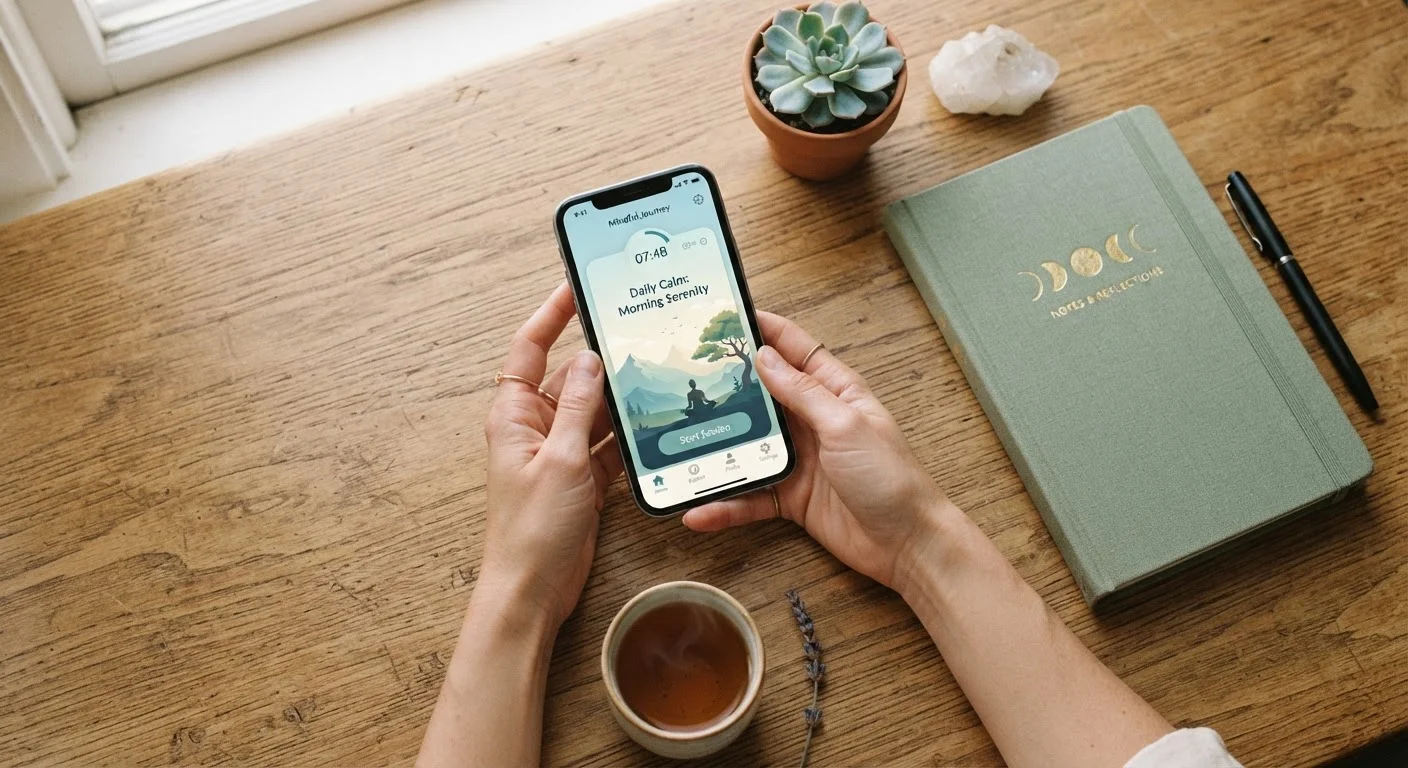
Photo credit: ArticlesHaven.net
In this article
Digital wellness tools have grown rapidly. Here's an honest look at their documented benefits, their limitations, and how they fit into broader self-care.
Key Takeaways
- Mental health apps can support mood awareness and low-level stress management, but are not a substitute for clinical care.
- Research backing varies significantly across app categories - guided meditation has stronger evidence than some newer tools.
- Privacy and data practices differ widely; reviewing an app's data policy before use is worthwhile.
- Apps work best as a complement to other wellness strategies, not as a standalone solution.
- People experiencing serious symptoms should consult a qualified mental health professional, not rely on an app.
Low barrier to entry for starting wellness habits
Apps remove logistical friction - no appointment needed, available at any hour. For someone new to mindfulness or mood tracking, this accessibility can make starting a habit significantly easier.
Guided mindfulness has a reasonable evidence base
Mindfulness-based practices, including app-delivered formats, have been examined in peer-reviewed literature for stress and mild anxiety reduction. Evidence quality varies, but this category has more support than most.
Mood tracking can reveal patterns over time
Logging daily mood, sleep, and energy consistently helps some users notice triggers and cycles they hadn't recognized. This data can also be useful context to share with a therapist or doctor.
Useful bridge during gaps in professional care
Waitlists for mental health services can be long. A structured app may help someone manage low-level symptoms while they wait for an appointment, provided it doesn't become a substitute for care.
Lower cost than ongoing clinical care
While therapy involves significant ongoing cost, many mental health apps are free or low-cost. For mild stress management or sleep support, this cost difference is meaningful for many households.
Most apps lack rigorous clinical validation
The vast majority of consumer mental health apps have not been tested in controlled clinical trials specific to their product. Marketing claims often outpace the supporting evidence.
Not suitable for clinical mental health conditions
Apps are not equipped to treat depression, anxiety disorders, PTSD, or other diagnosable conditions. Using them as a primary intervention for serious symptoms can delay necessary professional care.
Data privacy practices are inconsistent and often unclear
Mental health data is particularly sensitive, yet many apps share or monetize user data in ways that are buried in lengthy terms of service. Users may not realize what they're consenting to.
Engagement tends to drop off quickly
Research on digital health tools consistently finds that user engagement declines sharply after the first few weeks. An app that isn't used provides no benefit, regardless of its features.
No relational or therapeutic depth
A core mechanism of effective therapy is the therapeutic relationship - built on trust, skilled observation, and dynamic dialogue. No app replicates this, and some concerns genuinely require that human element.
Can reinforce avoidance of professional help
The feeling of 'doing something' via an app can reduce urgency around seeking actual care. This substitution effect is a documented concern among mental health practitioners.
What Mental Health Apps Actually Offer
The mental health app market has grown into a crowded space, covering everything from guided breathing exercises and sleep sounds to mood journals and cognitive behavioral therapy (CBT)-style prompts. Understanding what these tools are genuinely designed to do helps set realistic expectations from the start.
Most consumer-facing apps fall into a few broad categories: mindfulness and meditation tools, mood and symptom trackers, CBT-based self-help platforms, and peer support or coaching services. Each targets a different slice of mental wellness, and their usefulness depends heavily on what you're trying to address.
For context on how digital tools compare more broadly with analog alternatives, journaling as a wellness practice offers a grounded comparison of written self-reflection and its own documented limits.
Low barrier to entry for starting wellness habits
Apps remove logistical friction - no appointment needed, available at any hour. For someone new to mindfulness or mood tracking, this accessibility can make starting a habit significantly easier.
Guided mindfulness has a reasonable evidence base
Mindfulness-based practices, including app-delivered formats, have been examined in peer-reviewed literature for stress and mild anxiety reduction. Evidence quality varies, but this category has more support than most.
Mood tracking can reveal patterns over time
Logging daily mood, sleep, and energy consistently helps some users notice triggers and cycles they hadn't recognized. This data can also be useful context to share with a therapist or doctor.
Useful bridge during gaps in professional care
Waitlists for mental health services can be long. A structured app may help someone manage low-level symptoms while they wait for an appointment, provided it doesn't become a substitute for care.
Lower cost than ongoing clinical care
While therapy involves significant ongoing cost, many mental health apps are free or low-cost. For mild stress management or sleep support, this cost difference is meaningful for many households.
Where Apps Fall Short
The limitations of mental health apps are just as important to understand as their benefits - especially for anyone navigating more than everyday stress.
A persistent concern among researchers and clinicians is that the app marketplace moves far faster than evidence reviews can keep pace with. Many apps make implicit claims of therapeutic benefit without published clinical trials supporting those claims for their specific product. Certification or listing on an app store does not equal clinical endorsement.
There's also a real risk of substitution - using an app as a reason to delay or avoid professional help when professional help is what's actually needed. This dynamic is worth examining alongside common pitfalls in self-care culture that can quietly work against genuine mental wellness.
Most apps lack rigorous clinical validation
The vast majority of consumer mental health apps have not been tested in controlled clinical trials specific to their product. Marketing claims often outpace the supporting evidence.
Not suitable for clinical mental health conditions
Apps are not equipped to treat depression, anxiety disorders, PTSD, or other diagnosable conditions. Using them as a primary intervention for serious symptoms can delay necessary professional care.
Data privacy practices are inconsistent and often unclear
Mental health data is particularly sensitive, yet many apps share or monetize user data in ways that are buried in lengthy terms of service. Users may not realize what they're consenting to.
Engagement tends to drop off quickly
Research on digital health tools consistently finds that user engagement declines sharply after the first few weeks. An app that isn't used provides no benefit, regardless of its features.
No relational or therapeutic depth
A core mechanism of effective therapy is the therapeutic relationship - built on trust, skilled observation, and dynamic dialogue. No app replicates this, and some concerns genuinely require that human element.
Can reinforce avoidance of professional help
The feeling of 'doing something' via an app can reduce urgency around seeking actual care. This substitution effect is a documented concern among mental health practitioners.
This article is for general informational purposes only and does not constitute medical or mental health advice. If you are experiencing significant psychological distress, please consult a qualified mental health professional.
Evidence, Privacy, and What to Look For
Not all apps are created equal, and a few practical filters help separate useful tools from noise.
10,000+
Mental health apps available in major app stores
Estimates from health technology researchers suggest tens of thousands of mental wellness apps exist, yet only a small fraction have been independently evaluated for efficacy.
~25%
Users still active after 30 days
Digital health engagement studies broadly find that user retention in wellness apps drops significantly within the first month, limiting long-term impact for many.
Look for published research: Some app categories - particularly mindfulness-based approaches - have a more established evidence base than others. Apps that reference peer-reviewed studies or have been evaluated in clinical contexts are generally more credible than those relying solely on user testimonials.
Review the privacy policy: Mental health data is sensitive. Consider what data the app collects, whether it is sold to third parties, and how it handles account deletion. This is an area where tracking health metrics more broadly raises similar questions about data ownership and unintended consequences of self-monitoring.
Match the tool to the need: A sleep-focused app is unlikely to address workplace anxiety. Using structured mental wellness check-ins can help you identify which category of support you actually need before downloading the next trending app.
Apps Are Not Crisis Resources
Mental health apps are general wellness tools and are not designed for crisis situations. If you or someone you know is experiencing a mental health emergency, contact a crisis line such as the 988 Suicide and Crisis Lifeline (call or text 988 in the US) or go to the nearest emergency room. Do not rely on an app in an urgent situation.
Apps sit at one end of a broader support spectrum. For a sense of how mental wellness needs can shift over time and life stage, mental wellness across the lifespan maps how appropriate tools and strategies evolve with age.

Author
Articles Haven Editorial Contributor
Articles Haven Editorial Team is the collective byline for our editorial team and contributor network. Articles published under this byline or an editorial pen name are researched, written, and reviewed according to our editorial standards for clarity, consistency, and independence before publication.
View all articles →