
When Healthy Habits Become Rigid Rules: Recognizing the Line
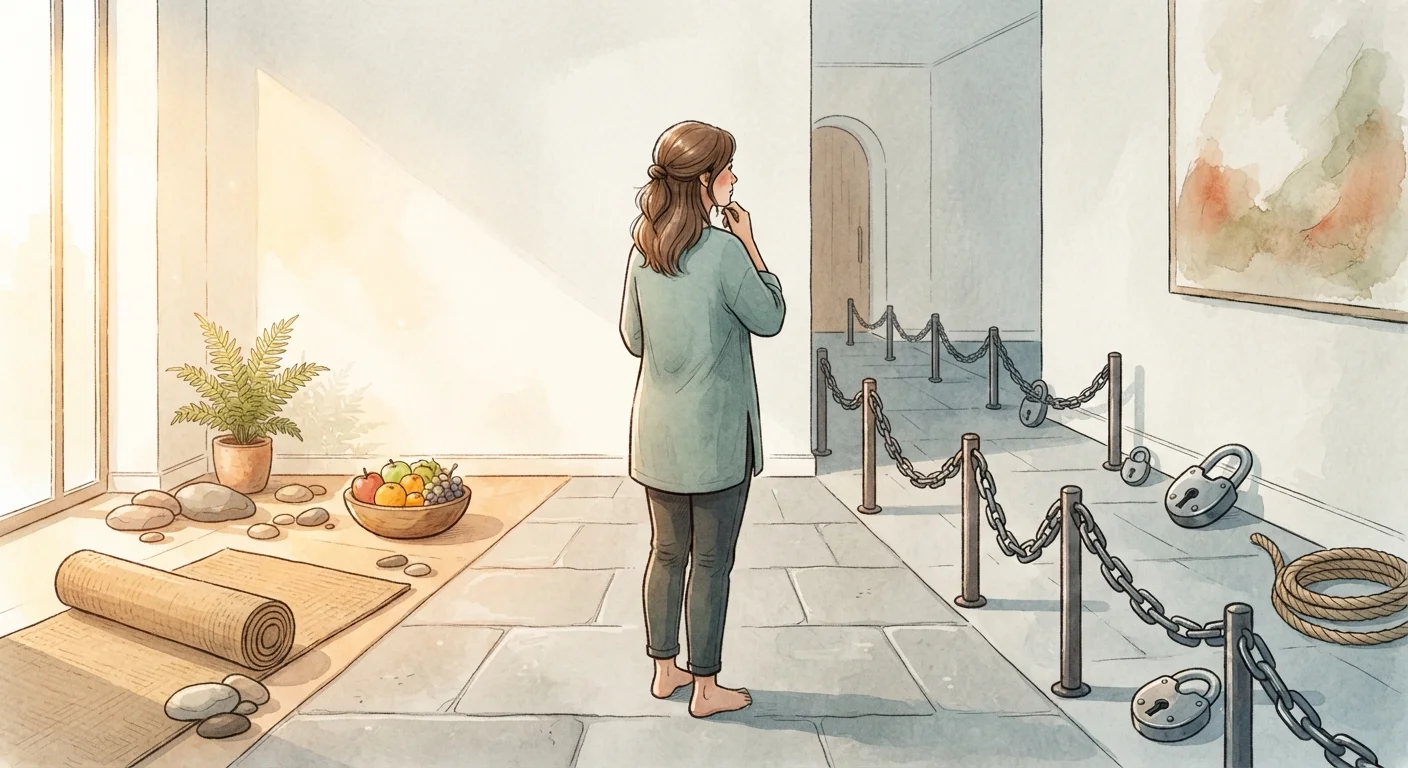
Photo credit: ArticlesHaven.net
In this article
How wellness routines can shift from supportive to restrictive — and how to keep a healthy relationship with them.
Key Takeaways
- Healthy habits are flexible; rigid rules cause distress when they can't be followed.
- The emotional response to 'breaking' a routine is often a stronger signal than the behavior itself.
- Social withdrawal to protect a wellness routine is a notable warning sign.
- Rigidity can develop gradually from otherwise reasonable starting points.
- Consulting a qualified healthcare professional is the right step if routines feel uncontrollable.
What Separates a Habit from a Rule
Habits are behavioral shortcuts - routines the brain automates so you don't have to make the same decision repeatedly. A morning walk, a consistent sleep schedule, a preference for vegetables: these work because they lower the friction of making good choices. They support your life without dominating it.
Rules operate differently. They carry a moral charge. Breaking a rule doesn't just mean skipping a workout - it means you've failed, been weak, or fallen short. That emotional weight is the distinguishing feature, not the behavior itself.
Behavioral science research on habit formation consistently shows that sustainable habits are adaptable - they bend around life events rather than demanding life events bend around them. When a behavior stops flexing, that's worth noticing.
~1%
Estimated prevalence of orthorexia-like symptoms
Research estimates vary widely, but some studies suggest clinically significant preoccupation with 'pure' eating affects roughly 1% of the general population, with higher rates in certain groups such as athletes and healthcare workers.
3x
Higher burnout risk with all-or-nothing exercise mindsets
Studies on exercise adherence suggest that rigid, inflexible exercise approaches are associated with substantially higher dropout rates than routines allowing for planned variation and recovery.
Warning Signs the Line Has Been Crossed
Rigidity tends to arrive gradually, which makes it easy to miss in yourself. A few patterns are worth watching for:
- Distress disproportionate to the disruption. Missing one workout is not a crisis. If it feels like one - if the anxiety or guilt lingers for hours - the routine may be carrying more psychological weight than is healthy.
- Social withdrawal. Declining dinner invitations because the restaurant doesn't fit your eating rules, or skipping events because they conflict with your exercise window, signals that the routine is limiting rather than enabling your life.
- All-or-nothing thinking. Believing that one 'off' day invalidates a week of consistent effort, or that any deviation means starting over entirely, reflects a rule-based rather than habit-based mindset.
- Hiding or defending the behavior. If you find yourself concealing how strictly you follow a routine - or feeling defensive when it's gently questioned - that's a useful signal to examine.
These patterns can emerge in exercise, eating, sleep hygiene, supplementation, or virtually any wellness domain. The specific behavior matters less than the emotional architecture around it. For more on how wellness culture can quietly work against mental health, see common self-care pitfalls.
Try the 'Disruption Test'
Ask yourself: if something outside my control prevented this routine today, how would I actually feel in an hour? Mild disappointment is a normal response to missing something you value. Prolonged guilt, anger, or anxiety that affects the rest of your day is a signal worth sitting with - and potentially discussing with a professional.
Why This Happens - and Why It's Not a Character Flaw
Rigidity around health behaviors often develops from genuinely good intentions. Someone recovering from a health scare may find that strict routines gave them a sense of control at a frightening time. Someone who struggled with inconsistency may have overcorrected into inflexibility. The brain, once it latches onto a behavior as identity-defining, can treat deviations as threats.
Environmental cues and habit formation also play a role: when surroundings are designed entirely around a routine, the routine can begin to feel non-negotiable in ways that have more to do with conditioning than conscious choice.
Understanding how this happens reduces shame and makes it easier to take an honest look. Rigidity is not a sign of weakness or excessive dedication - it's a pattern that can develop in anyone who cares about their health.
Context Matters for Everyone
The same behavior can be appropriate for one person and problematic for another depending on their history, mental health, and life circumstances. Someone managing a specific medical condition may legitimately need stricter routines than the general population. This is one reason why a qualified professional - not general articles - should guide decisions about your personal health behaviors.
Recalibrating: What Flexibility Actually Looks Like
Flexible wellness routines have a few recognizable qualities. They can tolerate interruption without a recovery spiral. They accommodate social eating, travel, illness, or a particularly demanding week at work. They feel like choices - not obligations with steep emotional penalties attached.
Recalibrating doesn't mean abandoning discipline. It means building in what behavioral researchers sometimes call 'implementation flexibility' - knowing in advance how you'll adapt when circumstances change, rather than treating any deviation as failure. Protecting your energy through healthy boundaries is a related concept: structure should protect your wellbeing, not become another source of pressure.
If you recognize patterns of rigidity in your own routines, a conversation with a physician, psychologist, or registered dietitian is the most appropriate next step. They can help evaluate whether what you're experiencing reflects a clinical concern or a habit pattern that responds to self-guided adjustment. General articles like this one are educational context - not a substitute for professional assessment.
This article is for general informational purposes only and does not constitute medical or mental health advice. If you have concerns about your health behaviors or their impact on your wellbeing, please consult a qualified healthcare professional.
Frequently Asked Questions

Author
Articles Haven Editorial Contributor
Articles Haven Editorial Team is the collective byline for our editorial team and contributor network. Articles published under this byline or an editorial pen name are researched, written, and reviewed according to our editorial standards for clarity, consistency, and independence before publication.
View all articles →