
Comparing Fitness Trackers and Smartwatches: Feature Overlap and Where They Diverge
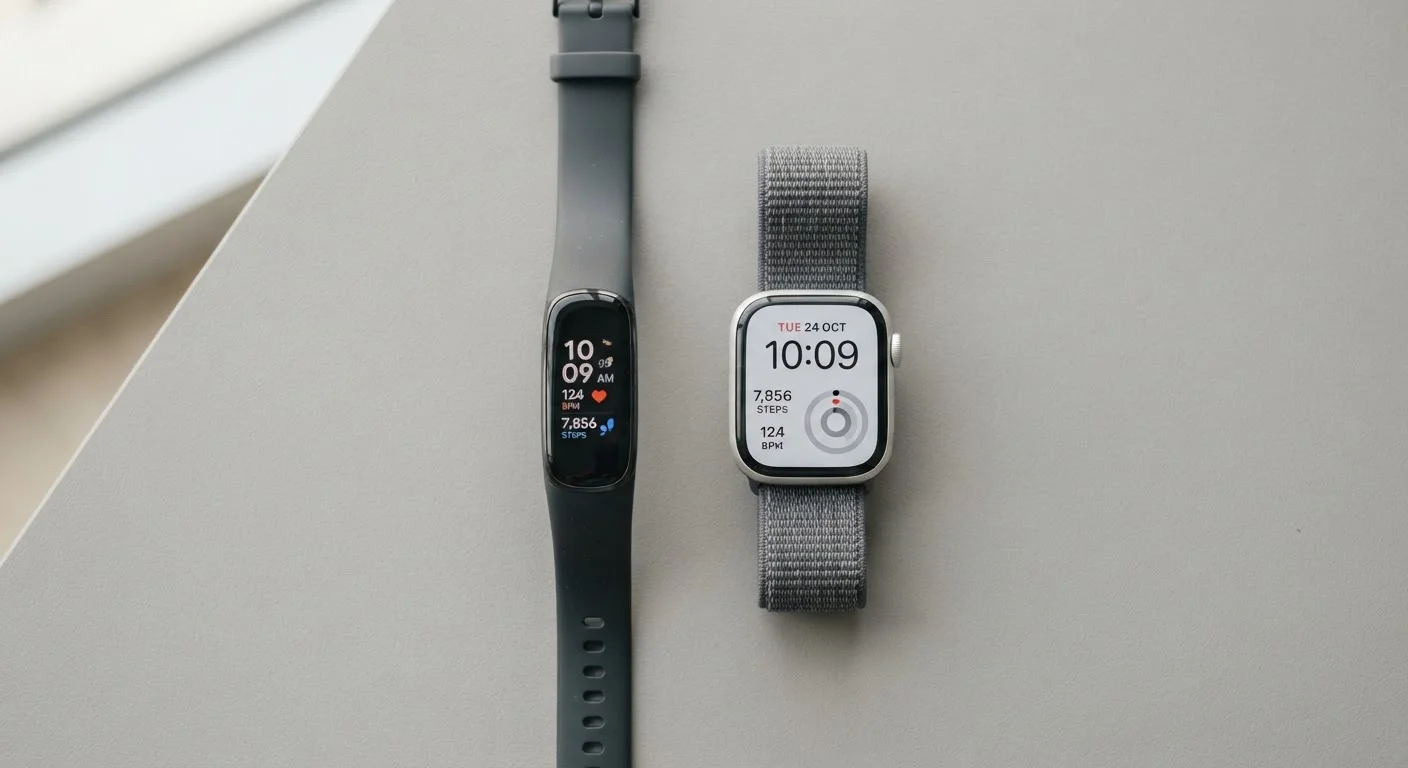
Photo credit: ArticlesHaven.net
In this article
Fitness trackers focus on health data; smartwatches do more—but more isn't always better. Compare both on accuracy, battery, and purpose.
Key Takeaways
- Fitness trackers excel at health metrics like heart rate, sleep, and step accuracy while staying lighter and cheaper.
- Smartwatches add notifications, apps, and media controls but typically have shorter battery life.
- Both categories now overlap significantly - the choice often comes down to purpose and priorities.
- Battery life is one of the clearest practical differences: trackers often last 5-14 days, smartwatches 1-3 days.
- Neither device replaces clinical-grade health monitoring - they provide estimates, not medical readings.
Where They Overlap: More Than You Might Expect
Walk into any electronics section and the line between fitness trackers and smartwatches has blurred considerably. Both now commonly offer heart rate monitoring, step counting, sleep tracking, GPS (on higher-end models), and smartphone notifications. That shared ground is real - and it's what makes the choice genuinely tricky for most shoppers.
The overlap matters because it means neither category has a monopoly on health data anymore. A mid-range smartwatch can track your VO2 max estimate and sleep stages just as a dedicated tracker does, while many modern fitness trackers surface calendar alerts and basic message previews. Before assuming one category is simply "more" than the other, it helps to understand where each still pulls apart. See our product comparison checklist for a framework to evaluate wearables beyond just the spec sheet.
| Criterion | Fitness Tracker | Smartwatch |
|---|---|---|
| Primary focus | Health & activity data | Connectivity & versatility |
| Typical battery life | 5-14 days | 1-3 days |
| Third-party apps | Limited or none | Broad app ecosystem |
| Notifications | Basic alerts only | Full message & call handling |
| Form factor | Slim, lightweight band | Larger display, heavier |
| Price range (general) | Lower to mid-range | Mid to premium |
| Sleep tracking comfort | Generally more comfortable | Depends on model size |
| Contactless payments | Rare | Common on mid/high models |
Where They Diverge: The Real Trade-Offs
Battery life is the most concrete dividing line. Fitness trackers routinely last between five and fourteen days on a charge; smartwatches typically need charging every one to three days, sometimes daily with always-on displays or heavy GPS use. If charging friction bothers you - or you want uninterrupted sleep tracking - this alone can tip the decision.
Processing power and apps separate them next. Smartwatches run operating systems (like Wear OS or watchOS) that support third-party apps, streaming controls, contactless payments, and even standalone cellular connectivity on some models. Fitness trackers are largely closed systems focused on their companion app ecosystem.
Sensor depth versus breadth is subtler. Some fitness trackers prioritize refining a narrower set of metrics - skin temperature variation, continuous SpO2 readings, or menstrual cycle tracking - with more consistent accuracy than a smartwatch trying to do everything. That said, both categories deliver estimates rather than clinical measurements. Health tracking has real limitations worth understanding before relying on any wrist-based data for health decisions.
5-14 days
Typical fitness tracker battery life
Most fitness trackers on the market advertise significantly longer battery life than smartwatches, often citing 5 to 14 days of typical use.
1-3 days
Typical smartwatch battery life
Smartwatches with always-on displays, GPS, and app activity commonly need charging every one to three days under regular use.
~30%
Wearable owners who cite battery life as a key concern
Industry surveys on wearable satisfaction consistently rank battery life among the top three pain points for smartwatch users specifically.
Form factor and comfort round out the divergence. Fitness trackers are generally lighter and slimmer, which some wearers prefer for overnight use or workouts. Smartwatches tend to have larger displays suited to glancing at maps or reading messages - but that bulk adds up over a full day.
Making the Right Call for Your Lifestyle
The honest answer is that neither device is objectively superior - the better fit depends on what you actually want from your wrist. If your primary goal is building consistent healthy habits and monitoring activity data over time, a fitness tracker keeps that focus clear and charged. Research broadly supports the idea that consistent daily movement matters more than any single metric, and a tracker that surfaces that data without distraction can reinforce that pattern.
If you want a device that reduces how often you reach for your phone, handles quick communications, and happens to also log your workouts, a smartwatch earns its complexity. The feature set makes more sense for people whose days require staying connected.
A Note on Health Metric Accuracy
Neither fitness trackers nor smartwatches produce clinical-grade measurements. Heart rate, SpO2, and stress estimates from wrist-worn sensors carry inherent limitations - skin tone, fit, movement, and sensor quality all affect readings. Both categories have improved meaningfully over time, but the data is best treated as a general trend indicator rather than a precise health measurement. Always consult a healthcare professional if you have concerns about specific health metrics.
A few practical questions worth asking before you decide: How often are you willing to charge a device? Do you wear it at night for sleep tracking? Do you need standalone GPS or is your phone always nearby? Do you want to reply to messages from your wrist? Your answers will point you toward one category more reliably than any feature list. For a broader look at how tracked data fits into a healthy routine, see our piece on structured exercise versus incidental activity.
This article is for general informational purposes only and does not constitute medical advice. Wrist-worn health metrics are estimates and should not be used to diagnose or manage any health condition. Consult a qualified healthcare professional for personal health guidance.

Author
Articles Haven Editorial Contributor
Articles Haven Editorial Team is the collective byline for our editorial team and contributor network. Articles published under this byline or an editorial pen name are researched, written, and reviewed according to our editorial standards for clarity, consistency, and independence before publication.
View all articles →