
What a Vehicle History Report Actually Tells You
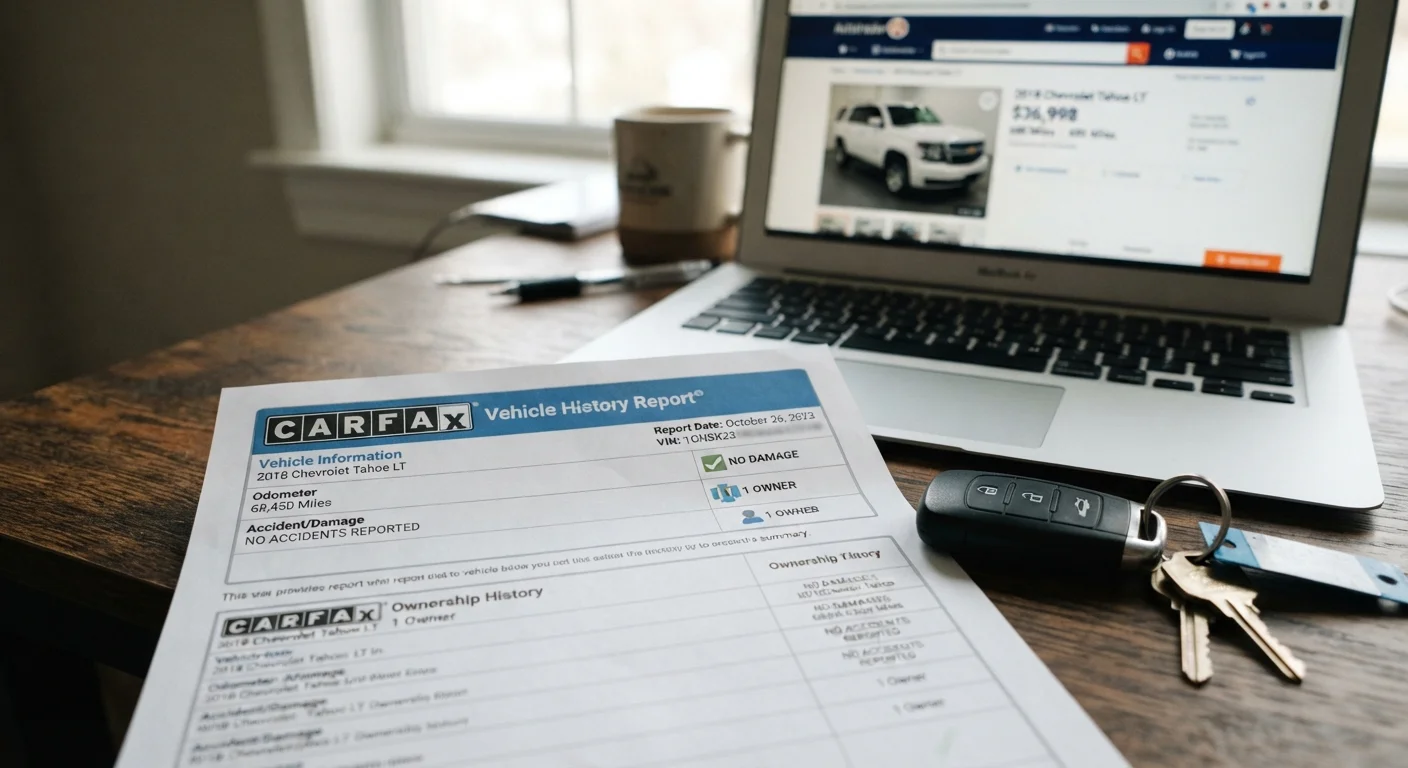
Photo credit: ArticlesHaven.net
In this article
Accident records, title issues, odometer readings, and service history—what's in these reports and what they can't verify.
Key Takeaways
- A vehicle history report covers title records, reported accidents, odometer readings, and sometimes service history.
- Reports only include events that were officially documented - private repairs and unreported accidents are invisible.
- Title brands like 'salvage' or 'flood' are major red flags that can affect safety, insurability, and resale value.
- A clean history report does not guarantee a vehicle is in good mechanical condition.
- Combining a report with a professional pre-purchase inspection gives you the most complete picture.
What the Report Actually Contains
A vehicle history report organizes data into several distinct categories. Understanding what each section covers - and where its limits are - helps you read the document critically rather than treating it as a pass/fail scorecard.
Title History
This section tracks every time the vehicle changed hands and in which state it was registered. It also flags title brands - official designations applied when something significant happened to the car. Common brands include:
- Salvage: An insurer declared the vehicle a total loss.
- Rebuilt/Reconstructed: A salvage vehicle was repaired and passed a state inspection to return to the road.
- Flood: The vehicle sustained water damage, often corrosive to electronics and structure.
- Lemon Law Buyback: A manufacturer repurchased the vehicle under state lemon law provisions.
Title brands travel with the vehicle permanently. A car sold across state lines still carries any brands applied in a previous state - though gaps in cross-state reporting have historically allowed some brands to be obscured, a practice sometimes called "title washing."
Accident and Damage Records
Reports list accidents that were reported to insurance companies or law enforcement. Each entry typically includes the date, state, and a severity descriptor (minor, moderate, severe). What it cannot tell you is the quality of the repair work performed afterward. A car with a reported accident and a clean repair is very different from one with hidden structural damage - but the report won't make that distinction for you. That's where a pre-purchase inspection becomes essential.
1 in 5
Used vehicles with a title brand or significant reported event
Industry estimates suggest roughly one in five used vehicles on the market carries some form of title brand or recorded damage history.
~$4,000
Average value reduction for a vehicle with a prior reported accident
Used car valuation guides generally apply meaningful depreciation adjustments to vehicles with documented accident histories, often several thousand dollars depending on severity.
Odometer and Service Records
Reports pull odometer readings from emissions inspections, dealer service visits, state registration renewals, and auction sales. Comparing these readings chronologically lets you verify that mileage has been accumulating consistently. A sudden drop in recorded mileage is a serious red flag for odometer rollback.
Service history is more variable. Records appear when the work was performed at a dealership or a shop that participates in reporting programs. Independent mechanics, DIY maintenance, and cash transactions typically leave no trace. If you're serious about understanding what a car has been through, a vehicle maintenance log kept by the previous owner is more complete than what any database can provide.
Cross-Check Multiple Odometer Data Points
When reviewing odometer entries, look at the full timeline rather than just the most recent reading. Entries from emissions tests, auctions, and dealer visits create a chain of evidence. Even small inconsistencies - a reading that seems too low relative to the vehicle's age - are worth asking about directly.
What the Report Cannot Tell You
Knowing a report's blind spots is just as important as knowing what it covers.
- Unreported accidents: Any collision settled privately between drivers - no police, no insurance claim - produces no record.
- Mechanical condition: Worn brakes, a failing transmission, a leaking head gasket - none of this appears in a history report.
- Repair quality: A reported accident with subsequent repairs tells you nothing about whether those repairs were done correctly or with OEM parts.
- Recent issues: A problem that developed last week has had no time to generate any documented record.
For a detailed look at what can and can't be captured in these databases, see the companion piece on what vehicle history reports tell you and what they miss.
Reports Vary by Provider and Data Source
Different history report providers access overlapping but not identical data networks. A report from one service may surface an event that another misses, depending on which state databases, auction networks, and insurance data feeds each provider subscribes to. Running a report does not guarantee exhaustive coverage of every documented event.
How to Use the Report in Context
A vehicle history report works best as one layer of research, not the whole picture. Here's a practical framework:
- Run the report before you invest time in the car. If the report shows a flood title or a salvage brand, that changes how - or whether - you proceed.
- Use the report to prepare better questions. An accident record from three years ago is an opportunity to ask about the repair, not necessarily a dealbreaker. See questions worth asking before a test drive for a fuller list.
- Follow the report with a physical inspection. A qualified mechanic can identify what no database captures - frame straightness, hidden corrosion, mismatched panel gaps, and mechanical wear.
- Consider resale implications. Title brands and accident records affect what the vehicle is worth. Understanding that going in helps you evaluate whether the asking price reflects the car's actual history. For context, factors that affect a car's market value include documented history as a significant variable.
“A vehicle history report tells you what was recorded. It doesn't tell you what wasn't. The absence of a red flag is not the same as a clean bill of health - it means the car's past left a paper trail that looks acceptable, which is a meaningfully different thing.”
— Consumer automotive education guidance, General principle cited by used-car buying advisors and automotive consumer advocates
Frequently Asked Questions

Author
Articles Haven Editorial Contributor
Articles Haven Editorial Team is the collective byline for our editorial team and contributor network. Articles published under this byline or an editorial pen name are researched, written, and reviewed according to our editorial standards for clarity, consistency, and independence before publication.
View all articles →