
Car Loan Basics: What Owners Should Understand About Financing
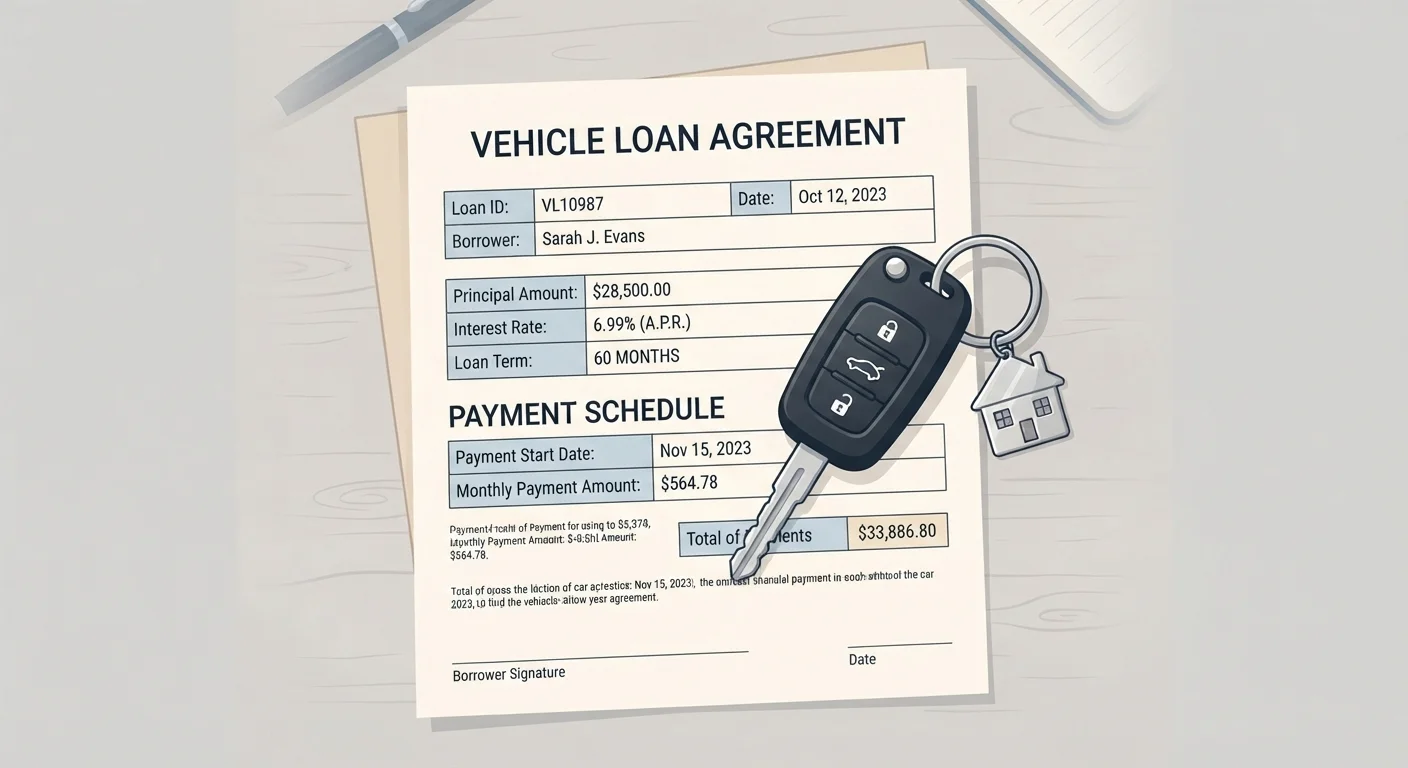
Photo credit: ArticlesHaven.net
In this article
APR, loan term, down payment, and total interest paid—a straightforward explainer on how auto financing works.
Key Takeaways
- APR (Annual Percentage Rate) reflects the true yearly cost of borrowing, including fees - not just the interest rate.
- Longer loan terms lower monthly payments but increase the total interest paid over the life of the loan.
- A larger down payment reduces the amount financed and can lower both your monthly payment and total interest.
- Your credit score is one of the strongest factors determining the rate a lender will offer you.
- The vehicle's value depreciates faster than loan balances in early years, which can create a gap called being 'upside down.'
The Core Mechanics of an Auto Loan
At its core, an auto loan works like this: a lender pays the seller, and you repay the lender in monthly installments that cover both principal (the amount borrowed) and interest (the lender's fee for advancing the funds). The vehicle is collateral throughout the repayment period.
Four numbers drive almost everything about what a loan costs you:
- Loan amount (principal): The vehicle price minus any down payment and trade-in credit.
- APR (Annual Percentage Rate): The all-in yearly cost of borrowing. Using APR - rather than a raw interest rate - is the cleanest way to compare offers from different lenders.
- Loan term: The repayment period, typically 36 to 84 months.
- Monthly payment: Derived from the three figures above. Lowering the principal or APR shrinks it; shortening the term raises it.
For a fuller look at how these figures interact for first-time borrowers, see the auto loan basics explainer.
$40,366
Average new car loan amount (U.S.)
According to Experian's State of the Automotive Finance Market report, average new vehicle loan amounts have climbed steadily in recent years.
69.5 months
Average new car loan term
Experian data shows the average new vehicle loan term now approaches six years, raising the risk of extended negative equity periods.
~20%
Typical first-year vehicle depreciation
Many consumer finance sources estimate new vehicles lose roughly 15-20% of their value within the first 12 months of ownership.
How APR and Loan Term Shape Your Total Cost
Monthly payment is the figure most shoppers focus on, but total interest paid over the life of the loan tells the fuller story. A lower monthly payment isn't always cheaper - extending a term from 48 to 72 months at the same rate can add hundreds to thousands of dollars in interest.
Consider a simplified comparison: borrowing $25,000 at 7% APR over 48 months costs roughly $2,980 in total interest. Stretch that same loan to 72 months and total interest climbs to around $4,500 - despite each monthly payment being smaller.
Focus on Total Cost, Not Just Monthly Payment
Before accepting any loan offer, calculate the total amount you'll repay (monthly payment × number of months) and subtract the principal. That figure is your total interest cost - a cleaner comparison tool than the monthly payment alone. A longer loan that saves $80 a month but costs $1,500 more in interest is a net loss.
APR sensitivity also compounds quickly. A borrower offered 5% versus 9% APR on a $30,000 loan over 60 months pays approximately $3,968 versus $7,424 in interest - a difference that traces almost entirely back to credit profile. For more on that relationship, see how credit scores affect loan rates.
Down Payments, Equity, and the Depreciation Gap
Vehicles lose value quickly - often 15-20% in the first year alone. If you finance most or all of the purchase price with a long-term loan, you can easily owe more than the car is worth for the first several years. This is called being upside down or having negative equity.
A meaningful down payment (commonly cited as 10-20% of the purchase price) narrows that gap from the start. It reduces the principal, which lowers both monthly payments and total interest, and it gives you an equity cushion against rapid early depreciation.
Gap Insurance and Negative Equity
If you're financing with a small down payment or a long term, Gap insurance (Guaranteed Asset Protection) is worth understanding. It covers the difference between what you owe on the loan and what the vehicle is worth if it's totaled or stolen. Standard auto insurance only pays current market value, which may be less than your remaining loan balance. Check the insurance types overview for context on how this fits into your broader coverage picture.
Understanding your loan statement month by month helps you track how quickly equity builds. The auto loan statement explainer breaks down each line item so you always know where you stand.
Where You Finance Matters Too
Lenders aren't interchangeable. Banks, credit unions, and dealership financing arms each have different rate structures, approval criteria, and incentives. Dealerships sometimes offer manufacturer-subsidized rates that undercut outside lenders - but not always, and not for every buyer profile.
“The best loan isn't always the one with the lowest monthly payment - it's the one that costs you the least overall while fitting your cash flow. Those two things are often not the same offer.”
— Consumer Financial Protection Bureau, U.S. federal agency providing auto loan consumer guidance
Shopping at least two or three lenders before stepping into a dealership gives you a benchmark rate. An outside pre-approval doesn't lock you into anything; it simply gives you a reference point so you can evaluate whatever the dealer presents. For a structured comparison of your options, see dealer vs. bank financing.
If you're also weighing whether to buy at all, it's worth comparing auto loan structure against leasing - the lease payment mechanics explainer covers the key differences. And for any term you encounter during the process, the car buying glossary is a practical reference.
This article provides general information about auto financing concepts and is not financial or legal advice. Loan terms, rates, and eligibility vary by lender and individual circumstances. Consult a qualified financial adviser or lender for guidance specific to your situation.
Frequently Asked Questions

Author
Articles Haven Editorial Contributor
Articles Haven Editorial Team is the collective byline for our editorial team and contributor network. Articles published under this byline or an editorial pen name are researched, written, and reviewed according to our editorial standards for clarity, consistency, and independence before publication.
View all articles →