
Understanding Your Auto Loan Statement: What Each Line Means
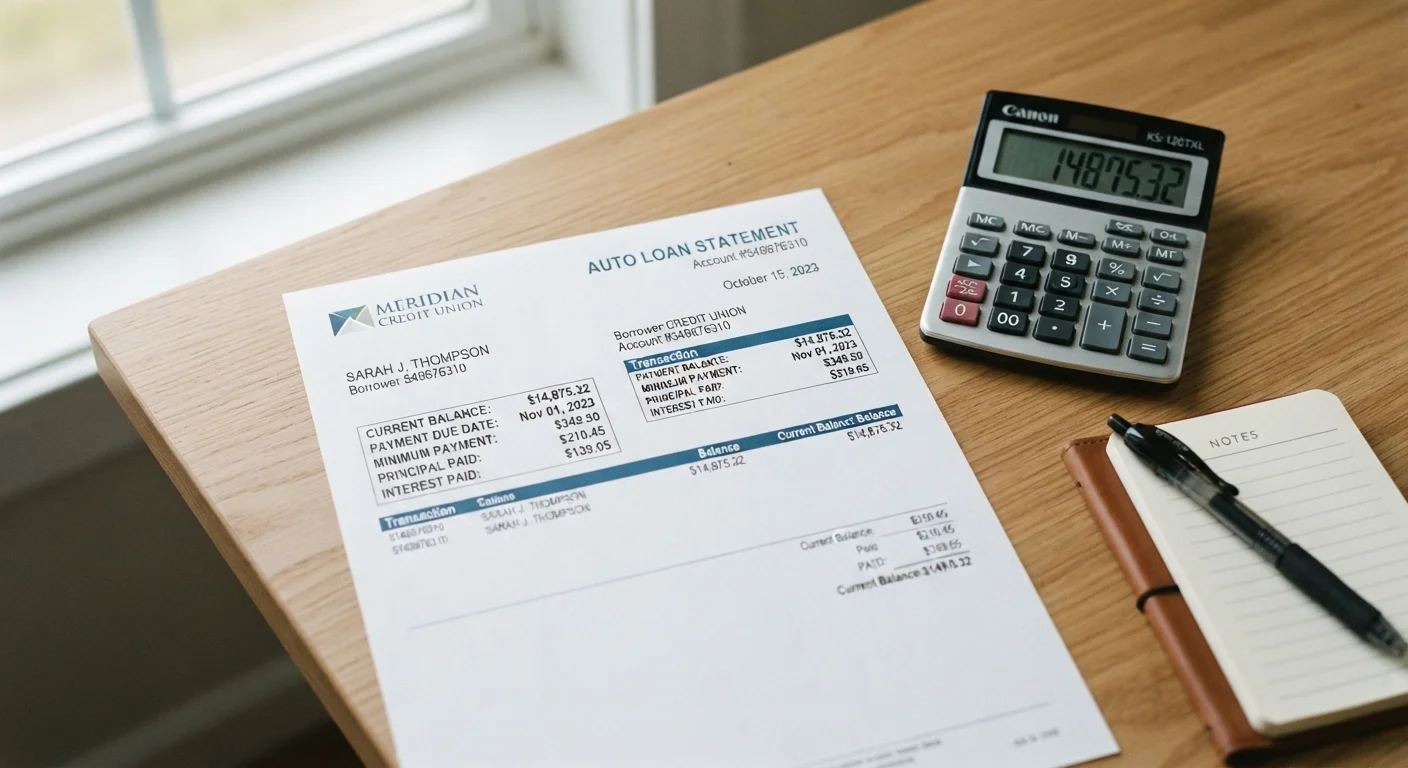
Photo credit: ArticlesHaven.net
In this article
Principal, interest, payoff amount, and remaining term — your loan statement carries key figures. Here's how to read them clearly.
Why Your Loan Statement Is Worth Reading Carefully
Most borrowers glance at their auto loan statement just long enough to confirm the payment amount, then set it aside. That habit can cost you. Every figure on that document tells you something about where your money is going and how far you still have to travel to own your vehicle outright.
If you're new to auto financing, see Auto Loan Basics for a foundation before diving into statement details. And for broader context on the costs of owning a vehicle, the Car Ownership hub is a useful reference point.
| Typical Auto Loan Statement Components | Principal balance, interest charged, payment allocation, payoff amount, fees |
| Interest Calculation Method | Simple interest on remaining principal (daily periodic rate × days in period) |
| Payoff Quote Validity | Typically 10-15 days from issuance |
| Standard Loan Term Range | 24 to 84 months, most commonly 60-72 months (Consumer Financial Protection Bureau, general guidance) |
Breaking Down the Key Line Items
Auto loan statements vary by lender in layout, but the core figures are consistent. Here's what each one means:
Principal Balance
This is the amount you still owe on the vehicle itself - not counting future interest. Early in the loan, this number drops slowly because most of your payment goes toward interest. Over time, that ratio shifts.
Interest Charged This Period
Lenders calculate interest on your remaining principal, typically using a daily periodic rate. The higher your APR and the larger your remaining principal, the more interest you see here. Your credit score at origination directly shaped this rate.
Payment Applied to Principal vs. Interest
This line shows how your last payment was split. In a standard amortizing loan, the proportion going to principal increases with each payment. If you're well into your loan and still seeing more than half your payment going to interest, double-check your statement against your original amortization schedule.
Current Payment Due
The scheduled monthly amount. If you're on autopay, verify this matches what's being withdrawn - lenders occasionally adjust due to rate changes on variable-rate loans.
Fees or Other Charges
Late fees, returned-payment fees, or optional add-ons like gap insurance billed through the lender will appear here as separate line items. Don't absorb them into your mental model of the loan itself.
Principal
The original amount borrowed, minus any repayments already made. Interest is calculated on this figure, so reducing it faster lowers total interest paid.
APR (Annual Percentage Rate)
The yearly cost of borrowing, expressed as a percentage. On auto loans, APR typically reflects the interest rate plus any lender fees rolled into the loan.
Amortization
The process of spreading loan repayment across scheduled payments so the loan is fully paid by the end of the term. Each payment covers interest first, then principal.
Payoff Amount
The exact dollar figure needed to close the loan completely on a specific date, including accrued interest. Always request this from your lender rather than using the statement balance.
Lienholder
The lender who holds a legal claim on the vehicle until the loan is repaid in full. They are typically listed on your auto insurance declarations page.
Payoff Amount vs. Current Balance - They're Not the Same
One of the most common points of confusion: the current balance on your statement is not the same as the payoff amount.
Your current balance reflects principal owed as of the statement date. The payoff amount - which you must request from your lender directly - includes interest that will accrue between now and the date the lender receives your final payment. Payoff quotes are typically good for 10-15 days, after which you'll need a new one.
Always Request a Fresh Payoff Quote Before Paying Off Early
Interest accrues daily on most auto loans, so the payoff amount changes every day. A quote from your lender is the only reliable figure to use when making a final payment or refinancing. Statement balances do not account for accrued interest since the last statement date.
If you're comparing your statement to your insurance declarations page, note that your lender may be listed as a lienholder there. For a full explanation of how those documents differ, see Understanding Your Auto Insurance Declarations Page.
Using Your Statement to Make Smarter Decisions
Your statement isn't just a bill - it's a planning tool. If you're considering an extra principal payment, confirm your lender applies it directly to principal and not to a future payment. Some lenders require you to mark extra funds explicitly.
Reviewing the amortization breakdown each month also helps you track whether refinancing might save money. If your remaining term is long and your credit profile has improved since origination, the math on a new rate could work in your favor. For a clear-eyed look at how rate differences compound over time, see what your credit score does to your car loan.
For any term on your statement you don't recognize, the Car Buying Glossary covers loan and financing language in plain English.
~$733
Average monthly new-car loan payment
According to Experian's State of the Automotive Finance Market report (Q3 2023).
72 months
Most common new-vehicle loan term
Experian data shows six-year terms have become the plurality choice among new-car borrowers.

Author
Articles Haven Editorial Contributor
Articles Haven Editorial Team is the collective byline for our editorial team and contributor network. Articles published under this byline or an editorial pen name are researched, written, and reviewed according to our editorial standards for clarity, consistency, and independence before publication.
View all articles →