
Hybrid Vehicles Explained: How They Work and Who They Work Best For
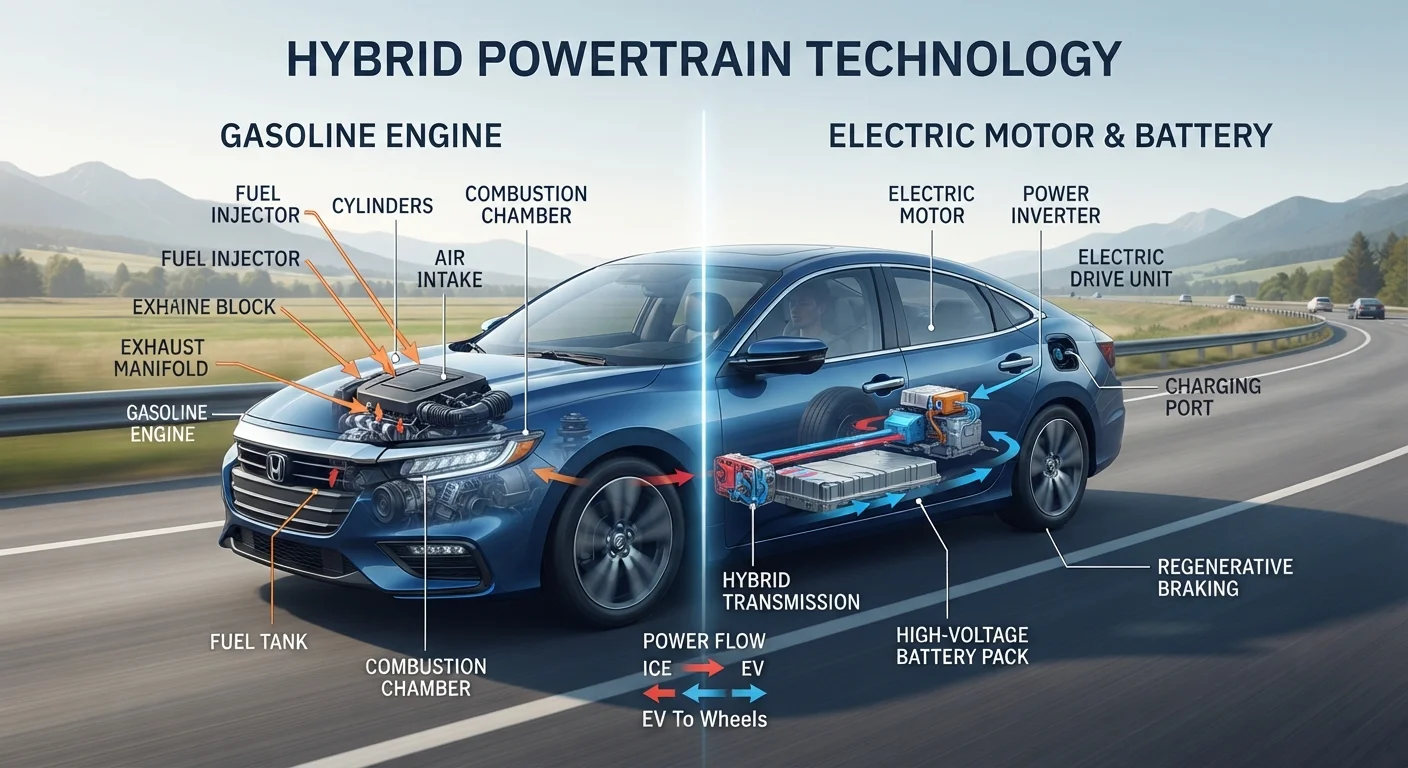
Photo credit: ArticlesHaven.net
In this article
Mild hybrid, full hybrid, plug-in hybrid — the terms are often confused. Here's a clear breakdown of how each type works and its tradeoffs.
Key Takeaways
- Hybrid vehicles come in three main categories: mild, full, and plug-in - each with distinct capabilities and tradeoffs.
- All hybrid types recapture braking energy; only full and plug-in hybrids can drive on electricity alone.
- Plug-in hybrids (PHEVs) require external charging to maximize their electric range benefit.
- Hybrids generally offer better fuel economy in city driving, where stop-and-go conditions allow frequent energy recovery.
- Higher upfront cost compared to gas-only vehicles may or may not offset over time depending on driving habits and fuel prices.
The Three Types of Hybrid Vehicles
The word "hybrid" covers a range of technologies that work quite differently from one another. Lumping them together leads to mismatched expectations - especially around what you can and can't do without a gas station.
Mild Hybrid
A mild hybrid adds a small electric motor and battery to a conventional engine, but the electric system cannot power the vehicle on its own. It assists the engine during acceleration and recovers some braking energy, reducing fuel consumption modestly. Think of it as a support layer rather than a second drivetrain.
Full Hybrid (HEV)
A full hybrid can operate on the electric motor alone at low speeds and under light loads - typically in slow traffic or while creeping through a parking lot. The gasoline engine kicks in automatically when power demand increases. The battery charges through regenerative braking and the engine; no plug is needed.
Plug-In Hybrid (PHEV)
A plug-in hybrid carries a significantly larger battery that can be charged from an external outlet or charging station. This enables a meaningful all-electric driving range - commonly anywhere from 20 to 50 miles depending on the vehicle - before the gasoline engine takes over. For drivers with short commutes and access to charging, a PHEV can run on electricity the majority of the time.
"Hybrid" Labels Vary by Manufacturer
Automakers sometimes use proprietary names - e-AWD, eSHD, EcoBoost Hybrid - that don't clearly signal which category (mild, full, or plug-in) the system falls into. Before comparing vehicles, it's worth confirming whether the electric motor can power the car independently and whether the battery requires external charging. The owner's manual and manufacturer specs page are the most reliable sources for this.
How the Fuel Savings Actually Work
The core mechanism behind hybrid efficiency is regenerative braking: when you slow down, the electric motor runs in reverse to act as a generator, converting kinetic energy into electricity stored in the battery. In a conventional gas car, that energy is simply lost as heat through the brakes.
This makes hybrids particularly effective in city driving. Stop-and-go traffic creates frequent opportunities to recover energy, which then assists the engine on the next acceleration. Highway driving, by contrast, involves fewer stops - so the electric assist contributes less, and fuel economy advantages over a conventional vehicle narrow considerably.
~25-50%
Typical city mpg improvement over gas-only equivalent
The EPA consistently shows larger hybrid fuel economy gains in city cycles versus highway cycles, reflecting regenerative braking's greater role in stop-and-go conditions.
20-50 miles
Common all-electric range for plug-in hybrids
EPA-rated PHEV electric ranges vary significantly by model; real-world range can be affected by temperature, speed, and climate system use.
8-10 years
Typical hybrid battery warranty period
Most manufacturers offer separate, longer warranties on hybrid battery systems compared to the standard powertrain warranty, though terms vary by brand and model year.
For EPA fuel economy ratings and what those figures actually reflect in real-world driving, see our guide on EPA estimates. Hybrid mpg figures can look impressive on the label but vary considerably based on driving patterns.
Who Hybrids Work Best For
A hybrid is not automatically the right call. Whether it makes practical sense depends heavily on how and where you drive.
High-mileage city commuters tend to extract the most value: frequent braking creates more recovery opportunities, and the electric assist reduces engine load in traffic. Drivers with short commutes who can charge at home may find a PHEV works well, running primarily on electricity and rarely visiting a gas station.
On the other hand, if most of your driving is rural highway miles, a hybrid's fuel advantage shrinks. And if the purchase price premium is significant, recouping that cost through fuel savings alone may take many years - or may not happen at all depending on gas prices. The gas vs. hybrid vs. electric cost comparison walks through a realistic multi-year breakdown to help you model this.
Body style also plays a role: hybrid powertrains are now available across sedans, SUVs, and even some trucks, so the choice isn't limited to a single vehicle category. Matching vehicle type to your life can help you think through that layer separately.
Estimate Your Real-World Savings Before Deciding
Use your actual average annual mileage and your typical city-versus-highway split to estimate fuel savings - don't rely solely on EPA label numbers. Many automakers and third-party sites offer fuel cost calculators that let you enter your own driving profile. Pair that with the vehicle's price premium to get a rough payback estimate before committing.
Key Tradeoffs to Keep in Mind
Every hybrid category involves real tradeoffs worth naming directly:
- Upfront cost: Hybrids typically carry a price premium over equivalent gas-only models. That gap varies by manufacturer and vehicle class.
- Battery longevity: Hybrid batteries are designed to last many years, but replacement costs are non-trivial if they fail outside warranty. Check manufacturer warranty terms carefully.
- PHEV charging dependency: A plug-in hybrid used without regular charging functions as a heavier, costlier standard hybrid. Charging access - at home or at work - matters significantly to the value proposition.
- Complexity: Two powertrains mean more systems to maintain, though in practice, regenerative braking tends to reduce brake wear and some routine maintenance needs.
For anyone weighing whether to buy new, used, or lease a hybrid, the purchase path itself affects the overall equation. Comparing new, used, and leased options is a useful next step once you've settled on a powertrain type.
“Hybrid technology has matured considerably - battery durability is no longer the question mark it once was. The real question for most buyers is whether their driving patterns allow them to use what the technology offers.”
— Consumer Reports Auto Testing Division, Automotive research and testing organization
Frequently Asked Questions

Author
Articles Haven Editorial Contributor
Articles Haven Editorial Team is the collective byline for our editorial team and contributor network. Articles published under this byline or an editorial pen name are researched, written, and reviewed according to our editorial standards for clarity, consistency, and independence before publication.
View all articles →