
Gas vs. Hybrid vs. Electric: Comparing the Costs of Ownership Over Time
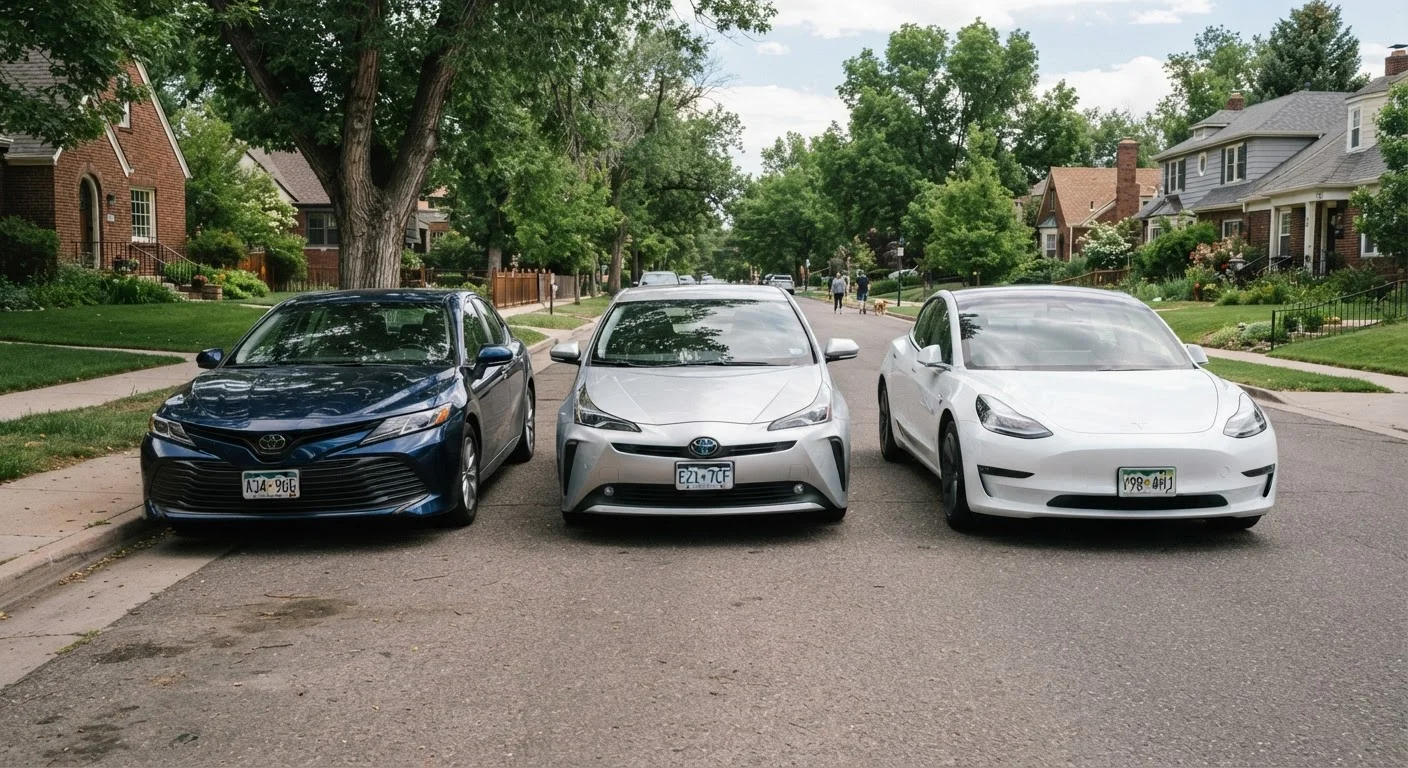
Photo credit: ArticlesHaven.net
In this article
Fuel, maintenance patterns, insurance, and incentives differ across powertrain types. Here's a realistic multi-year comparison.
Key Takeaways
- Electric vehicles generally have lower fuel and maintenance costs but higher purchase prices than gas equivalents.
- Hybrids occupy a middle ground - modest price premium, reduced fuel spend, and no range anxiety.
- Insurance costs for EVs tend to run higher due to repair complexity and parts pricing.
- Federal and state incentives can meaningfully offset EV or plug-in hybrid purchase costs, but eligibility varies.
- Over a five-year window, the powertrain with the lowest total cost depends heavily on driving habits and local fuel prices.
Purchase Price and Incentives
The upfront gap between powertrain types is real but narrowing. A comparable gas vehicle typically carries the lowest sticker price. A hybrid version of the same model often adds a few thousand dollars. A fully electric vehicle (EV) can cost significantly more, though that premium has compressed as battery costs have dropped.
Federal tax credits - currently up to $7,500 for qualifying new EVs and $4,000 for certain used EVs under the Inflation Reduction Act - can change the calculus significantly, but eligibility depends on buyer income, vehicle MSRP caps, and where the vehicle is assembled. Many states layer on additional rebates. Plug-in hybrids (PHEVs) may also qualify for partial federal credits. Before assuming an incentive applies to you, verify current rules with the IRS or your state's energy office, since these details change.
See our guide to evaluating total cost of ownership for a framework that accounts for these variables before you sign anything.
Fuel and Energy Costs Over Time
This is where EVs and hybrids begin to recover their price premium. Electricity is generally cheaper per mile than gasoline, though the exact figure depends on local utility rates and whether you charge at home (cheapest), at a workplace, or on a public fast-charging network (most expensive).
3-4¢
Approximate cost per mile for home EV charging
Estimates from the U.S. Department of Energy's Alternative Fuels Data Center suggest home charging typically costs significantly less per mile than gasoline at average national prices.
~50%
Maintenance cost reduction for EVs vs. gas
A 2020 analysis by Consumer Reports found EV owners spent roughly half as much on maintenance and repairs over time compared to gas vehicle owners.
$7,500
Maximum federal EV tax credit (new vehicles)
The Inflation Reduction Act established this ceiling for qualifying new EV purchases, subject to income thresholds and vehicle eligibility requirements.
Hybrids use gasoline but extract far more miles per gallon than comparable gas-only vehicles - particularly in stop-and-go city driving, which is where the regenerative braking system is most effective. PHEVs run on electricity for shorter trips and switch to gas for longer ones, so their real-world fuel cost depends heavily on how often they get plugged in.
Gas vehicle fuel costs are straightforward but volatile - pump prices fluctuate and have spiked sharply at various points. High-mileage drivers absorb those swings most acutely.
Maintenance Patterns and Long-Term Reliability
Powertrain type directly shapes your maintenance schedule. Gas vehicles require the full suite: oil changes every few thousand miles (or per the manufacturer's interval), transmission service, spark plugs, and a longer list of fluid-dependent systems. These costs are well understood and widely available from independent shops.
Track Your Actual Driving Pattern First
Before choosing a powertrain, log your typical weekly mileage and trip types for a month. Short daily commutes favor EVs and PHEVs. Frequent long-distance driving weakens the EV case unless fast-charging infrastructure along your routes is solid. Your real usage pattern is the most important input into the cost comparison - general averages may not apply to you.
Hybrids share most of that maintenance profile, with one notable difference - the regenerative braking system significantly reduces brake wear, so rotors and pads often last longer than on a gas-only vehicle.
EVs eliminate oil changes, spark plugs, transmission fluid, and exhaust system maintenance entirely. Their brake systems also benefit from regenerative braking. The main long-term concern is battery degradation. Most EV manufacturers warrant the battery for eight years or 100,000 miles, but real-world capacity loss varies by climate, charging habits, and usage patterns. Replacement outside warranty is expensive, though used battery markets are developing. For a fuller picture of what day-to-day EV ownership looks like, see what changes with EV ownership.
Insurance Costs
Insurance is an often-overlooked line item in ownership cost comparisons. EVs generally carry higher premiums than equivalent gas vehicles - the repair costs after even minor collisions can be substantial due to specialized parts, battery proximity to impact zones, and a smaller pool of trained repair technicians.
Don't Underestimate EV Repair Costs
EV collision repair can be significantly more expensive than equivalent gas vehicle repairs, partly because high-voltage battery systems require specialized handling and certified technicians. Some insurers have totaled EVs after moderate collisions due to battery proximity to the damage zone. Factor this into your insurance budget estimates before purchasing, and confirm repair shop availability in your area.
Hybrids tend to fall in the middle: premiums are typically modestly higher than gas equivalents but lower than full EVs. The specific make, model, trim, your driving record, and your location all influence what you'll actually pay - these are generalizations about category-wide patterns, not guarantees.
When budgeting, pull actual insurance quotes for the specific vehicles you're comparing. Don't estimate from the gas model and assume the EV equivalent will be similar - it often isn't.
Side-by-Side Cost Comparison
The table below summarizes how the three powertrain types typically compare across key cost categories over a five-year ownership window. Figures represent general patterns, not guarantees for any specific vehicle or situation.
| Gas | Hybrid | Electric | |
|---|---|---|---|
| Typical purchase price premium | Baseline | Moderate ($2K-$5K over gas) | Significant ($5K-$15K+ over gas) |
| Federal incentive eligibility | None | Partial (PHEVs only) | Up to $7,500 (income/model limits apply) |
| Fuel/energy cost per mile | Highest, most volatile | Lower than gas, uses gas | Lowest (home charging) |
| Routine maintenance frequency | Highest | Moderate | Lowest |
| Brake wear | Standard wear rate | Reduced via regen braking | Significantly reduced |
| Typical insurance premium | Baseline | Slightly above baseline | Noticeably higher |
| Range flexibility | Highest - gas stations everywhere | High - gas backup available | Dependent on charging access |
| Battery replacement risk | N/A | Low (hybrid battery smaller) | Moderate long-term consideration |
For a detailed look at how new versus used vehicles affect these same cost categories, see new car vs. used car ownership costs. And if you're weighing the hybrid and EV options more closely, this comparison of hybrid vs. electric powertrains covers the driving experience differences beyond just cost.

Author
Articles Haven Editorial Contributor
Articles Haven Editorial Team is the collective byline for our editorial team and contributor network. Articles published under this byline or an editorial pen name are researched, written, and reviewed according to our editorial standards for clarity, consistency, and independence before publication.
View all articles →