
Currency and Payment Prep for International Travel
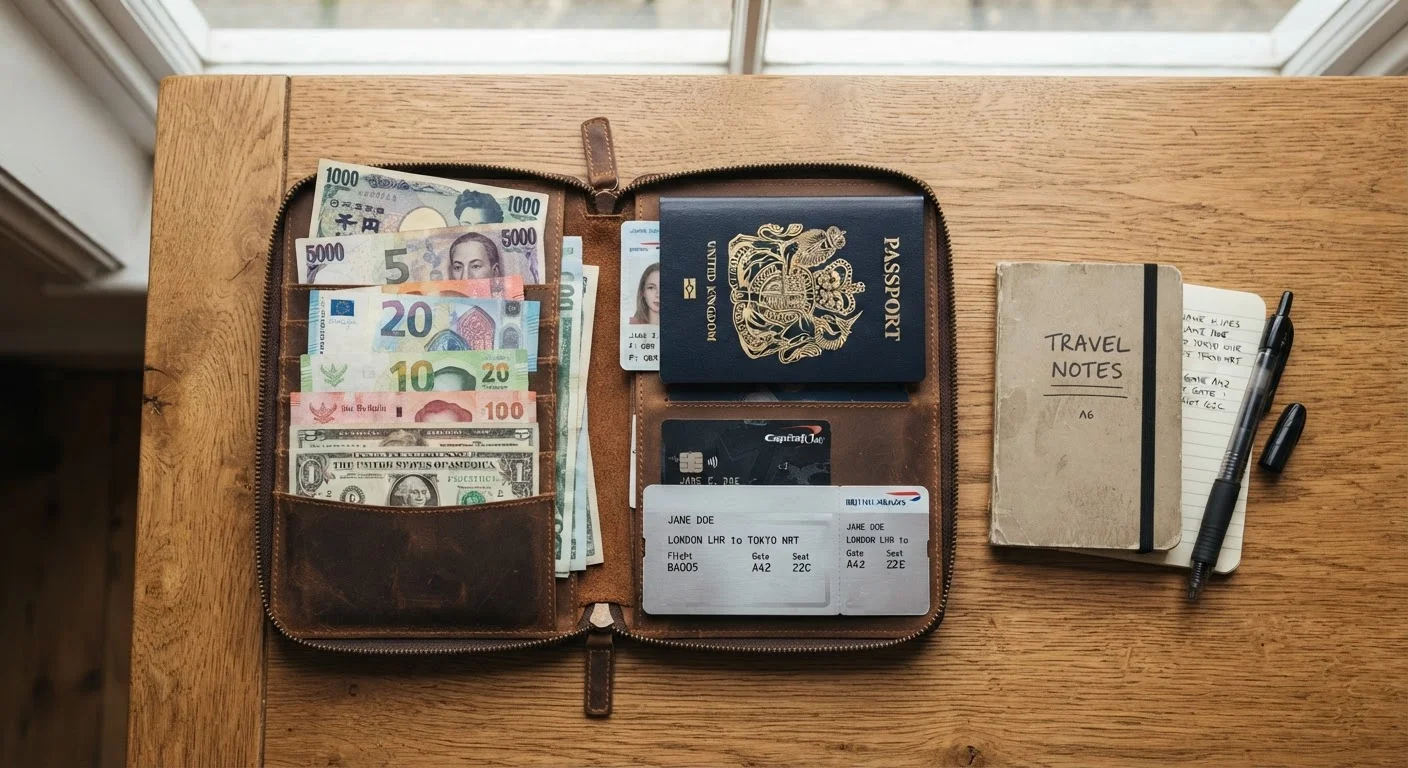
Photo credit: ArticlesHaven.net
In this article
What travelers should understand about exchanging currency, using cards abroad, and avoiding common payment pitfalls in foreign countries.
Key Takeaways
- Notify your bank and credit card issuers before departure to prevent fraud blocks on foreign transactions.
- Credit cards with no foreign transaction fees are usually the most cost-effective payment method abroad.
- Airport and hotel currency exchange desks typically offer the worst rates - avoid them when possible.
- Carrying a modest amount of local cash covers situations where cards are not accepted.
- Dynamic currency conversion at card terminals almost always costs you more - always pay in local currency.
- A backup card stored separately protects you if your primary card is lost or blocked.
Why Payment Prep Matters More Than Most Travelers Expect
Financial friction is one of the most common and avoidable sources of stress in international travel. Cards getting blocked, paying avoidable fees, or running short on cash in a cash-only market can derail otherwise smooth trips. The good news: most of these problems are straightforward to prevent with a bit of planning before you leave.
Payment systems vary significantly by country. A card that works seamlessly in Germany may be declined in rural Japan. ATM networks that are ubiquitous in the UK may be sparse in certain parts of Central America. Understanding these variables in advance - rather than discovering them at a checkout counter with a line behind you - is what separates a prepared traveler from a stressed one. For a broader look at what changes when you cross borders, see our comparison of domestic vs. international travel.
What you will need
No-foreign-transaction-fee credit card
Used for most purchases abroad - eliminates the typical 1-3% surcharge on every international transaction.
Debit card with ATM access
Used to withdraw local currency from ATMs at your destination.
Backup credit or debit card
Stored separately from your primary card in case of loss, theft, or a fraud block.
Small travel money pouch or wallet
Keeps cash and cards organized and reduces the risk of losing everything at once.
Destination country's currency (small amount)
Covers immediate needs on arrival - transport, tips, small vendors - before you reach an ATM.
Step-by-Step: Preparing Your Finances Before Departure
Follow these steps in the weeks leading up to your trip - not the night before. Some tasks, like ordering foreign currency or opening a new bank account, can take several days to complete.
Research your destination's payment landscape
Before anything else, find out how your destination handles payments in practice. Scandinavia is nearly cashless; rural Southeast Asia or parts of Latin America may be cash-dominant. Check travel forums, government travel advisories, and your destination's tourism resources to understand whether cards are widely accepted, whether ATMs are reliably available, and whether tipping or small transactions typically require cash. This shapes how much local currency you'll need to carry.
Notify your bank and card issuers
Contact every bank and card issuer for accounts you plan to use. Most allow you to set a travel notice online or through their app. Provide your destination countries and travel dates. Without a notice, your card issuer's fraud detection may flag foreign charges and freeze your card mid-trip - a genuinely disruptive situation. Also confirm whether your cards carry foreign transaction fees (typically 1-3% per purchase) and consider whether a no-fee card is worth obtaining before you go.
Obtain a small amount of local currency before departure
Order foreign currency through your bank before you travel - many US banks offer this service with delivery to a branch or by mail. Rates from your own bank are generally better than airport kiosks. Aim for enough to cover your first day or two: ground transport from the airport, a meal, and small incidentals. You don't need to carry a week's worth of cash upfront; ATMs at your destination will handle refills.
Identify ATMs and fee structures at your destination
Look up which ATM networks are common in your destination country (Visa Plus, Mastercard Cirrus, and local interbank networks are widespread). Check whether your debit card's network is compatible. Your card issuer may charge a flat fee per withdrawal plus a foreign transaction fee - withdrawing larger amounts less frequently reduces the per-dollar cost. Use ATMs affiliated with established local banks rather than standalone kiosks in tourist areas, which tend to charge higher fees and can carry higher skimming risk.
Set up a backup card and store it separately
Pack a second card - a different card issuer if possible - and keep it in a separate location from your wallet (a hotel safe, a different bag, or a travel document holder). If your primary card is lost, stolen, or blocked, this backup gives you immediate access to funds without having to wait for a replacement card to arrive or a wire transfer to clear. Brief a travel companion on where the backup is stored if traveling with others.
Decline dynamic currency conversion at every opportunity
When paying by card at a foreign terminal or with a foreign merchant online, you may be offered the choice to pay in US dollars. This is Dynamic Currency Conversion (DCC). Always decline it. The exchange rate applied through DCC is set by the merchant or terminal operator and is nearly always worse than the rate your card network applies. Choosing local currency ensures your card network - Visa, Mastercard, or similar - handles the conversion, which typically uses a more competitive rate.
[important_callout]Check Your Card's ATM Reimbursement Policy
Some checking accounts - particularly those offered by online-focused banks - reimburse ATM fees charged by foreign banks each month. If your current account doesn't offer this, it may be worth opening one specifically for travel. Even a flat $3-5 ATM fee adds up quickly over a two-week trip with multiple withdrawals.
Common Pitfalls and How to Avoid Them
Even well-prepared travelers encounter payment friction. Here are the scenarios that catch people most often:
- Exchanging too much cash upfront. You can rarely exchange leftover currency back at a favorable rate. Withdraw and exchange in smaller, more frequent amounts.
- Relying on a single card. A single lost wallet or fraud block can leave you stranded. The backup card step above is non-negotiable for trips longer than a weekend.
- Ignoring ATM fee structures. A $5 flat fee on a $40 withdrawal is a 12.5% surcharge. Withdraw larger amounts less often to reduce the per-dollar cost.
- Carrying too little cash in cash-dominant countries. Markets, small guesthouses, local transport, and street food vendors often don't accept cards. Research your destination's norms - see our guide for travelers visiting developing-world destinations for more on this.
Avoid Airport and Hotel Exchange Desks
Currency exchange booths at airports, hotels, and tourist-heavy areas routinely charge margins of 10-15% above interbank rates. These are the least favorable places to exchange money. If you need cash quickly upon arrival, withdraw a small amount from an in-network ATM instead, and exchange the bulk of what you need through your bank before departing or at a reputable local bank or post office at your destination.
Payment prep is one piece of a broader pre-trip financial and logistics picture. The pre-trip checklist for first-time international travelers covers documents, health, and other financial steps in one place - worth reviewing before any international departure.

Author
Articles Haven Editorial Contributor
Articles Haven Editorial Team is the collective byline for our editorial team and contributor network. Articles published under this byline or an editorial pen name are researched, written, and reviewed according to our editorial standards for clarity, consistency, and independence before publication.
View all articles →