
Booking Direct vs. Using a Travel Platform: What Changes for Flights
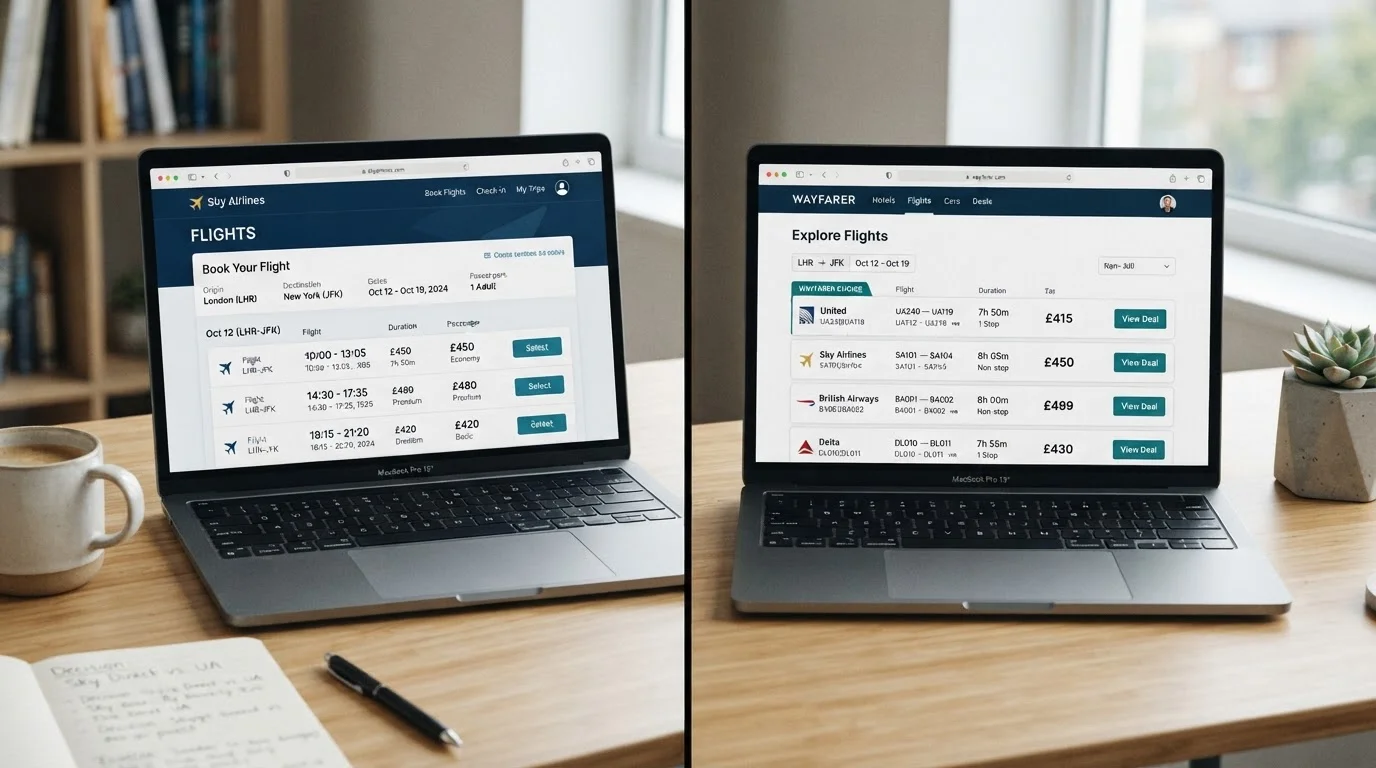
Photo credit: ArticlesHaven.net
In this article
Weigh the trade-offs between airline websites and third-party booking platforms before you commit to a ticket.
Key Takeaways
- Booking direct gives you a cleaner relationship with the airline for changes, cancellations, and support.
- Third-party platforms excel at comparing fares across carriers quickly and can surface bundle savings.
- Price differences between channels are often small; focus on terms, not just the headline fare.
- Loyalty miles and elite status benefits are usually better protected when booking directly with the airline.
- Always read the cancellation and change-fee policy before confirming on any platform.
The Core Difference: Who Controls Your Booking
When you book directly through an airline's website, you have a contract entirely with that carrier. Your name, payment, and preferences live in their system, and any changes go straight to the source. When you book through a third-party platform - commonly called an online travel agency, or OTA - a middleman holds the reservation on your behalf, even though you're ultimately flying on the airline's plane.
That structural difference drives most of the practical trade-offs travelers encounter. It's not just about where the cheaper fare appears - it's about what happens when something goes wrong, or when you need to modify your itinerary. Before you commit, it's worth understanding itinerary flexibility considerations.
| Criterion | Booking Direct | Third-Party Platform (OTA) |
|---|---|---|
| Reservation control | Held directly with airline | Held by OTA on your behalf |
| Price comparison | Single carrier only | Multiple carriers at once |
| Change/cancellation process | Directly with airline | Through OTA (may add steps) |
| Loyalty miles | Typically full accrual | Varies by fare class booked |
| Flight + hotel bundles | Rarely available | Common, sometimes discounted |
| Fee transparency | Generally clearer | Can vary by platform |
| Support in disruptions | Airline acts directly | OTA intermediary may be required |
Price: Is There Actually a Difference?
The most common reason travelers turn to OTAs is price comparison. Platforms like these display fares from dozens of carriers side by side, which genuinely saves time. However, the assumption that OTAs always offer lower prices deserves scrutiny.
Airlines frequently match or undercut OTA fares on their own websites, sometimes offering exclusive direct-booking rates or waived fees. In many cases the headline price is identical across channels; the real divergence shows up in ancillary fees - seat selection, baggage, or change costs - which OTAs may display inconsistently. Common flight booking misconceptions include the belief that one channel is always cheaper, when reality is far more route- and date-dependent.
~40%
US flights booked via OTAs
Industry estimates suggest roughly 40% of US leisure flight bookings flow through third-party platforms, reflecting their widespread use for comparison shopping.
2-5%
Typical price gap between channels
When price differences exist between direct and OTA bookings, they are often marginal - frequently within a few percentage points on identical itineraries.
#1
Traveler frustration: disruption handling
Across travel industry surveys, difficulty rebooking during disruptions consistently ranks as the top complaint among OTA-booked passengers.
The smarter habit is to use an OTA to identify promising fare options, then check the airline's own site before purchasing - a practice outlined in flight and hotel research best practices.
Customer Support and Changes: Where the Gap Widens
This is the area where booking channel makes the most tangible difference. When a flight is cancelled or significantly delayed, airlines are generally required to assist the passenger - but if your booking came through an OTA, the airline may direct you back to that platform before taking action. The OTA, in turn, may have its own process and wait times.
Booking direct eliminates that loop. Your record locator is in the airline's system, their agents can access it immediately, and rebooking or refund requests follow the airline's published policy without an intermediary's approval layer. For complex itineraries or time-sensitive travel, that directness has real value. It's also worth comparing how this dynamic plays out with hotels: OTA vs. direct booking for hotels involves similar trade-offs.
When Timing Intersects With Channel Choice
How far in advance you book can affect which channel serves you better. Early bookers often find airlines and OTAs equally competitive on price; last-minute shoppers may find OTA aggregation particularly useful for scanning remaining inventory. For more on the timing dimension, see advance vs. last-minute booking trade-offs. Regardless of timing, always review the change and cancellation terms before purchasing.
Loyalty Programs and Bundled Value
Frequent flyer miles generally accrue based on the fare class purchased, not the channel - but some OTA-exclusive fares are booked into restricted classes that earn fewer or zero miles. If you're actively building toward elite status or a points goal, verify the earning rate before booking through a platform.
On the other hand, OTAs can offer genuine value through bundled packages. Combining a flight and hotel in one booking sometimes unlocks pricing that's lower than purchasing separately, particularly for leisure travel to popular destinations. This doesn't apply universally, so comparison-shopping both approaches on the same itinerary is worthwhile. For broader context on fare variability, why flight prices change so often explains the underlying dynamics. Also consider how your carrier choice interacts with this decision - budget vs. full-service carrier differences often have different OTA relationships altogether.

Author
Articles Haven Editorial Contributor
Articles Haven Editorial Team is the collective byline for our editorial team and contributor network. Articles published under this byline or an editorial pen name are researched, written, and reviewed according to our editorial standards for clarity, consistency, and independence before publication.
View all articles →