
Southeast Asia vs. Central America: A Budget Traveler's Comparison
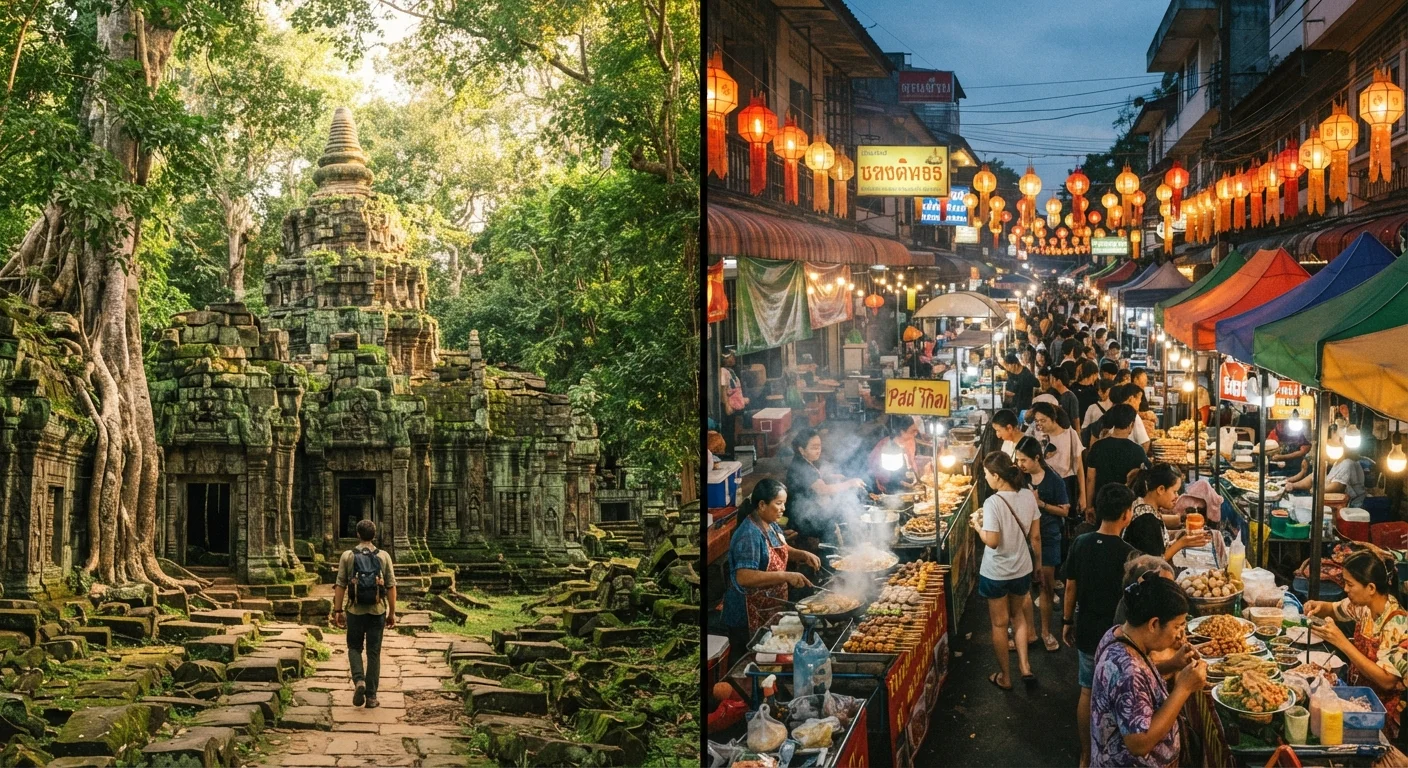
Photo credit: ArticlesHaven.net
In this article
Two of the world's top backpacking regions face off on cost, safety, cuisine, and ease of travel for US visitors on a budget.
Key Takeaways
- Southeast Asia generally offers lower daily costs than Central America, especially for food and lodging.
- Central America is significantly closer for US travelers, cutting flight time and often airfare.
- Both regions carry real safety considerations that vary considerably by country and area.
- Southeast Asia has more extensive backpacker infrastructure; Central America rewards slower, more independent travel.
- Visa logistics are simpler in Central America for most US passport holders.
- Season matters in both regions - rainy seasons affect costs, crowds, and accessibility.
Cost Breakdown: Where Your Dollar Goes Further
Daily costs are the most common deciding factor for budget travelers, and here Southeast Asia holds a clear edge. Across much of Thailand, Vietnam, and Cambodia, a traveler staying in budget guesthouses and eating local food can reasonably expect to spend $30-$50 per day - sometimes less. Accommodation options at the $8-$15 range are widely available, and street food meals often cost $1-$3.
Central America is affordable by global standards but not quite as cheap. Budget accommodations in Guatemala or Nicaragua typically run $12-$25 per night, and meals at local restaurants (called comedores) are inexpensive but rarely as low as Southeast Asia's street food floor. Costa Rica, popular and well-developed for tourism, sits noticeably higher - $60-$100 per day is realistic for a budget traveler there.
Flight costs flip the equation somewhat. Round-trip airfare from major US cities to Southeast Asia frequently runs $700-$1,200 or more, while flights to Central America can be found in the $300-$600 range from many hubs. For a short trip, that gap matters. For a month-long journey, lower daily costs in Southeast Asia often close it. See our trip budgeting guide for help modeling total costs before you decide.
| Criterion | Southeast Asia | Central America |
|---|---|---|
| Average daily budget (mid-range backpacker) | ~$35-$55/day | ~$45-$80/day |
| Round-trip airfare from US | $700-$1,200+ | $300-$600 |
| Flight duration from US | 15-22 hours | 3-7 hours |
| Visa requirements (US passport) | Varies by country; many visa-on-arrival | Visa-free entry in most countries |
| Backpacker infrastructure | Highly developed | Moderate, improving |
| Food variety and street food culture | Exceptional | Good, simpler |
| Eco-tourism and wildlife | Strong (varies by country) | Outstanding |
| Language barrier | Moderate to high | Low (Spanish widely spoken) |
Safety, Infrastructure, and Getting Around
Neither region is monolithic on safety. In Southeast Asia, popular tourist corridors in Thailand, Vietnam, and Bali are well-worn and relatively straightforward for solo travelers. Petty theft and scams targeting tourists exist but are widely documented and avoidable with basic precautions. Some areas in Myanmar and parts of the Philippines require more careful research given political or infrastructure conditions.
Central America carries a more varied safety profile. Honduras and parts of Guatemala have historically high crime rates in certain urban areas, while Belize, Costa Rica, and the tourist-heavy areas of Nicaragua are generally considered lower-risk for travelers. Sticking to established routes, avoiding travel at night, and using reputable transport are consistent recommendations across both regions.
Infrastructure for backpackers is more developed in Southeast Asia. A robust network of budget airlines, overnight buses, and traveler-oriented guesthouses makes multi-country trips logistically smooth. Central America has improving overland options, but road quality and transport reliability vary more sharply by country. Our article on visiting developing-world destinations covers infrastructure expectations in more depth.
Always Verify Current Travel Advisories
The US Department of State publishes country-specific travel advisories that are updated regularly. Conditions change, and what applied a year ago may not reflect the current situation. Before booking, check official government sources and your country's foreign affairs guidance for each destination you plan to visit. This is especially important for entry requirements, health precautions, and regional safety conditions.
Cuisine, Culture, and the Travel Experience
Southeast Asia's food culture is one of its strongest draws. Thai, Vietnamese, Khmer, and Indonesian cuisines are diverse, deeply regional, and available cheaply at markets and roadside stalls. Culinary tourism - cooking classes, food tours, night markets - is a well-developed part of the experience.
Central America's food is simpler and less celebrated internationally, though honest and filling. Rice, beans, plantains, and fresh seafood dominate. Guatemala stands out for its indigenous food traditions, and coastal areas in any country offer excellent fresh fish. It won't be a culinary destination in the same sense, but it won't disappoint those who aren't traveling primarily to eat.
Culturally, Southeast Asia offers an immersion into ancient religious traditions - Buddhist temples, Hindu-influenced architecture, and a density of UNESCO heritage sites that rewards curious travelers. Central America brings Mayan ruins, colonial cities, and living indigenous communities. It's a different kind of depth, less overwhelming in scale but no less meaningful.
For travelers weighing cultural density against ecological experience, consider that Central America punches above its weight on biodiversity. Howler monkeys, sea turtles, cloud forest hikes, and active volcanoes are accessible within short distances. If comparing to another Asia-Pacific destination, our Japan vs. South Korea comparison shows how even similar regions offer genuinely different trips. See also our look at budget vs. comfort travel styles if you're still deciding how you want to travel, not just where.
~15-22 hrs
Typical flight time from US to Southeast Asia
Depending on departure city and routing, most US travelers face a long-haul journey of 15-22 hours to reach major Southeast Asian hubs.
7
Countries in Central America
Guatemala, Belize, Honduras, El Salvador, Nicaragua, Costa Rica, and Panama can be combined in one overland trip, offering diverse experiences in a compact corridor.
$1-$3
Typical street food meal cost in Vietnam or Thailand
Local market stalls and roadside vendors in countries like Vietnam and Thailand routinely serve filling meals for the equivalent of $1-$3 USD.

Author
Articles Haven Editorial Contributor
Articles Haven Editorial Team is the collective byline for our editorial team and contributor network. Articles published under this byline or an editorial pen name are researched, written, and reviewed according to our editorial standards for clarity, consistency, and independence before publication.
View all articles →