
Japan vs. South Korea: Two Different Kinds of East Asian Travel
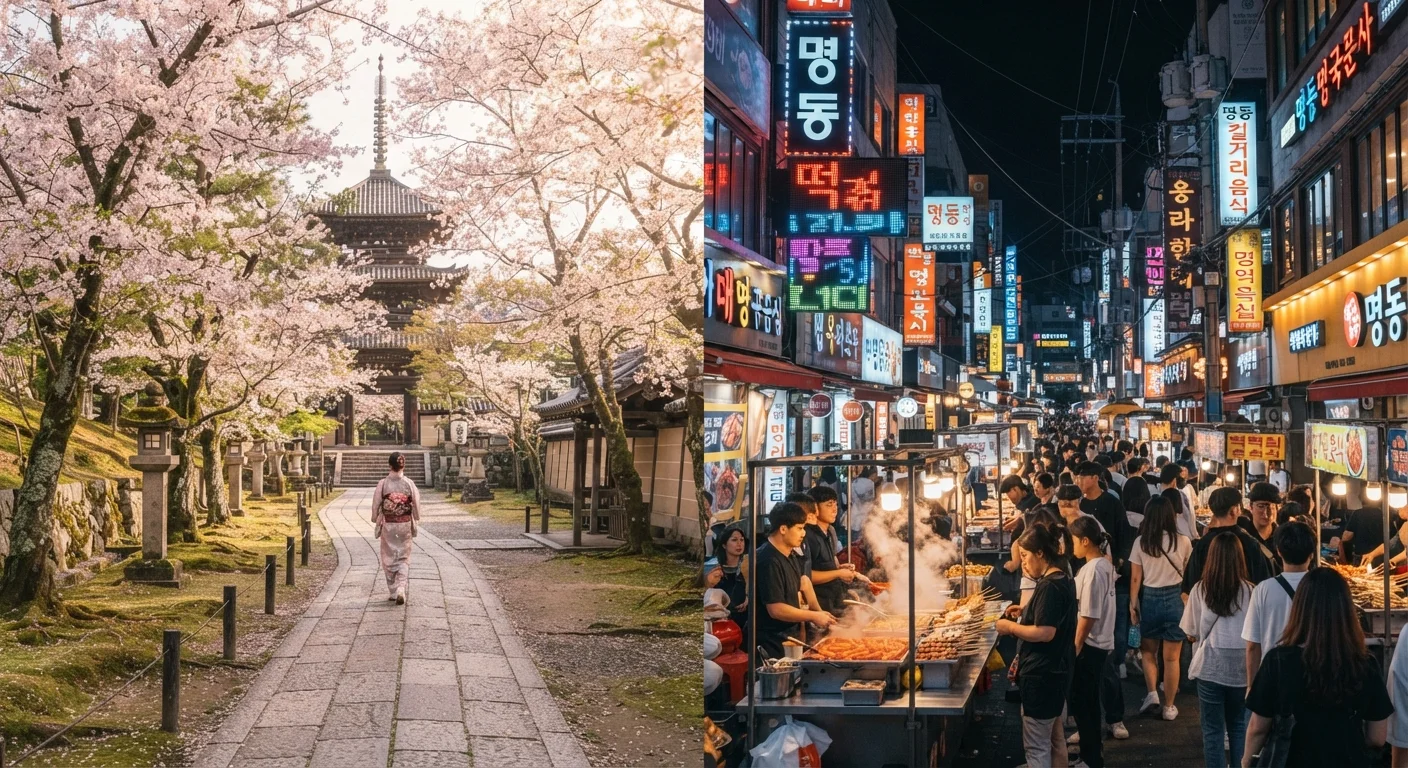
Photo credit: ArticlesHaven.net
In this article
Both are popular with US travelers, but Japan and South Korea offer very different trips. Compare pace, cost, food culture, and logistics.
Key Takeaways
- Japan generally costs more than South Korea for accommodation, dining, and activities.
- South Korea's Seoul-centric layout makes it easier to plan a shorter trip efficiently.
- Japan rewards longer trips; its regional diversity - Kyoto to Hokkaido - takes real time to explore.
- Both countries offer world-class food, but the styles and street-food accessibility differ significantly.
- Spring and autumn are peak seasons for both; summer brings heat and typhoon risk to each.
- Neither country requires visas for most US passport holders, but entry rules can change - always verify before traveling.
The Core Difference: Pace and Complexity
Japan and South Korea are often mentioned in the same breath as East Asian travel destinations, and for good reason - both are safe, infrastructure-rich, food-obsessed, and deeply interesting. But they deliver very different trips in practice.
Japan is a country that rewards patience and planning. Its sheer geographic spread, cultural layering, and regional variation mean most visitors feel they've barely scratched the surface. South Korea moves faster, feels more immediately legible to Western visitors, and concentrates much of its energy - culinary, cultural, commercial - in a single dominant city: Seoul.
For US travelers deciding between the two, the right question isn't which is better. It's which fits your trip length, travel style, and budget. As a general framing exercise, it helps to read about what shifts when you cross a border before diving into a specific destination comparison.
| Criterion | Japan | South Korea |
|---|---|---|
| Average daily cost (mid-range) | Higher (~$120-180/day) | Moderate (~$80-130/day) |
| Trip length needed | 10-14+ days recommended | 7-10 days sufficient |
| Inter-city transport | Shinkansen (bullet train) | KTX high-speed rail |
| Urban transit ease | Excellent, IC card system | Excellent, T-money card |
| Street food accessibility | Moderate, varies by city | High, widely available |
| English signage | Good in tourist areas | Good in Seoul and cities |
| Visa for US citizens | Not required (verify before travel) | Not required (verify before travel) |
| Geographic range | Wide - diverse regions | Compact - Seoul-centric |
Cost and Budget Realities
Japan has a reputation as an expensive destination, and while that's somewhat overstated - budget-conscious travelers can absolutely find affordable meals and guesthouses - it is generally pricier than South Korea. Accommodation in major Japanese cities, particularly Tokyo and Kyoto, skews higher. The Japan Rail Pass, while convenient, represents a significant upfront cost.
South Korea tends to be more forgiving on daily spend. Seoul's subway is cheap and comprehensive. Guesthouses and mid-range hotels offer solid value. Street food and convenience store meals are both inexpensive and genuinely good - not a compromise.
#3
Japan's rank among top US outbound destinations
Japan consistently ranks among the most-visited international destinations for US travelers, according to US Department of Commerce tourism data.
~17M
Foreign visitors to South Korea annually (pre-pandemic baseline)
South Korea's Korea Tourism Organization reported approximately 17 million international arrivals in 2019, with US visitors forming a significant share.
2.5 hrs
Seoul to Busan by KTX high-speed rail
South Korea's KTX rail service connects the two major cities in roughly 2.5 hours, making multi-city itineraries practical even on short trips.
Travelers exploring how to calibrate their spending against destination choice may find it useful to review budget versus comfort travel approaches as a framework before committing to either country's itinerary style.
Food Culture: Two Very Different Tables
Both countries take food seriously, but the dining cultures diverge. Japan emphasizes craft, specialization, and quiet reverence - a ramen shop that has served one recipe for 40 years is a point of pride, not limitation. Kaiseki (multi-course Japanese cuisine) and sushi omakase represent dining as performance art, though accessible options exist at every price point.
South Korea's food culture is louder, more communal, and arguably easier to navigate on a budget. Korean BBQ (where you grill your own meat at the table), bibimbap, tteokbokki (spicy rice cakes), and kimchi jjigae are all readily available and affordable. Street food markets like Gwangjang in Seoul offer a particularly accessible entry point. Spice tolerance matters: Korean food trends spicier and more intensely flavored than Japanese cuisine.
Dietary Restrictions: Plan Ahead in Both Countries
Travelers with vegetarian, vegan, or gluten-free requirements may find both Japan and South Korea moderately challenging. Japanese cuisine uses dashi (fish stock) widely, even in seemingly vegetarian dishes. Korean cuisine frequently includes fermented seafood products like jeotgal in dishes such as kimchi. Larger cities offer more options, and dedicated apps or guesthouse staff can help identify suitable restaurants. Researching this before arrival - not upon landing - makes the experience considerably smoother.
Logistics, Itinerary Shape, and Seasonal Timing
Japan's geography demands more planning. The country spans significant latitude - Okinawa in the south, Hokkaido in the north - and a multi-city itinerary requires thought about rail passes, regional transport, and time between destinations. A single-destination approach (Tokyo only, or Osaka/Kyoto base) is a legitimate option for first-timers. The single-destination vs. multi-city planning comparison is worth consulting if you're still mapping out your itinerary structure.
South Korea is more compact. A week in Seoul with day trips covers a lot of ground. Busan, the country's second city and a coastal hub, is two and a half hours by KTX high-speed rail from Seoul - doable as an overnight or short extension.
Seasonally, both countries peak in spring (cherry blossoms, mild temperatures) and autumn (foliage, cooler weather). Summer brings heat, humidity, and typhoon risk to both. Winter is cold in both countries but far more extreme in Seoul than in Tokyo or Kyoto. Verify current travel advisories and entry requirements through official government sources before booking - policies can change.
If you're still weighing East Asia against other international options entirely, the Southeast Asia vs. Central America comparison offers a useful reference point for how dramatically costs and travel styles can vary by region.

Author
Articles Haven Editorial Contributor
Articles Haven Editorial Team is the collective byline for our editorial team and contributor network. Articles published under this byline or an editorial pen name are researched, written, and reviewed according to our editorial standards for clarity, consistency, and independence before publication.
View all articles →