
New Zealand vs. Iceland: Remote Nature Travel Compared
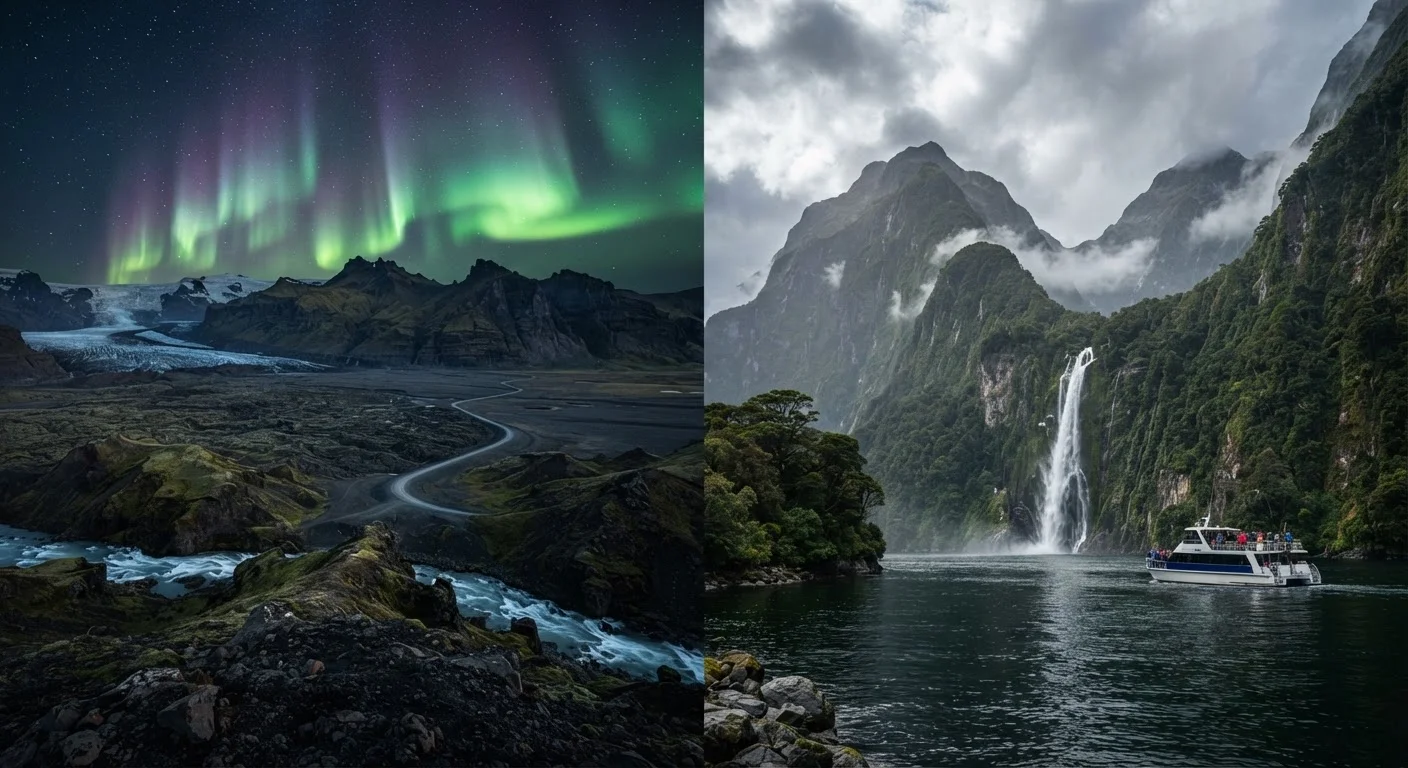
Photo credit: ArticlesHaven.net
In this article
Both promise dramatic landscapes and outdoor adventure, but New Zealand and Iceland deliver very different experiences. See how they stack up.
Key Takeaways
- New Zealand offers more climate variety and longer hiking seasons than Iceland.
- Iceland is generally more expensive per day, particularly for food and accommodation.
- Both destinations require careful seasonal planning - timing significantly shapes what's accessible.
- New Zealand suits multi-week road trips; Iceland rewards compact, loop-based itineraries.
- Long-haul flight costs to New Zealand from the US are typically higher than flights to Iceland.
- Visa-free entry applies to US citizens in both countries, but entry requirements can change - verify before travel.
Landscape Character: What Each Country Actually Looks Like
Both Iceland and New Zealand are defined by geological youth - volcanoes, glaciers, and forces that are still actively reshaping the land. But the character of each is distinct.
Iceland is sparse and elemental: black lava fields, steaming fumaroles, massive icecaps, and open tundra. The landscape can feel almost extraterrestrial. There's relatively little tree cover, which means unobstructed views but also limited shade and shelter on exposed terrain.
New Zealand is lusher and more varied. The South Island combines Southern Alps glaciers with ancient beech forest, dramatic fjords, and braided river valleys. The North Island adds geothermal landscapes, subtropical coastline, and rolling farmland. The range of ecosystems within a single country is unusual.
For travelers drawn to a single, dramatic visual identity, Iceland delivers it with clarity. For those who want landscape variety across a longer trip, New Zealand's multi-island structure is hard to match. See how they compare side by side below.
| Criterion | New Zealand | Iceland |
|---|---|---|
| Geographic size | 268,000 km² (two main islands) | 103,000 km² (one main island) |
| Peak travel season | December-February (Southern Hemisphere summer) | June-August (midnight sun) |
| Typical daily cost (estimate) | Moderate-high | High-very high |
| Flight time from US East Coast | ~17 hours (with stopover) | ~6-7 hours direct |
| Northern lights viewing | Not available | September-March (weather dependent) |
| Landscape variety | Very high (alpine, coastal, geothermal, forest) | High (volcanic, glacial, tundra) |
| Wildlife diversity | High (endemic birds, marine mammals) | Moderate (puffins, seals, reindeer) |
| Self-drive suitability | Excellent, left-hand traffic | Excellent, right-hand traffic |
| Ideal trip length | 2-4 weeks | 1-2 weeks |
Seasonality and Timing: When You Go Changes Everything
Timing is arguably the most important planning variable for both destinations - and they operate on very different seasonal logic. Understanding how peak season works by destination is essential before booking either trip.
Iceland's tourism season peaks from June through August, when days are almost endless and the highland roads open. Winter (November to February) is the prime window for northern lights but comes with limited daylight, closed interior routes, and unpredictable road conditions. Shoulder months like May and September offer a middle ground - fewer crowds, some highland access, and a reasonable aurora chance.
New Zealand, sitting in the Southern Hemisphere, flips the calendar. Its summer runs December through February, which is prime hiking season in the Southern Alps. Winter (June to August) brings ski season to the South Island and can make some high passes impassable. Spring and autumn (March-May, September-November) are often considered ideal for road trips - moderate weather, fewer crowds, and good visibility.
1,332 km
Length of Iceland's Ring Road
Iceland's Route 1 circles the entire island, forming the backbone of most self-drive itineraries and passable for most vehicles in summer.
3,000+ km
New Zealand State Highway network length (South Island alone)
The South Island's highway network spans over 3,000 km, reflecting how much more ground a full New Zealand itinerary typically covers.
~90 days
Visa-free stay allowed for US citizens
US passport holders can visit both Iceland (Schengen area rules apply) and New Zealand without a visa for short stays - verify current entry rules before travel.
One practical note: New Zealand's school holiday periods (especially December-January) drive up domestic travel prices significantly. Iceland's shoulder seasons can offer better value than peak summer without sacrificing much access.
Cost and Logistics: What to Budget For
Neither destination is cheap for international travelers, but Iceland consistently ranks among the more expensive countries in Europe for daily expenditure. Meals, petrol, and accommodation in Iceland - particularly outside Reykjavik - can strain budgets quickly. Camping with a tent or campervan is one of the few genuine cost-reduction strategies, though Iceland's weather demands proper gear.
New Zealand is costly compared to Southeast Asia or parts of Europe, but generally more affordable than Iceland on a per-day basis. The freedom camping culture is well-developed, and a campervan circuit of both islands is a popular budget-conscious approach. Food costs in New Zealand's cities and towns are more moderate than Iceland's, and grocery shopping for self-catering is practical throughout.
Flight costs cut the other direction: New Zealand is a long-haul destination from the continental US (typically 12-17+ hours depending on routing), while Iceland is reachable from the US East Coast in 6-7 hours. Round-trip airfares to New Zealand are generally higher, which matters for shorter trips where flights represent a larger share of total cost.
Check Entry Requirements Before You Book
New Zealand introduced an Electronic Travel Authority (NZeTA) requirement for visa-waiver travelers, including US citizens. Iceland, as part of the Schengen Area, follows Schengen entry rules - and the EU's ETIAS authorization system is expected to apply in the future. Entry requirements and travel advisories can change. Always verify current rules through official government travel portals before purchasing flights or accommodation.
For travelers choosing between the two, the total trip cost often equalizes when flight distance is factored in - but the distribution shifts. Iceland costs more on the ground; New Zealand costs more to reach.
Travel Style Fit: Who Each Destination Suits
Iceland and New Zealand both reward independent travelers with a comfort tolerance for unpredictable weather. But they attract different instincts.
Iceland works well for people who want a single, intense experience packed into a week or two. The Ring Road - roughly 1,332 kilometres encircling the island - gives a structured framework that most visitors follow. It's a relatively linear journey, which suits first-time international independent travelers. The downside is that Iceland can feel formulaic if you follow the same well-worn itinerary as everyone else.
New Zealand rewards travelers who embrace spontaneity and have time to explore. The balance between nature immersion and urban stopovers is easier to manage here, since cities like Queenstown, Wellington, and Christchurch sit close to wilderness areas. Road trips are genuinely varied - you're not circling one island on a single route.
For wildlife enthusiasts, New Zealand adds a layer Iceland doesn't: endemic birdlife including kiwi, kea, and countless seabirds, plus marine mammal encounters along coastlines. If natural history is part of the draw, this tilts the scales noticeably.
Both destinations are accessible for solo travelers and are generally considered safe for independent exploration. Verify current entry requirements and any travel advisories through official government sources before making bookings.

Author
Articles Haven Editorial Contributor
Articles Haven Editorial Team is the collective byline for our editorial team and contributor network. Articles published under this byline or an editorial pen name are researched, written, and reviewed according to our editorial standards for clarity, consistency, and independence before publication.
View all articles →