
What "Travel Season" Actually Means — and Why It Varies by Destination
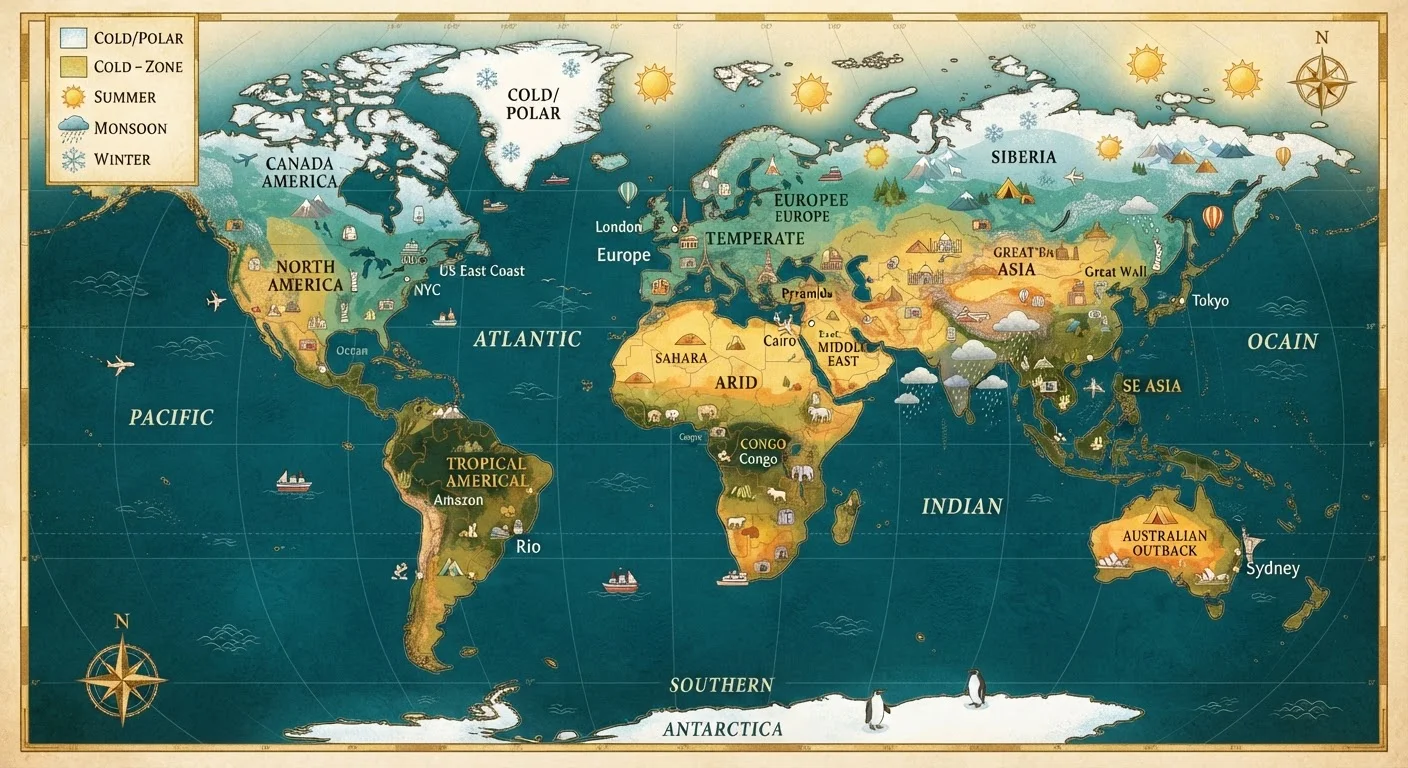
Photo credit: ArticlesHaven.net
In this article
High season in Iceland is not high season in Thailand. Understand how peak, shoulder, and off-season shift dramatically by region.
Key Takeaways
- Peak season is defined by the destination, not the calendar - December is high season in some places and low season in others.
- Weather, local holidays, school calendars, and events all shape when a place gets crowded.
- Shoulder season often offers a balance of reasonable conditions and lower costs.
- Off-season doesn't mean bad conditions - it can mean fewer crowds, lower prices, and a more local experience.
- Understanding a destination's season helps you set realistic expectations for cost, availability, and weather.
Why "Season" Isn't One-Size-Fits-All
Ask someone when the best time to visit Europe is, and they'll likely say summer. Ask the same about Costa Rica, and the answer flips - summer is rainy season there. This fundamental disconnect trips up a surprising number of travelers who assume a single global calendar governs when destinations are crowded, expensive, or worth visiting.
Travel season is shaped by a combination of climate, hemisphere, local school schedules, religious or cultural holidays, and sometimes specific events like festivals or sporting seasons. None of these factors align neatly across the globe, which is why a confident answer about "high season" is only useful when it's attached to a specific place.
Understanding the framework - peak, shoulder, and off-season - helps you decode any destination's rhythm before you book. For practical advice on how this timing affects what you actually pay, explore how demand cycles influence flight and hotel pricing.
~1.4 billion
International tourist arrivals globally per year (pre-pandemic baseline)
According to UNWTO data, global international arrivals approached 1.4 billion annually before 2020, with demand heavily concentrated in peak seasons.
30-50%
Typical price variation between peak and off-season accommodations
Industry surveys and booking platform analyses consistently show accommodation rates varying 30-50% or more between high and low demand periods, depending on destination.
3-4 months
Average length of a destination's true peak window
Most popular destinations experience concentrated peak demand over a 3-4 month window, leaving shoulder and off-season periods underutilized by travelers.
Peak, Shoulder, and Off-Season: What Each Actually Means
Peak season is when a destination sees its highest visitor volume. Weather is typically at its most favorable, school holidays align, and the full range of attractions and services are operating. The downside: accommodations book out early, prices climb, and popular sites get crowded.
Shoulder season sits on either side of peak. The weather may be slightly less predictable, but crowds thin noticeably. Many travelers consider shoulder season the practical sweet spot - good enough conditions with fewer trade-offs on cost and availability.
Off-season (sometimes called low season) is when visitor numbers drop significantly. This often coincides with weather that many travelers want to avoid - monsoons, extreme heat, or cold. That said, off-season is not uniformly bad. Some destinations remain very pleasant; they simply lack the demand. Travelers frequently misjudge what off-season actually delivers - it's worth examining assumptions before writing a window off entirely.
Research the Destination's Calendar, Not Yours
When evaluating travel timing, look up school holiday schedules, monsoon windows, and major festivals specific to your destination country. A shoulder-season date in your home country's calendar may land squarely in another country's peak. A few minutes of destination-specific research can significantly change your timing decision.
How Climate and Hemisphere Flip the Script
The most common source of confusion is hemispheric difference. When it's summer in the Northern Hemisphere, it's winter in Australia, South Africa, and Argentina. A New Zealand ski trip in August makes perfect geographic sense - it just requires recalibrating assumptions built around a North American or European calendar.
Within the tropics, the relevant distinction isn't summer vs. winter - it's wet season vs. dry season. Thailand, Bali, and many Caribbean islands define their peak around rainfall patterns, not temperature extremes. Visitors often overlook this and book during a region's rainy season without realizing it.
High-altitude destinations add another variable: accessibility. Some mountain regions are simply unreachable during winter months due to road closures or safety concerns, which compresses peak season into a narrow window regardless of traveler demand. For a structured approach to matching your timing to a destination's actual conditions, researching seasonal patterns before booking is a practical next step.
Local Events and Demand Spikes Within a Season
Even within a designated peak period, local events can create micro-surges that dwarf normal demand. A major festival, an international sporting event, or a national holiday can send prices sharply higher and availability sharply lower for a concentrated window. These spikes can be easy to overlook when you're focused only on general seasonal guidance.
It's worth checking a destination's event calendar alongside its seasonal profile. A shoulder-season trip could coincide with a major local celebration that turns a quiet period into a de facto peak. Conversely, a peak-season trip timed to avoid school holidays in the destination country's calendar can be notably calmer than the label "peak" suggests.
The Trip Planning Tips hub offers further guidance on building itineraries that account for these nuances. Being aware of local demand drivers - not just the global travel calendar - is what separates a well-timed trip from one that caught you off guard.
Seasons Can Vary Within a Single Country
Large or geographically diverse countries - like India, Mexico, or the United States - can have dramatically different seasonal profiles depending on the specific region you're visiting. A blanket "best time to visit" for a country may not apply to your actual destination. Always drill down to the specific city, coast, or region you plan to travel to.
Frequently Asked Questions

Author
Articles Haven Editorial Contributor
Articles Haven Editorial Team is the collective byline for our editorial team and contributor network. Articles published under this byline or an editorial pen name are researched, written, and reviewed according to our editorial standards for clarity, consistency, and independence before publication.
View all articles →