
Store Brands vs. Name Brands: What the Research Actually Shows
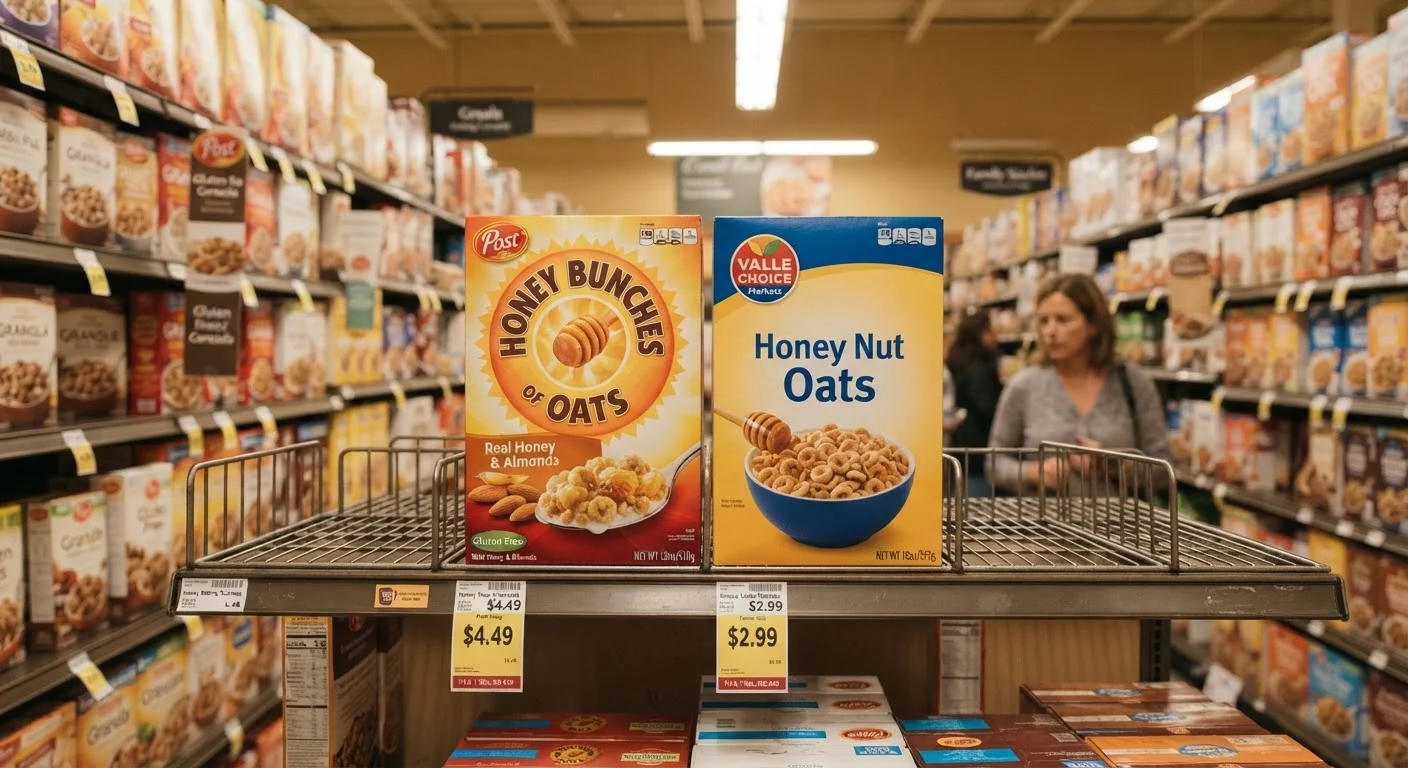
Photo credit: ArticlesHaven.net
In this article
Generic and private-label products are often made in the same facilities as national brands. Here's how to evaluate when switching makes sense.
Key Takeaways
- Many store-brand products are manufactured in the same facilities as their name-brand counterparts.
- Quality differences between store and name brands vary significantly by product category.
- Name brands invest heavily in marketing, which accounts for a substantial portion of their price premium.
- Independent taste tests and consumer research show store brands win in some categories but lose in others.
- Switching selectively - rather than entirely - is the most practical approach for most shoppers.
The Manufacturing Reality Behind the Label
One of the most counterintuitive facts in consumer retail is that a significant share of store-brand products are made by the same manufacturers that produce name-brand equivalents - sometimes on the same production line, in the same shift. This is particularly common in categories like dairy, canned vegetables, bottled water, and over-the-counter pharmaceuticals.
The reason is straightforward economics: large food and consumer goods manufacturers have excess production capacity. Supplying a retailer's private label fills that capacity without additional capital investment. The retailer gets a margin-friendly product; the manufacturer keeps their lines running.
This doesn't mean every store brand is identical to its name-brand counterpart. Retailers sometimes specify slightly different formulations, ingredient grades, or packaging tolerances to hit a target cost. But in many cases, the differences are minimal - and well within the range that most consumers would never detect in a blind test. For a broader look at how price alone can mislead, see why price-only comparisons often backfire.
| Criterion | Name Brands | Store Brands |
|---|---|---|
| Average price difference | Higher (20-40% premium typical) | Lower across most categories |
| Manufacturing source | Proprietary or contracted facilities | Often same facilities as name brands |
| OTC drug equivalence | Sets the branded standard | FDA-required active ingredient match |
| Marketing investment | Heavy - built into price | Minimal - cost not passed on |
| Formulation consistency | Tightly controlled to brand spec | Varies by retailer and category |
| Blind test performance | Often preferred when labeled | Competitive in unlabeled tests |
| Best product categories | Specialty, proprietary recipes, snacks | Staples, dairy, cleaning, generics |
Where the Research Points - and Where It Doesn't
Consumer research on store brands vs. name brands has been conducted for decades, and the findings are nuanced. Studies from academic consumer behavior researchers and independent testing organizations have found that store brands perform competitively in commodity categories - basic foods, cleaning supplies, and generic medications - but that name brands tend to hold an edge in categories involving complex formulations, brand-driven taste expectations, or technology.
~25%
Typical store-brand price discount vs. name brands
Private Label Manufacturers Association data has consistently shown store brands priced roughly 20-30% below comparable national brands across grocery categories.
~1 in 5
Grocery items sold as private label in the US
Private-label products have grown to account for a substantial and increasing share of total US grocery unit sales over recent years.
80%+
Consumer satisfaction with store-brand staples
Consumer research surveys in multiple studies have found high satisfaction rates among shoppers who switched to store brands in basic food and household product categories.
One consistent finding is the role of expectations. Blind taste tests frequently show narrower gaps between store and name brands than labeled tests do. When people know which product they're evaluating, perceived brand quality influences their judgment. This psychological dimension is real and worth accounting for - especially if you're buying for someone else in the household who has strong brand preferences.
Generic OTC drugs deserve a specific mention: in the US, the FDA requires that generic medications contain the same active ingredients, in the same dosage and strength, with the same route of administration as the branded version. This is a regulatory equivalence standard, not an approximation.
Generic OTC Drugs: What FDA Equivalence Means
In the United States, the FDA requires that generic over-the-counter drugs contain identical active ingredients, dosages, and administration routes as their brand-name equivalents. Inactive ingredients - fillers, binders, coatings - may differ, and in rare cases this can affect tolerability for sensitive individuals. If you have specific sensitivities or conditions, a pharmacist is the right person to consult before switching. This information is general in nature and is not a substitute for professional medical advice.
A Category-by-Category Approach Makes More Sense Than an All-or-Nothing Switch
The practical takeaway from the research isn't "always buy store brands" - it's that category matters enormously. A blanket switch will almost certainly disappoint you in some product areas while saving you meaningfully in others.
Categories where store brands tend to perform well include: basic pantry staples (flour, sugar, canned tomatoes, dried pasta), dairy products (butter, milk, shredded cheese), cleaning and laundry products, and OTC medications. Categories where name brands more reliably justify their premium include proprietary snack foods, carbonated beverages with signature formulas, and certain personal care products where a specific active ingredient concentration is key to your routine.
Building a shopping habit around selective switching - rather than brand loyalty or blanket skepticism - is the kind of intentional approach that holds up across budgets. It pairs naturally with other informed habits covered in practices intentional shoppers use consistently. And if you're evaluating where to make those purchases, the channel matters too - see online vs. in-store shopping trade-offs for context on how retail format affects your options.
This article is for general informational purposes only. References to OTC drug regulations reflect publicly available FDA guidance; readers should consult a pharmacist or healthcare provider for advice specific to their health needs.

Author
Articles Haven Editorial Contributor
Articles Haven Editorial Team is the collective byline for our editorial team and contributor network. Articles published under this byline or an editorial pen name are researched, written, and reviewed according to our editorial standards for clarity, consistency, and independence before publication.
View all articles →