
Online Shopping vs. In-Store: When Each One Actually Works Better
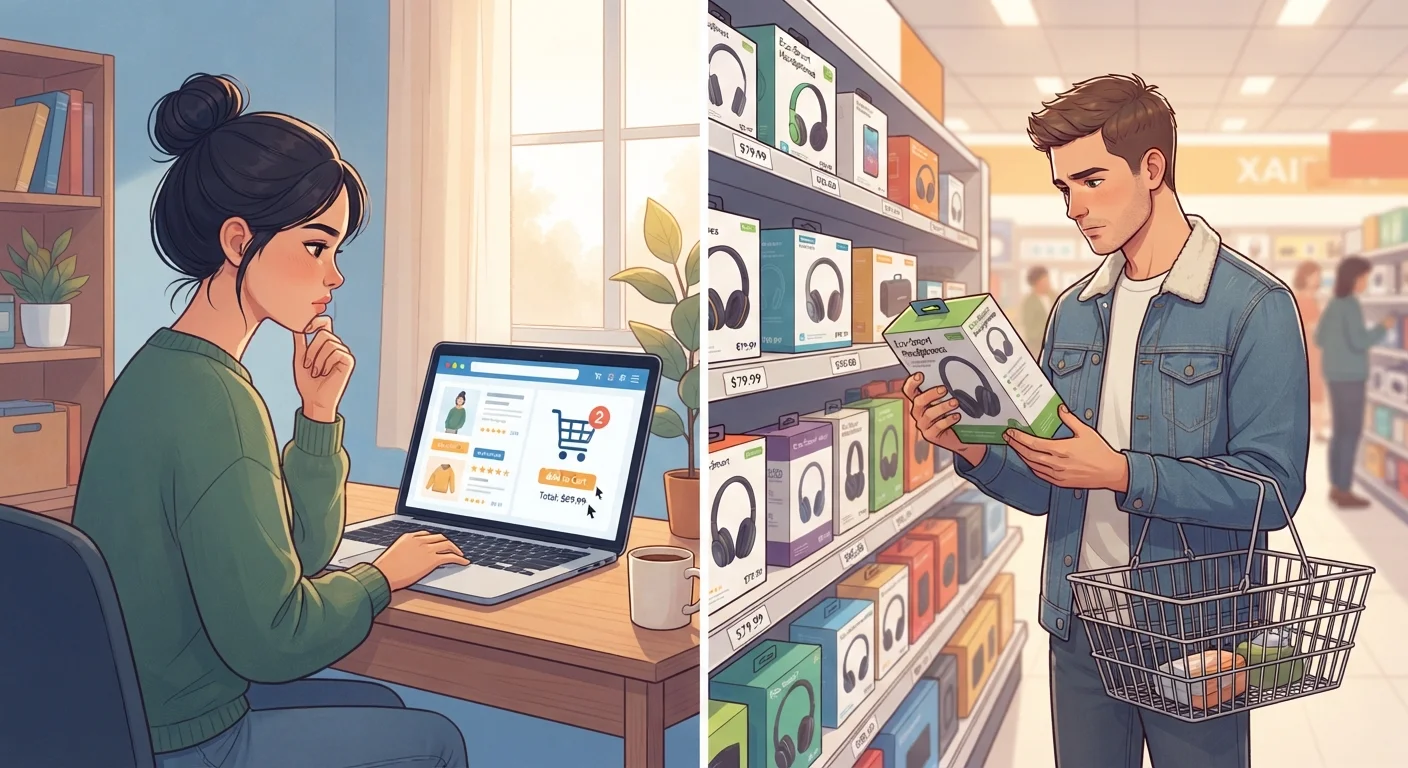
Photo credit: ArticlesHaven.net
In this article
Neither channel is universally superior. This side-by-side look at cost, convenience, and risk helps you decide where to shop for what.
Key Takeaways
- Neither online nor in-store shopping is universally superior - the better choice depends on the product category.
- Online shopping generally offers wider selection and easier price comparison, but sensory evaluation is impossible.
- In-store shopping lets you assess quality directly, but limits comparison and may involve upsell pressure.
- Return logistics and fraud risk differ meaningfully between channels and should factor into your decision.
- High-consideration purchases - furniture, clothing, electronics - often benefit from a hybrid approach.
- Shipping costs and delivery timelines can erode the apparent price advantage of online purchases.
The Core Trade-Off: Convenience vs. Confidence
Online shopping's central promise is convenience - shop from anywhere, compare prices across dozens of retailers in minutes, and have items delivered to your door. In-store shopping's core advantage is certainty - you can hold the item, assess quality, confirm color accuracy, and walk out with it the same day.
The problem is that consumers often default to one channel out of habit rather than matching the channel to the purchase type. That mismatch is where buying mistakes happen. Someone orders a sofa online based on photos and discovers the color is nothing like the screen rendering. Someone buys electronics in-store without checking whether the same model is available elsewhere at a lower price.
A practical rule: the more sensory judgment a purchase requires, the stronger the case for in-store. The more the purchase is research-driven and repeatable, the more online shopping pays off. This end-to-end guide to smarter everyday shopping walks through how to approach each stage of the decision systematically.
| Criterion | Online Shopping | In-Store Shopping |
|---|---|---|
| Selection breadth | Typically much wider | Limited to store inventory |
| Price comparison ease | Easy - multiple tabs, tools | Difficult without extra effort |
| Sensory evaluation | Not possible | Full - touch, fit, color |
| Availability speed | 1-5+ days shipping | Immediate |
| Return process | Varies; may require shipping | Usually simpler, in person |
| Fraud and misrepresentation risk | Higher on some platforms | Lower for branded retailers |
| Upsell / impulse pressure | Algorithmic recommendations | Staff and in-store displays |
| Shipping and handling cost | May apply; varies by retailer | None (travel cost instead) |
Price and Selection: Where Online Has a Real Edge
Online retailers typically carry broader selection than any single physical store. Niche sizes, discontinued colorways, or specialty product variants are far more likely to appear in an online catalog. Price transparency is also higher - comparison tools, browser extensions, and review aggregators make it easy to know whether you're paying a fair price before committing.
That said, the apparent price advantage deserves scrutiny. Shipping fees, return shipping costs, and the time cost of waiting for delivery can close the gap quickly. Price-only comparisons routinely overlook these factors, and the same principle applies when comparing online versus in-store pricing.
~22%
US retail sales conducted online
According to U.S. Census Bureau estimates, e-commerce represents roughly one-fifth of total retail sales, meaning in-store still accounts for the large majority of transactions.
30%
Average online return rate
Industry estimates from the National Retail Federation suggest online return rates are roughly double those of in-store purchases, adding cost and friction to the channel.
2-in-3
Consumers who research online before buying in-store
Research from Forrester and similar firms consistently finds a majority of in-store purchases are preceded by online research, reinforcing the value of a hybrid approach.
For shoppers who rely on apps, it's worth noting that pricing can differ between mobile and desktop interfaces. The article on shopping apps vs. desktop shopping covers how those differences play out in practice.
Risk, Returns, and What Can Go Wrong
Online shopping introduces risks that don't exist in-store: items that look different in person than in photos, counterfeit or misrepresented products on third-party marketplaces, and return processes that require repackaging and shipping. Many retailers offer free returns, but some charge restocking fees or require the buyer to cover return postage - terms that are easy to overlook before purchasing.
In-store shopping carries its own risks, though they're different in character. Upsell pressure from sales staff, limited time to research alternatives on the spot, and impulse purchases driven by in-store displays are documented patterns. The physical format can also create a false sense of urgency - "only two left" messaging exists in both channels, but it lands differently face-to-face.
Check Return Policies Before You Buy
Return terms vary significantly between retailers and between online and in-store purchases from the same brand. Some online orders carry restocking fees or exclude certain categories from free returns. Reading the return policy before completing a purchase - not after - can prevent a frustrating situation, especially for higher-priced items.
Fraud risk is meaningfully higher online, particularly on peer-to-peer marketplaces or lesser-known sites. Paying with a credit card (which provides dispute rights) and buying through established platforms reduces but doesn't eliminate that risk. In-store fraud is less common, though receipt-swapping scams and return fraud do occur.
The Hybrid Approach: Using Both Channels Intentionally
For major purchases - electronics, furniture, appliances, footwear - the most reliable approach is to use both channels at different stages. Browse in-store to evaluate quality and fit, then compare prices online before committing. Some retailers will match prices found elsewhere, which lets you get the certainty of an in-person evaluation and the pricing transparency of online research.
The reverse also works: research specifications and reviews online, then visit a store to verify before purchasing. This is especially useful for high-consideration product categories where the difference between models isn't obvious from descriptions alone.
If price comparison is part of your pre-purchase routine, the practical pre-purchase comparison routine outlines a straightforward process that works for both channels. And for shoppers evaluating club memberships or warehouse stores - which blend aspects of both models - this breakdown of warehouse club memberships is worth reviewing before committing to an annual fee.

Author
Articles Haven Editorial Contributor
Articles Haven Editorial Team is the collective byline for our editorial team and contributor network. Articles published under this byline or an editorial pen name are researched, written, and reviewed according to our editorial standards for clarity, consistency, and independence before publication.
View all articles →