
Layaway vs. Buy Now Pay Later: Two Ways to Spread Costs, Two Very Different Risks
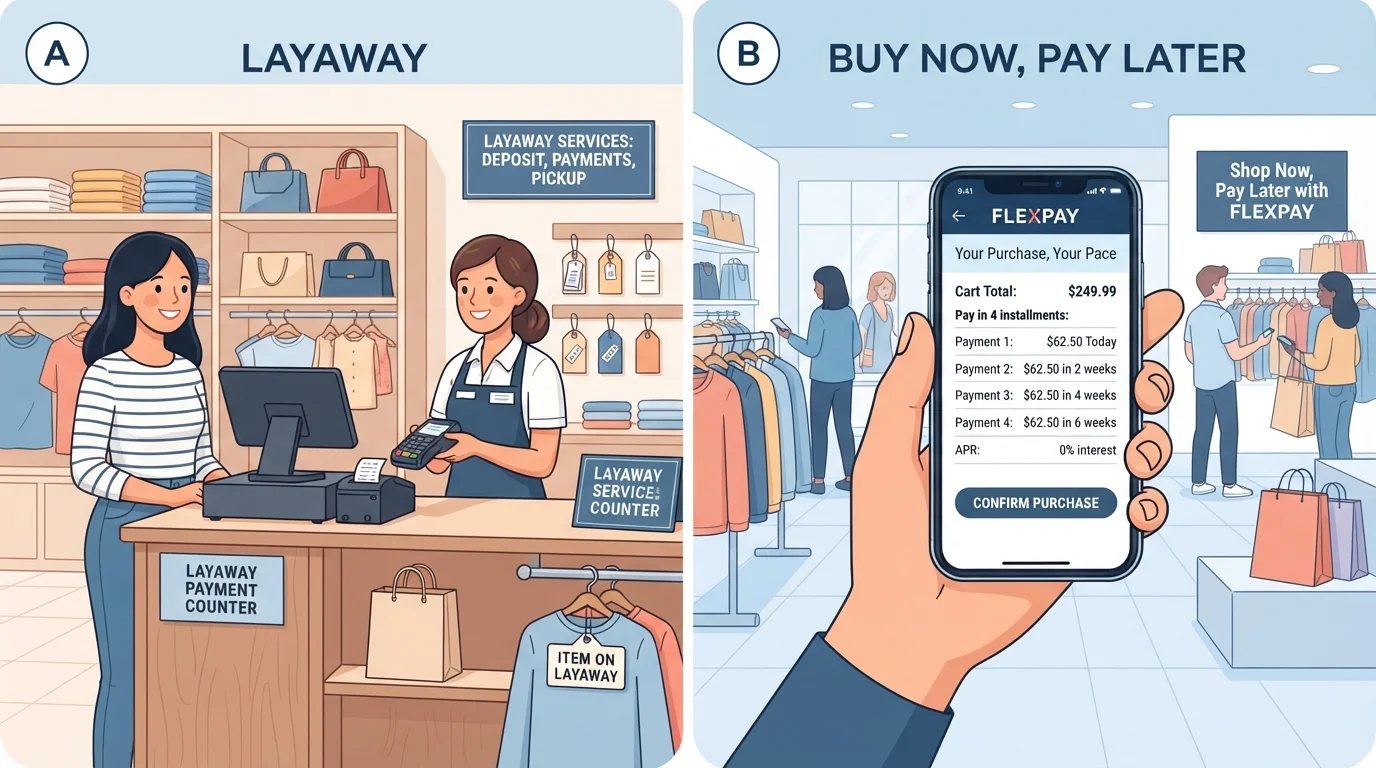
Photo credit: ArticlesHaven.net
In this article
Both options let you pay for purchases over time, but the mechanics, risks, and credit implications differ significantly. Here's a clear comparison.
Key Takeaways
- With layaway, you don't receive the item until it's fully paid off - reducing your immediate financial risk.
- BNPL gives you the item upfront but creates a debt obligation that can carry fees or interest if missed.
- Layaway programs may charge cancellation or service fees; always read the terms before enrolling.
- Some BNPL products report missed payments to credit bureaus, which can impact your credit score.
- Neither option is universally safer - the right choice depends on your budget discipline and the purchase type.
How Each Model Actually Works
Layaway is a retail arrangement where a store holds a physical item for you while you make scheduled payments. Only after the final payment do you take the merchandise home. It's a system that predates credit cards and was especially common in department stores through much of the 20th century. A few major retailers still offer it, though it's less widespread than it once was.
Buy Now, Pay Later (BNPL) flips that sequence entirely. You receive the item at checkout - or it ships immediately - and then repay the provider in installments, typically over four to six weeks or longer depending on the plan. BNPL products are offered through standalone apps and are increasingly embedded at the checkout stage of online retailers. Some plans charge zero interest if paid on time; others carry deferred interest or fees after a promotional window.
The core structural difference: layaway carries no debt risk because no purchase is finalized until you've paid. BNPL creates an immediate financial obligation. For a broader look at how payment structures shape real financial trade-offs, see our comparison of leasing vs. buying in the auto context - the same logic around obligation timing applies.
| Criterion | Layaway | Buy Now, Pay Later (BNPL) |
|---|---|---|
| When you get the item | After final payment | Immediately at checkout |
| Debt created | No - you pre-pay | Yes - you owe installments |
| Interest charges | None (fees may apply) | Varies - often 0% if on time |
| Cancellation terms | Fee often applies | Depends on provider |
| Credit check required | Typically no | Soft or hard inquiry possible |
| Credit score impact | None | Possible if payments missed |
| Available online | Rarely | Widely available |
| Consumer dispute protections | Standard retail return policies | Varies; may be limited |
Fees, Interest, and the Fine Print
Layaway is often marketed as interest-free, and technically that's true - there's no borrowing involved. However, that doesn't mean it's cost-free. Retailers commonly charge a service fee to open a layaway account (often $5-$15) and a cancellation fee if you back out before completing payments. If an item goes on sale after you've enrolled, you may not automatically receive the lower price. These terms vary significantly, so reviewing program details before committing matters.
BNPL fee structures are more varied and can be harder to track. Many "pay in 4" plans are genuinely interest-free if all installments are made on time. But late payment fees are common - sometimes a flat dollar amount, sometimes a percentage of the missed installment. Longer-term BNPL plans (those stretching six months to a year or more) frequently carry annual percentage rates (APRs) that rival or exceed a standard credit card. The Consumer Financial Protection Bureau (CFPB) has flagged that BNPL disclosures are inconsistent across providers, which makes comparison difficult for consumers.
360%+
BNPL market growth since 2019
According to the Consumer Financial Protection Bureau, BNPL loan originations grew sharply between 2019 and 2021 as digital checkout integration expanded.
1 in 4
BNPL users who reported paying a late fee
A survey conducted by the Pew Charitable Trusts found that a significant share of BNPL users incurred late fees, often because installment dates didn't align with pay cycles.
~$5-$15
Typical layaway service fee range
Retailers that still offer layaway commonly charge upfront service or processing fees, though exact amounts vary by retailer and program.
For shoppers who also weigh big recurring costs, our look at subscription boxes vs. one-time purchases explores similar themes around hidden ongoing costs.
Credit Impact and Consumer Protections
Traditional layaway programs don't involve a credit check and don't report to credit bureaus. This makes them accessible to consumers with limited or poor credit, and there's no downside credit risk if you cancel - beyond losing any non-refundable fees.
BNPL is more complicated from a credit standpoint. Many providers run a soft credit inquiry at signup (which doesn't affect your score), but some run hard inquiries for longer-term plans. More importantly, some BNPL providers now report payment history to credit bureaus. Missed or late payments can appear on your credit report, potentially lowering your score. At the same time, on-time BNPL payments don't always help build your credit, depending on the provider's reporting practices.
Consumer protections also differ. Purchases made with a credit card - which some BNPL services allow as the underlying funding method - may carry dispute rights under federal law. Purchases funded directly through a BNPL provider's debit-style system often carry fewer formal protections. If a product arrives damaged or a merchant fails to deliver, resolving disputes can be more complex. This protection gap is a practical reason to understand exactly how a BNPL plan is structured before using it. For context on how financial product structures affect real risk exposure, our article on liability-only vs. full coverage auto insurance walks through a comparable gap-analysis framework.
BNPL Is Not Regulated Like Credit Cards
Because many BNPL products are structured as individual installment loans rather than revolving credit lines, they aren't subject to all the same federal consumer protections that apply to credit cards. This includes certain Truth in Lending Act disclosures and chargeback rights. The regulatory landscape is evolving - the CFPB has signaled increased scrutiny of the sector - but for now, consumers should not assume BNPL offers the same protections as credit card purchases.
Choosing the Right Option for Your Situation
The better choice depends almost entirely on your personal spending habits and what you're buying. Layaway suits a shopper who's disciplined enough to make steady payments but doesn't trust themselves to avoid using an item once it's in hand. It's also a reasonable path for non-urgent purchases - holiday gifts, for instance - where you have lead time to pay gradually without needing the item immediately.
BNPL suits situations where you genuinely need the item now and have a reliable plan to make each installment payment on schedule. It's widely available for online shopping, which the brick-and-mortar-only nature of most layaway programs can't match. See our piece on online shopping vs. in-store for more context on where each channel excels.
Either way, both options work best when you've verified the total cost - including all fees - before enrolling, and when the purchase fits within a realistic budget without requiring either plan to stretch your finances to a breaking point.
This article is for general informational purposes only and does not constitute financial or legal advice. Terms for both layaway and BNPL programs vary by provider. Always read program disclosures carefully and consider consulting a financial adviser if you're unsure how these options affect your personal financial situation.

Author
Articles Haven Editorial Contributor
Articles Haven Editorial Team is the collective byline for our editorial team and contributor network. Articles published under this byline or an editorial pen name are researched, written, and reviewed according to our editorial standards for clarity, consistency, and independence before publication.
View all articles →