
Vacuum Sealers vs. Zip-Lock Storage: What Actually Extends Food Freshness
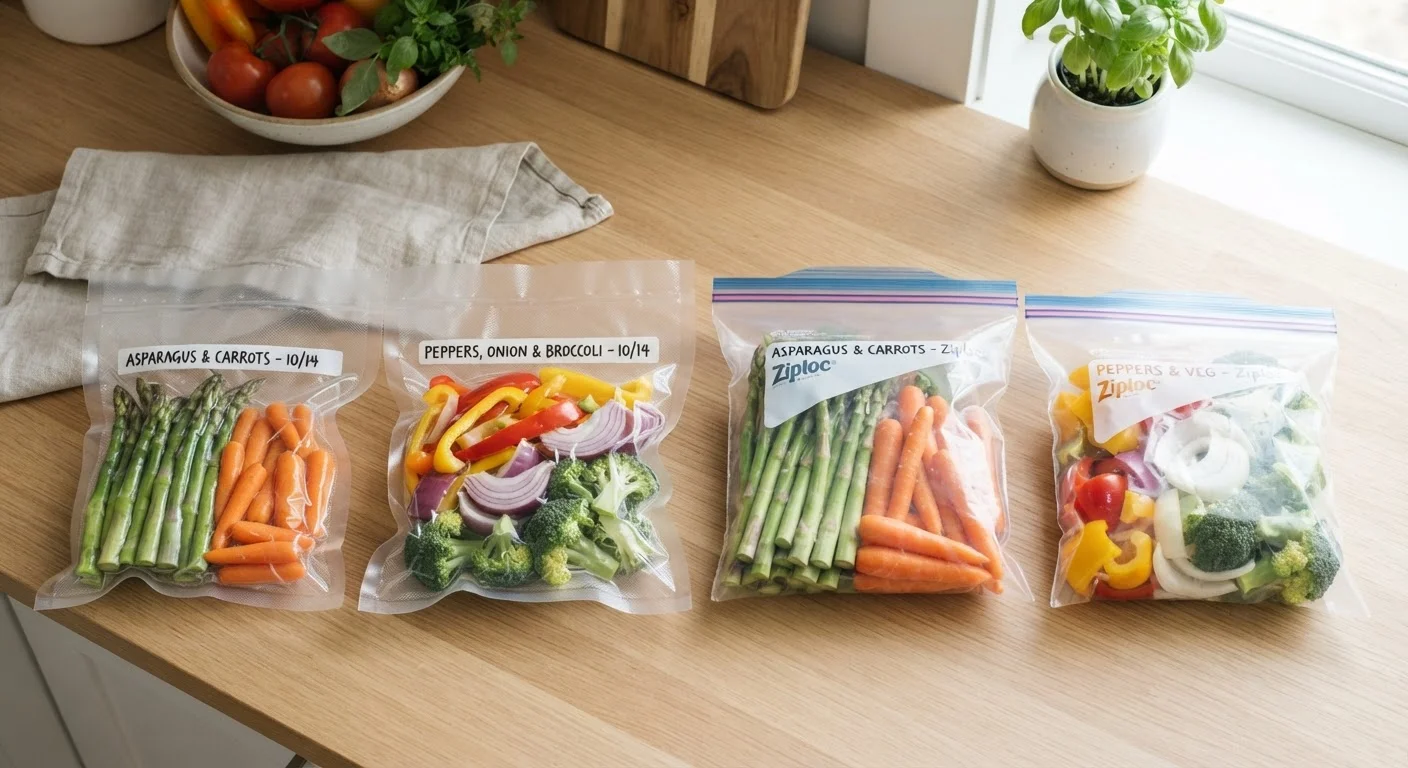
Photo credit: ArticlesHaven.net
In this article
Does vacuum sealing actually make a difference for everyday groceries? Compare real-world food preservation outcomes and cost per use.
Key Takeaways
- Vacuum sealing removes air almost entirely, which meaningfully slows oxidation and freezer burn.
- Zip-lock bags work well for short-term storage but let in enough oxygen to accelerate spoilage over days.
- The cost-per-use gap narrows considerably when you factor in vacuum sealer bags versus reusable zip-lock options.
- Neither method prevents bacterial growth in the danger zone - refrigeration and freezing still do the heavy lifting.
- The right choice depends on your storage duration, food type, and how often you actually use the equipment.
The Core Science: What Actually Causes Food to Spoil
Food spoilage is driven by three main factors: oxygen exposure (which drives oxidation and supports aerobic bacteria), moisture loss or gain, and temperature. Understanding this triangle is the only way to evaluate storage claims fairly.
Vacuum sealers remove roughly 99% of the air from a bag before heat-sealing it. This dramatically slows oxidation - the process that turns fats rancid, browns cut fruit, and degrades flavor compounds. Zip-lock bags, even when pressed flat by hand, typically retain 20-50% of their air volume. That residual oxygen continues working against your food, especially over longer storage windows.
What neither method changes: temperature. Harmful bacteria like Listeria and Salmonella don't care what bag you used - they respond to heat and cold. Vacuum-sealing at room temperature and leaving food out doesn't make it safe. Both systems are only as good as the refrigerator or freezer they're paired with.
Double-Check Your Temperature First
Before investing in any new storage system, verify your refrigerator stays at or below 40°F and your freezer at 0°F. An accurate fridge thermometer costs a few dollars and can reveal temperature drift that no bag type can compensate for. Proper cold storage is the foundation - packaging is secondary.
Real-World Performance by Food Type
The difference between vacuum sealing and zip-lock storage isn't uniform across all foods. Here's where each method earns its keep:
- Freezer proteins (meat, fish, poultry): Vacuum sealing is the clear winner. Freezer burn - caused by sublimation where ice crystals evaporate and leave dry, discolored patches - is dramatically reduced. Vacuum-sealed meat can last 2-3 years in a deep freezer with minimal quality loss; zip-lock-stored meat typically degrades noticeably within 6-12 months.
- Hard cheeses and cured meats: Vacuum sealing extends fridge life meaningfully, from 1-2 weeks to 4-6 weeks in many cases, by preventing mold and oxidation.
- Produce and leafy greens: This is where vacuum sealing often underperforms expectations. Many vegetables need to respire (exchange gases) and can deteriorate faster when fully sealed. Zip-lock bags - slightly vented or with a paper towel insert - frequently outperform vacuum bags here.
- Dry goods and pantry items: Vacuum sealing coffee, nuts, and grains extends shelf life and preserves flavor, but a well-sealed zip-lock kept in a cool, dark place performs reasonably well for items consumed within a few months.
| Vacuum Sealer | Zip-Lock Bags | |
|---|---|---|
| Air removal | ~99% of air removed | 20-50% air typically remains |
| Freezer burn prevention | Excellent - 2-3 year window | Moderate - 6-12 months before degradation |
| Best for produce | Often worse - blocks respiration | Better - slight venting helps |
| Upfront cost | $50-$200 for machine | Minimal - cents per bag |
| Ongoing bag cost | Higher per-unit cost | Low; reusable options available |
| Ease of use | Requires machine and setup | Immediate, no equipment |
| Best use case | Bulk protein, long-term freezing | Short-term fridge, everyday use |
Cost Per Use: A Realistic Breakdown
The upfront cost of a vacuum sealer - typically in the $50-$200 range - is only part of the equation. The bags themselves matter. Proprietary vacuum sealer bags generally cost more per unit than zip-lock bags, and they're not always reusable depending on what was stored.
Quality zip-lock bags in gallon and quart sizes run a few cents each and, for dry or non-greasy contents, can often be washed and reused several times. Reusable silicone zip-top bags push that economy further.
For households that vacuum seal regularly - processing a bulk meat purchase once a month, for example - the per-use cost becomes competitive, especially when set against the cost of food thrown away due to spoilage. If you only seal occasionally, the machine itself becomes a sunk cost that's hard to justify. This connects directly to the broader logic covered in when bulk buying actually saves money: the savings only materialize if the food actually gets used.
40%
Food wasted by average US household annually
According to USDA estimates, American households discard roughly 30-40% of the food supply, with spoilage a primary driver.
3x
Longer freezer life with vacuum sealing vs. standard bags
Food safety and storage research generally attributes a two-to-three-fold extension in quality-preserving freezer life to vacuum-sealed packaging compared to conventional zip bags.
Practical Considerations Before You Choose
Before buying a vacuum sealer, ask a few honest questions about your household habits:
- How often do you freeze large quantities? If you batch-cook or buy half a cow from a local farm, a vacuum sealer pays back fairly quickly. If you freeze the occasional chicken breast, zip-lock bags are adequate.
- Do you have counter space and storage for the machine? Vacuum sealers aren't compact. If equipment ends up in a cabinet and never gets used, zip-lock bags will outperform it by default.
- How are your broader grocery habits? If you already plan meals carefully and rotate stock well, you may already be limiting spoilage more effectively than any bag change could. See grocery shopping systems that reduce food waste for a fuller picture of what actually moves the needle on household waste.
For those focused on day-to-day grocery economics, the principles in everyday savings without extreme couponing offer a useful frame: small, consistent habits often outperform expensive equipment purchases.
Vacuum Sealing Doesn't Mean Safe at Room Temperature
A common misconception is that vacuum-sealed food is shelf-stable. Removing oxygen does not eliminate anaerobic bacteria like Clostridium botulinum, which can thrive in low-oxygen environments at room temperature. Always refrigerate or freeze vacuum-sealed perishables, and never assume a sealed bag is a substitute for proper cold storage. When in doubt about food safety, discard rather than risk illness.

Author
Articles Haven Editorial Contributor
Articles Haven Editorial Team is the collective byline for our editorial team and contributor network. Articles published under this byline or an editorial pen name are researched, written, and reviewed according to our editorial standards for clarity, consistency, and independence before publication.
View all articles →