
Smart Thermostats vs. Programmable Thermostats: Savings Potential and Setup Reality
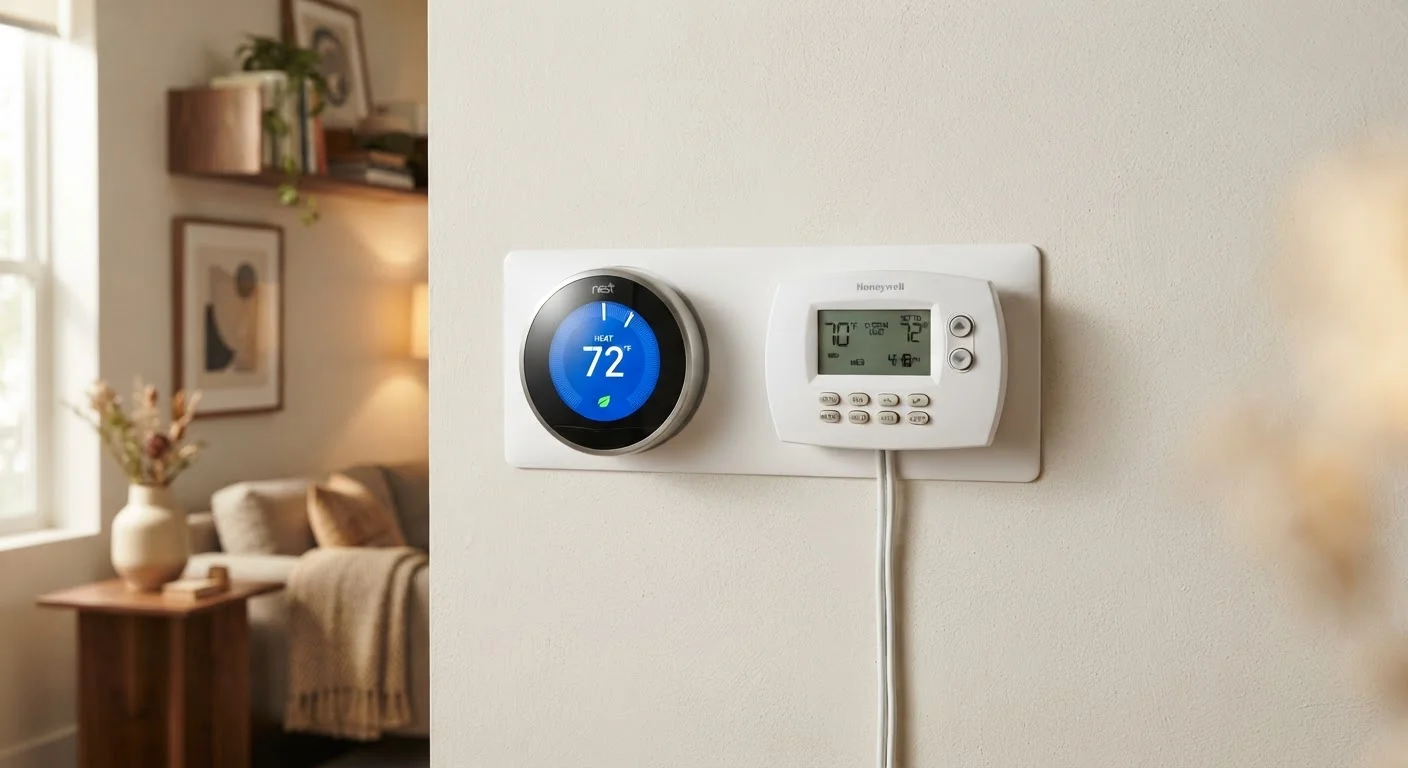
Photo credit: ArticlesHaven.net
In this article
Both promise energy savings, but they work differently. Compare smart and programmable thermostats on features, cost, and ease of use.
Key Takeaways
- Smart thermostats cost more upfront but offer remote access, auto-scheduling, and usage data.
- Programmable thermostats deliver solid savings when users actually follow through on manual setup.
- Studies suggest many programmable thermostat owners never fully program them, limiting real-world savings.
- Smart thermostats typically require Wi-Fi and may need a C-wire - installation complexity varies.
- Both types can reduce heating and cooling costs, but only if used correctly and consistently.
How Each Thermostat Actually Works
A programmable thermostat lets you pre-set temperature schedules - for example, lower heat during work hours and raise it before you get home. Once programmed, it runs those instructions automatically. Nothing more happens unless you change it manually.
A smart thermostat goes further. It connects to your home Wi-Fi, enabling remote control via a smartphone app. Many models also learn from your behavior over time - detecting when you're home, asleep, or away - and adjust schedules without you touching a button. Some integrate with local weather data, humidity sensors, or home automation hubs.
The core difference: a programmable thermostat executes your instructions, while a smart thermostat can generate and refine its own instructions. That distinction matters a lot in practice, especially for households with unpredictable schedules. For a broader look at how connected home devices stack up, see the trade-offs of whole-home smart automation.
| Criterion | Smart Thermostat | Programmable Thermostat |
|---|---|---|
| Typical price range | $150-$300 | $20-$80 |
| Remote control via app | Yes | No |
| Auto-learning / adaptive schedule | Many models, yes | No |
| Requires Wi-Fi | Yes | No |
| C-wire often needed | Frequently yes | Rarely |
| Energy usage reports | Yes | No |
| Voice assistant integration | Common | Rare |
| Effective without manual upkeep | Yes | Only if pre-programmed |
Savings Potential: What the Numbers Actually Suggest
Both thermostat types are widely marketed around energy savings, but the real-world results depend heavily on usage habits.
The U.S. Department of Energy has noted that turning your thermostat back 7-10°F for 8 hours a day can reduce heating and cooling costs meaningfully - a principle both thermostat types can support. However, research has shown that programmable thermostat owners often fail to program them correctly or at all, which erases most of the theoretical benefit.
Smart thermostats address this gap through automation. Studies conducted by energy utilities and independent researchers have found that smart thermostats can reduce HVAC energy use by roughly 10-15% on average compared to manual control - though results vary significantly based on climate, home size, and prior thermostat habits. These aren't guaranteed figures; your savings will depend on your specific setup.
10-15%
Estimated HVAC savings from smart thermostats
Utility-sponsored studies and independent research suggest this range compared to manual thermostat control, though results vary by household.
7-10°F
Temperature setback for meaningful savings
The U.S. Department of Energy notes this adjustment over 8 hours per day can produce noticeable reductions in heating and cooling costs.
~50%
Programmable thermostat owners who don't use programming
Research from Lawrence Berkeley National Laboratory found a significant share of programmable thermostat users rarely or never use the scheduling features.
The honest takeaway: a well-programmed basic thermostat can perform comparably to a smart model. The problem is most people don't maintain that programming. If you're not likely to do so consistently, the automation built into smart models is doing real work on your behalf. For context on how home upgrades like this fit into a broader efficiency strategy, see what energy-efficient home upgrades actually deliver.
Setup Reality: Cost and Installation
Programmable thermostats are widely available and generally straightforward to install for anyone comfortable with basic electrical work. They typically replace an existing thermostat using the same wiring. Prices commonly range from around $20 to $80, depending on features like multi-day scheduling and touchscreen displays.
Smart thermostats cost more - often $150 to $300 - and installation can hit a snag if your HVAC system lacks a common wire (C-wire), which many older systems don't have. Without it, some smart models won't receive consistent power. Workarounds exist (adapter kits, alternate wiring configurations), but they add complexity. If you're unsure about your home's wiring, consulting an HVAC technician is worth considering before purchasing.
Check Your Wiring Before You Buy
Many older homes - particularly those built before the 1990s - use HVAC systems that don't include a C-wire (common wire), which many smart thermostats rely on for consistent power. Before purchasing a smart thermostat, check your existing thermostat's wiring labels or consult your HVAC system documentation. Some smart thermostat manufacturers offer compatibility check tools on their websites. When in doubt, a licensed HVAC technician can assess your setup without a full service call.
Wi-Fi dependency is another real-world factor. Smart thermostats require a stable home network and a compatible app. If your router goes down or you switch internet providers, functionality may be temporarily affected. Programmable thermostats have no such dependency - they run entirely on-device.
Before purchasing either type, doing some upfront comparison research pays off. A structured pre-purchase routine can help you avoid overpaying or buying more features than you'll actually use. Similarly, if you're evaluating multiple home efficiency investments at once, it's worth understanding how upfront cost vs. long-term efficiency plays out in other home upgrades like water heaters.

Author
Articles Haven Editorial Contributor
Articles Haven Editorial Team is the collective byline for our editorial team and contributor network. Articles published under this byline or an editorial pen name are researched, written, and reviewed according to our editorial standards for clarity, consistency, and independence before publication.
View all articles →