
Gas vs. Electric Ranges: What Home Cooks Should Know Before Choosing
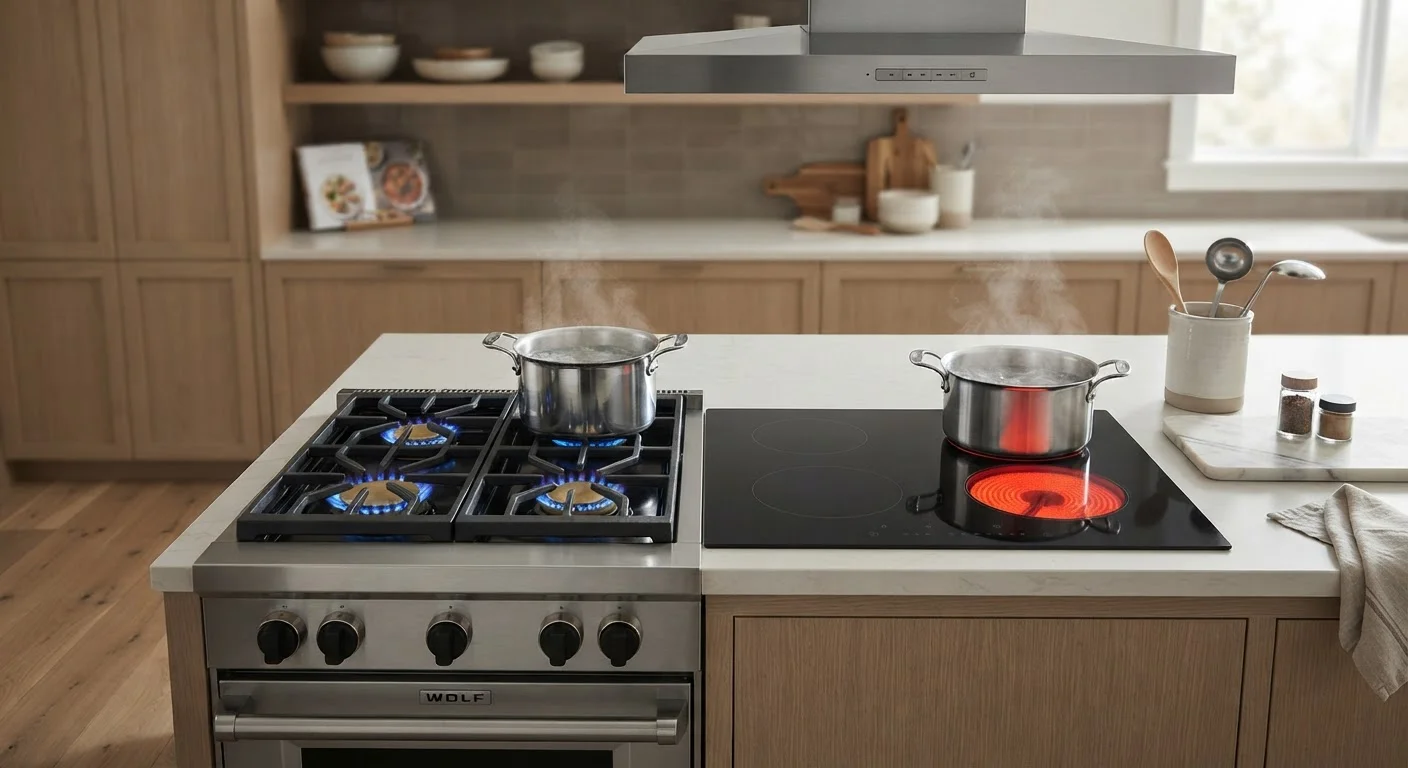
Photo credit: ArticlesHaven.net
In this article
Gas or electric? Compare cooking performance, energy costs, safety, and installation to find the right range for your kitchen.
Key Takeaways
- Gas ranges heat instantly and offer precise flame control, but require a natural gas or propane connection.
- Electric ranges - including smooth-top and coil types - tend to bake more evenly and are generally easier to clean.
- Installation costs can vary significantly depending on whether your home already has the required utility hookups.
- Indoor air quality is a growing concern with gas ranges; proper ventilation is important regardless of range type.
- Neither option is universally better - the right choice depends on your cooking habits, kitchen setup, and energy costs.
Stovetop Performance: Heat Control and Responsiveness
Gas burners ignite immediately and respond to dial adjustments in real time - turn the flame down and the heat drops within seconds. This responsiveness is why many experienced stovetop cooks gravitate toward gas, especially for tasks like simmering sauces or searing at high heat. The visual feedback of a visible flame also helps with gauging intensity.
Electric coil burners heat more slowly and retain heat longer after being turned down, which can make precise control trickier. Smooth-top electric ranges (ceramic or glass) sit between the two - faster than coil, but still lag behind gas in responsiveness. If stovetop cooking dominates your kitchen routine, this difference is real and worth weighing. For more on how induction fits into this picture, see our comparison: Induction vs. Gas Cooktops.
Test the Burners Before You Commit
If possible, try cooking on both range types before purchasing - many appliance showrooms have working displays. Pay attention to how quickly each responds when you dial the heat up or down. Stovetop feel is highly personal, and a hands-on test removes a lot of guesswork.
Oven Performance and Baking Consistency
Electric ovens generally maintain more stable, even temperatures than gas models. Gas ovens can have hot spots and slightly more moisture in the oven cavity due to combustion byproducts, which can affect browning and crisping on baked goods. For bread, pastries, and casseroles that depend on consistent heat, many bakers prefer electric.
That said, gas ovens can work very well for roasting and dishes where a moister environment is acceptable. Convection features - available on both types - help mitigate temperature inconsistencies by circulating air. If you bake frequently, it's worth pairing range research with a look at how convection compares to air frying for supplemental cooking options.
~40%
US households using gas for cooking
According to the U.S. Energy Information Administration's Residential Energy Consumption Survey, roughly 40% of US homes use natural gas for cooking.
2-4x
Higher NO₂ levels near gas stoves
Research published in environmental health journals has found nitrogen dioxide concentrations near operating gas stoves can be two to four times higher than near electric stoves in comparable conditions.
Installation, Safety, and Indoor Air Quality
Installation requirements are a practical gating factor. Electric ranges need a 240-volt outlet, which most US homes have. Gas ranges require a gas line and proper venting - if your kitchen doesn't already have a gas hookup, installation costs can add hundreds of dollars or more, depending on how much new piping is needed.
On safety: gas ranges carry risks that electric models don't - open flames, potential gas leaks, and the presence of combustion gases indoors. Studies have found that gas cooking can release nitrogen dioxide and other pollutants at levels that may affect indoor air quality, particularly in kitchens with limited ventilation. The Consumer Product Safety Commission and environmental health researchers have noted this as a meaningful concern, especially in smaller or poorly ventilated kitchens. Using a range hood or opening windows while cooking on gas is a reasonable precaution. Electric ranges eliminate combustion-related air quality issues, though smooth-top surfaces can cause burns from residual heat that isn't visually obvious.
Ventilation Is Non-Negotiable with Gas
Gas combustion releases pollutants including nitrogen dioxide and carbon monoxide into the kitchen air. Always use a range hood that vents to the outside - not a recirculating filter - when cooking on gas. If your kitchen lacks adequate ventilation, this is a significant factor to weigh before choosing a gas range.
Energy Costs and Long-Term Considerations
Operating costs depend heavily on local utility rates, which vary widely across the US. Natural gas has historically been less expensive per unit of energy than electricity in many regions, but this gap fluctuates with market conditions. In areas where electricity is relatively cheap - or where solar panels offset usage - electric ranges can be quite cost-competitive over time.
It's also worth noting that household energy decisions rarely exist in isolation. If you're weighing a broader shift toward electric appliances, a range is one piece of a larger picture. The practical realities of cooking at home more often can also influence how much your range choice affects your monthly bills.
| Gas Range | Electric Range | |
|---|---|---|
| Stovetop heat control | Instant, precise, visual flame | Slower response, retains heat longer |
| Oven consistency | Can have hot spots, adds moisture | More even, stable temperature |
| Installation requirements | Gas line + 120V outlet needed | 240V outlet (standard in most homes) |
| Indoor air quality | Combustion gases; ventilation critical | No combustion; minimal concern |
| Cookware compatibility | Works with all cookware types | Smooth-top can scratch; check specs |
| Cleaning ease | Grates and burner caps to clean | Flat smooth-top wipes down easily |
| Operating cost | Often lower where gas rates are low | Varies; competitive where electricity is cheap |
Cookware compatibility is another quiet consideration: gas works with virtually any pot or pan, while smooth-top electric surfaces can be scratched by rough cookware. If you're also thinking about upgrading your pots and pans, our cast iron vs. stainless steel breakdown covers what works best across different range types.

Author
Articles Haven Editorial Contributor
Articles Haven Editorial Team is the collective byline for our editorial team and contributor network. Articles published under this byline or an editorial pen name are researched, written, and reviewed according to our editorial standards for clarity, consistency, and independence before publication.
View all articles →