
Email List Sign-Ups and First-Order Discounts: What You're Actually Trading
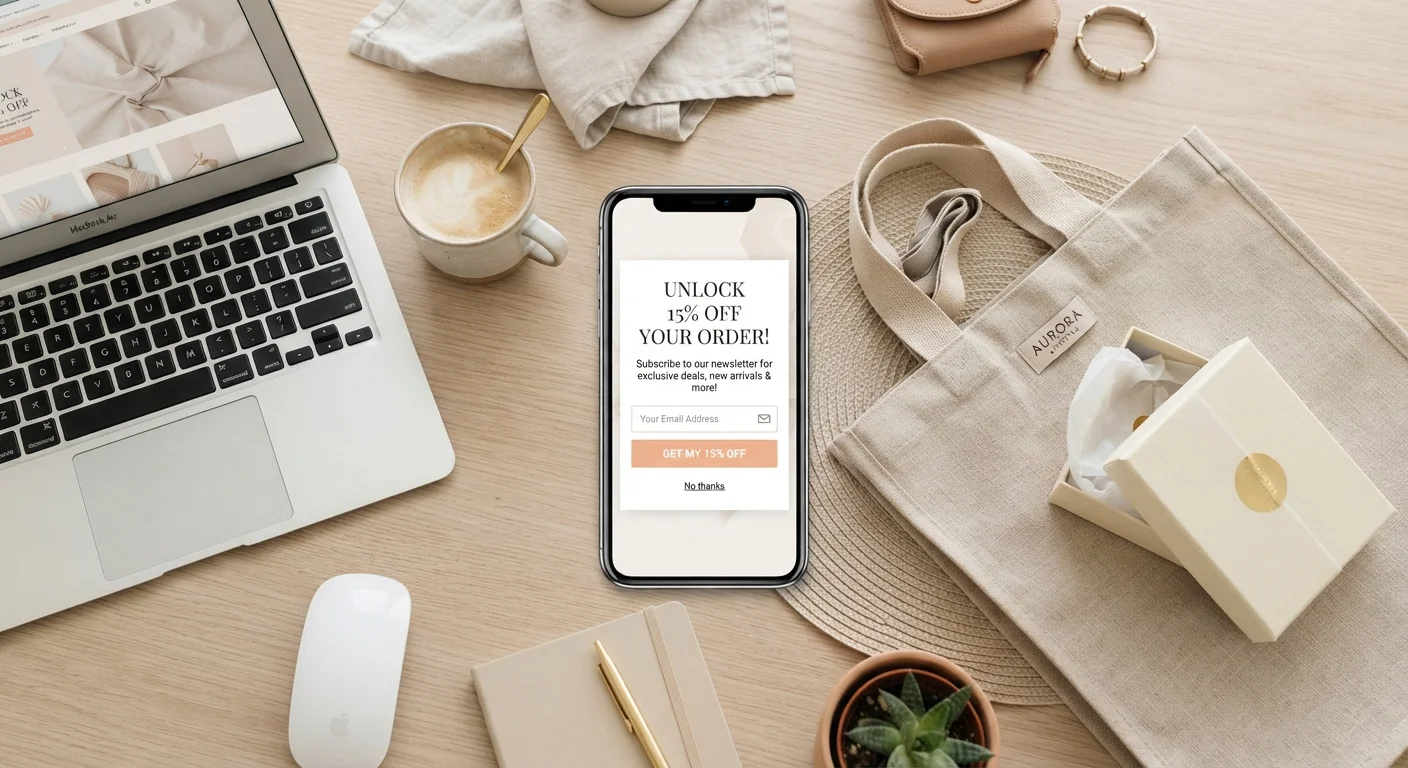
Photo credit: ArticlesHaven.net
In this article
Welcome discounts are a popular acquisition tactic. Understanding what retailers do with your email helps you decide if it's worth it.
Key Takeaways
- A welcome discount gives you a coupon; it gives the retailer a marketing channel and a data asset.
- Your email address is the starting point for behavioral tracking, not the end of the exchange.
- Unsubscribing removes you from email sends but may not delete stored purchase or browse data.
- Welcome discounts are often genuinely useful - the key is going in with realistic expectations.
- Dedicated sign-up email addresses can reduce inbox clutter without foregoing the savings.
The Basic Exchange - and What's Left Unsaid
Pop-ups offering 10%, 15%, or even 20% off your first order in exchange for an email address have become a standard feature of online retail. The pitch is simple: enter your email, get a code. For budget-conscious shoppers, it looks like easy savings.
The exchange is real - the discount is genuine and usually straightforward to redeem. But framing it as just "email for coupon" leaves out the part retailers care most about: the ongoing marketing relationship and the data infrastructure that relationship feeds.
When you subscribe, you're not making a one-time transaction. You're opening a channel the retailer intends to use repeatedly, and you're becoming a named data point in their customer database. Understanding that doesn't mean you should avoid sign-up offers - it means you should evaluate them with clear eyes.
Privacy Policies Vary Widely
There is no universal standard for what retailers do with subscriber data beyond federal anti-spam rules. Some retailers are explicit about not selling personal data; others share it with advertising partners or data brokers. Before signing up, a quick scan of the retailer's privacy policy - specifically the 'how we share your data' section - takes less than two minutes and tells you the most important part of the deal.
What Retailers Are Actually Getting
Your email address is the anchor for a behavioral profile. Retailers connect it to:
- Browse history - pages you visited before and after subscribing, often tracked via cookie or pixel even before you completed sign-up.
- Purchase history - every order you place becomes associated with your email in their CRM.
- Third-party data enrichment - many retailers append demographic or interest data purchased from data brokers to refine your segment.
- Cross-device matching - your email can serve as an identifier that links your desktop browsing to your mobile activity.
The result is that a "10% off" pop-up is, from the retailer's perspective, an acquisition cost - a relatively small discount paid to convert an anonymous visitor into a known, targetable customer.
~$10-$15
Typical retailer email subscriber acquisition cost
Industry estimates suggest retailers often spend $10-$15 per acquired email subscriber via paid channels; a welcome discount is frequently cheaper, making it an efficient acquisition tactic.
10 days
Required unsubscribe processing window under CAN-SPAM
U.S. law (CAN-SPAM Act) requires commercial email senders to honor opt-out requests within 10 business days of receipt.
~60%
Retail email subscribers who only open welcome emails
Various email marketing studies have found a significant share of subscribers engage primarily with the initial welcome message and then go largely inactive - a pattern most retailers build campaign strategy around.
This isn't inherently sinister. Most shoppers tacitly understand that marketing emails are part of the deal. The issue is that the value exchange is rarely spelled out, and the data side continues well beyond any single purchase.
Evaluating the Discount's Actual Value
Not every welcome discount is worth the same thing. Before entering your email, it's worth running a quick mental check:
- Are you actually buying today? Most codes expire in 24-72 hours or within 7-14 days. If you're browsing speculatively, the discount may lapse before you commit.
- Does a minimum order apply? A $10-off code requiring a $75 minimum purchase is a different proposition than 15% off with no floor.
- How does it stack against other discounts? Some codes can't be combined with sale pricing, which may mean you're choosing between the welcome offer and a better deal already on the site.
For a planned purchase you've already decided to make, a welcome discount is straightforwardly useful - it's real money off a real transaction. For impulse browsing, it can nudge you toward a purchase you wouldn't have made otherwise, which isn't a saving at all. See our framework for evaluating whether a discount is genuinely worth it before assuming any percentage off is a win.
Check Whether the Discount Stacks
Before entering your email for a welcome code, check whether the retailer currently has a sitewide sale. Some stores explicitly exclude sale items from promo codes, meaning the welcome discount and the existing sale are mutually exclusive. In that case, the sale price may already be the better deal - and you avoid adding another email subscription.
Managing the Trade-Off Practically
If you want the discount without the inbox clutter and some degree of data exposure, there are practical approaches worth knowing about:
- Use a dedicated promotional email address. Set up a free secondary inbox used exclusively for retail subscriptions. You preserve the discount, check it when you want, and keep your primary inbox clean.
- Unsubscribe after your purchase. The CAN-SPAM Act gives you the right to opt out at any time, and retailers must honor it within 10 business days. This stops the marketing emails, though it doesn't erase purchase data already collected.
- Read the privacy policy summary. Most retailers now include a plain-language data summary. Look specifically for whether they share data with third parties and whether they honor deletion requests.
These steps won't eliminate the data trade entirely - once you make a purchase, that transaction record exists. But they give you meaningful control over how intrusive the ongoing relationship becomes.
For context on where email sign-ups fit among the broader range of savings tools, the savings landscape overview covers how coupons, cashback, and promo codes compare. And if you notice yourself signing up for lists across many retailers without tracking what's useful, deal fatigue is worth reading about - more discounts don't always mean more savings.
“Email remains the highest-ROI direct marketing channel for retailers precisely because subscribers have self-selected - they've already signaled interest. The welcome discount is the price of entry into that relationship, not the relationship itself.”
— Retail Marketing Industry Analysis, General observation widely cited in email marketing literature
Frequently Asked Questions

Author
Articles Haven Editorial Contributor
Articles Haven Editorial Team is the collective byline for our editorial team and contributor network. Articles published under this byline or an editorial pen name are researched, written, and reviewed according to our editorial standards for clarity, consistency, and independence before publication.
View all articles →