
Fiber Internet Bundles vs. Cable Internet Bundles
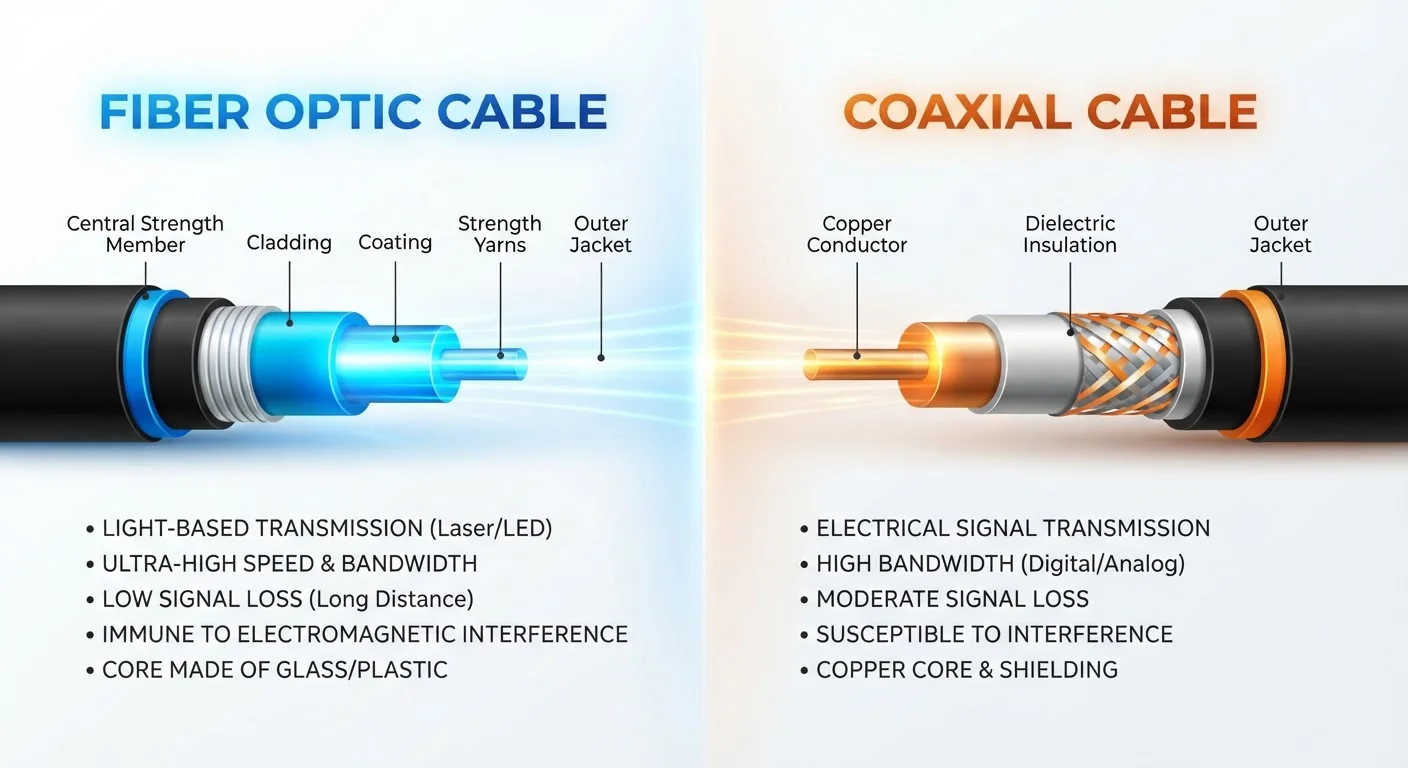
Photo credit: ArticlesHaven.net
In this article
Fiber and cable bundles differ in speed, reliability, and pricing structure. Here's what those differences mean for everyday consumers.
Key Takeaways
- Fiber bundles deliver symmetrical upload and download speeds; cable upload speeds are typically much slower.
- Cable bundles are available in far more US households than fiber, making them the default option in most markets.
- Fiber networks experience less congestion during peak hours due to dedicated bandwidth architecture.
- Cable bundles often include legacy TV packages; fiber providers may offer streaming-oriented add-ons instead.
- Contract terms, equipment fees, and promotional pricing structures vary significantly between fiber and cable bundles.
- Neither option is universally superior - availability, household usage, and total cost all determine the right fit.
What the Bundle Actually Includes
Both fiber and cable providers package internet service with other products - typically TV, phone, or both - and call the combination a bundle. The key difference lies in what each technology brings to the table before any add-ons are layered on top.
Fiber bundles are built on a network where data travels as light pulses through glass strands. That architecture supports symmetrical speeds, meaning upload capacity matches download capacity. For a household uploading large video files, backing up to the cloud, or running a home office, that symmetry matters in ways that a raw download-speed comparison won't capture.
Cable bundles use coaxial infrastructure originally designed for television. Downstream capacity is generally strong - many cable tiers now reach 500 Mbps to 1 Gbps on downloads - but upload speeds on standard cable plans lag well behind, often capped at a fraction of the download figure. For most casual browsing and streaming that gap is invisible; for upload-intensive tasks, it becomes obvious quickly.
For a deeper breakdown of the underlying technology differences, see Fiber vs. Cable Internet: Speed, Reliability, and Availability Differences Explained.
| Criterion | Fiber Internet Bundles | Cable Internet Bundles |
|---|---|---|
| Upload speeds | Symmetrical (matches download) | Significantly lower than download |
| Download speeds | Up to 1 Gbps or more | Up to 1 Gbps (varies by tier) |
| US household availability | Roughly 40-50% of addresses | Over 85% of addresses |
| Peak-hour congestion | Less susceptible (dedicated lines) | More susceptible (shared segments) |
| TV bundle options | Growing; often streaming-oriented | Mature; linear TV widely available |
| Pricing structure | Often flatter, fewer promo cliffs | Frequent promotional intro rates |
| Contract flexibility | Month-to-month more common | Annual or two-year terms common |
Availability and Infrastructure Gaps
Availability is often the deciding factor before pricing or speed even enter the conversation. Cable infrastructure blankets the vast majority of US addresses - estimates routinely place cable broadband availability above 85% of households. Fiber coverage, while growing rapidly, remains concentrated in urban and suburban markets and trails cable significantly in rural zones.
If you live outside a metro area, the fiber-versus-cable question may answer itself. For a look at what rural consumers face when shopping for any bundle type, How Rural Internet Bundles Differ From Urban Offerings covers that gap in detail.
~45%
US households with fiber access
The FCC's broadband deployment data indicates fiber availability has expanded but still covers roughly under half of all US locations.
~88%
US households with cable broadband access
Cable infrastructure's reach across the country consistently exceeds fiber, based on FCC fixed broadband availability reports.
10-20x
Typical fiber upload speed advantage
On comparable download-speed tiers, fiber upload speeds frequently run ten to twenty times faster than standard cable upload caps.
Within markets where both options exist, the competitive dynamic shifts. Fiber providers have expanded aggressively in dense metros, often targeting neighborhoods previously served only by a single cable operator. Where genuine competition exists, consumers tend to see more transparent pricing and fewer long-term lock-in requirements - though this varies by provider and market.
Pricing Structure and Contract Trade-Offs
Headline monthly prices for fiber and cable bundles are often similar, but the structure beneath those numbers differs. Cable bundles frequently lead with heavily discounted promotional rates for 12 to 24 months, after which pricing steps up - sometimes substantially. Fiber providers have trended toward simpler, flatter pricing with fewer promotional cliffs, though this is not universal.
Equipment rental fees, installation charges, and early termination penalties are common on both sides. Read the fine print before committing: a lower promotional rate with a two-year contract and a $200 early termination fee may cost more than a slightly higher month-to-month fiber plan if your housing situation is uncertain.
Watch for Hidden Fees in Bundle Quotes
Advertised bundle prices rarely reflect the actual monthly bill. Equipment rental fees, regional sports surcharges on TV packages, taxes, and one-time installation charges can add $20-$50 or more per month to the quoted rate. Always ask for an itemized estimate of the full monthly cost - including any post-promotional pricing - before signing a contract. Compare that all-in figure, not the headline number.
Bundle composition also affects value. Traditional cable triple-play packages bundle internet, linear TV, and a phone line. Many consumers no longer need linear TV or a landline, which means they may be paying for services they don't use. Fiber providers often offer leaner two-service bundles or internet-only plans with streaming app add-ons. If you're already cutting the cord, Cord-Cutting While Keeping Your Internet Bundle: A Practical Approach lays out how to navigate that shift without overpaying.
Speed Tiers, Reliability, and Everyday Performance
Speed tiers within bundles often lock you into a single service level for the contract duration. Understanding what your household actually needs - not just what sounds impressive - prevents overpaying for unused headroom. How Internet Speed Tiers Within Bundles Affect Everyday Use walks through how to match tier to actual usage patterns.
On reliability, fiber has a structural advantage: the dedicated optical network is less susceptible to neighborhood-level congestion. Cable uses shared bandwidth segments, which means evening peak hours - when everyone in the area is streaming simultaneously - can produce noticeable slowdowns on some systems. Modern cable upgrades (including the DOCSIS 3.1 and emerging DOCSIS 4.0 standards) have reduced but not eliminated this effect.
Weather and physical interference also differ. Fiber is largely immune to electromagnetic interference and moisture-related signal degradation. Coaxial cable is more robust than older copper telephone wire but can still be affected by physical damage and signal quality issues at connection points.
Some providers are now offering bundles that pair home internet with wireless phone plans, a newer structure worth comparing against both fiber and cable triple-plays. See Bundling Internet With a Wireless Phone Plan: How It Differs From Traditional Bundles for how those options stack up.
This article provides general information about internet bundle types and is not a recommendation of any specific provider or plan. Pricing, availability, and terms vary by location and change frequently - verify details directly with providers before making a decision.

Author
Articles Haven Editorial Contributor
Articles Haven Editorial Team is the collective byline for our editorial team and contributor network. Articles published under this byline or an editorial pen name are researched, written, and reviewed according to our editorial standards for clarity, consistency, and independence before publication.
View all articles →