
What Insurance Actually Covers—and What It Doesn't
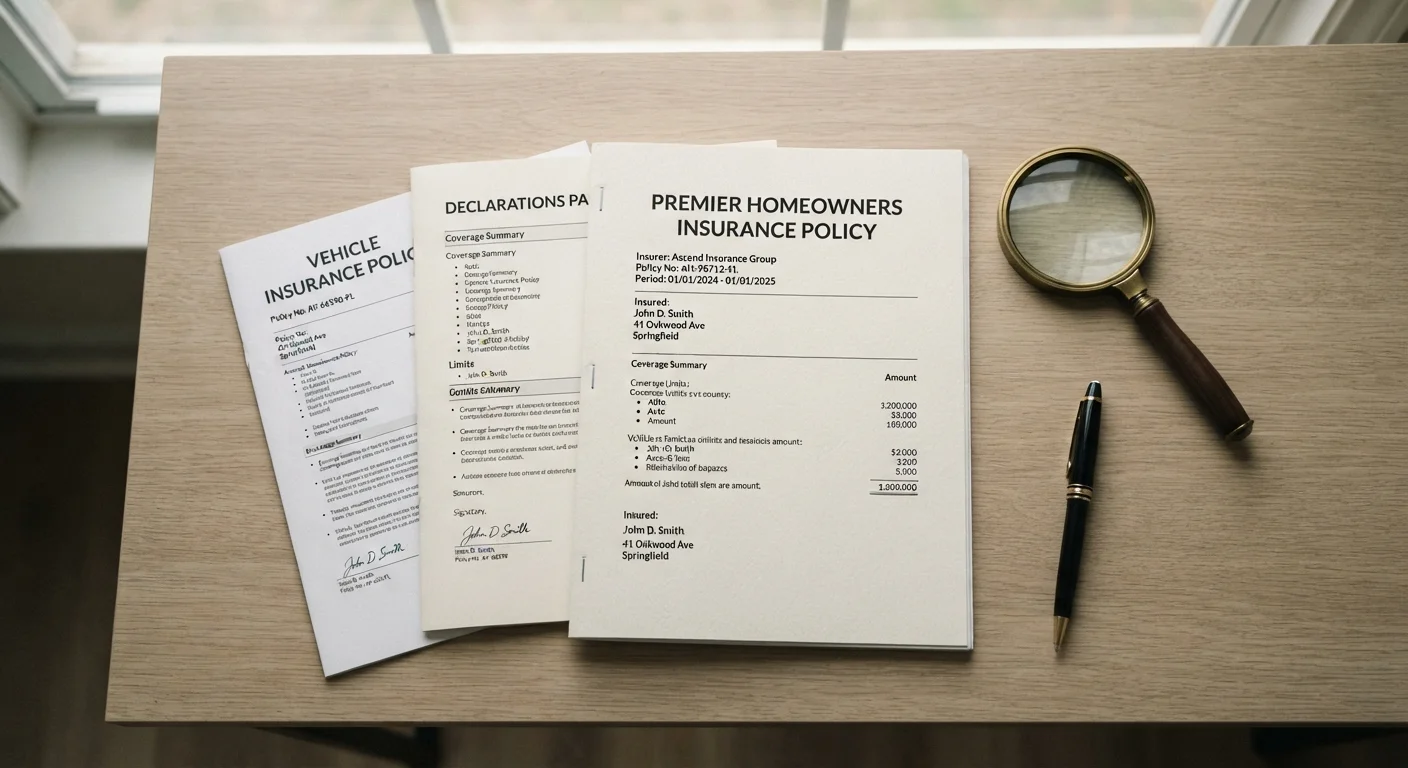
Photo credit: ArticlesHaven.net
In this article
Every policy has exclusions. This overview explains common coverage gaps across health, auto, home, and life insurance types.
Key Takeaways
- Every insurance policy defines coverage through inclusions, exclusions, and limits - all three matter equally.
- Health plans often exclude cosmetic procedures, dental, and certain specialist care without supplemental coverage.
- Standard homeowners policies do not cover floods or earthquakes - those require separate policies.
- Auto liability coverage protects others, not your own vehicle - collision and comprehensive fill that gap.
- Life insurance claims can be denied for misrepresentation or specific exclusions like contestability periods.
- Reading the declarations page and exclusions section of any policy is the fastest way to spot coverage gaps.
How Insurance Coverage Actually Works
Insurance is a contract. You pay premiums; the insurer agrees to cover defined financial losses under defined conditions. That sounds straightforward - but the definition of "defined" is where most confusion begins.
Every policy has three layers that determine real-world coverage:
- Inclusions - the perils, events, or losses the policy will pay for
- Limits - the maximum dollar amount the insurer will pay per claim or per policy period
- Exclusions - the specific scenarios, causes, or conditions that are explicitly not covered
Missing any one of these layers gives you an incomplete picture. A policy might cover fire damage (inclusion) up to $300,000 (limit), but exclude damage caused by arson you commit intentionally (exclusion). Understanding all three together is what separates a well-chosen policy from a false sense of security.
For a closer look at how exclusions shape your real coverage, see how exclusions define the real limits of your coverage.
Premium
The amount you pay - monthly, quarterly, or annually - to keep your insurance policy active. Paying premiums does not guarantee a claim will be approved.
Deductible
The amount you must pay out of pocket before your insurer starts covering a claim. A $1,000 deductible means you pay the first $1,000 of any covered loss.
Exclusion
A specific risk, event, or condition that your policy explicitly does not cover. Exclusions are listed in the policy document and are legally binding.
Coverage limit
The maximum dollar amount your insurer will pay for a covered loss. Any costs above the limit are your responsibility.
Endorsement
An add-on or rider that modifies your base policy - often used to extend coverage for risks the standard policy excludes, like sewer backup or jewelry.
Declarations page
The summary page at the front of a policy listing your coverage types, limits, deductibles, and effective dates. It's the quickest reference for what you're actually insured for.
Health Insurance: What's In and What's Out
Most health plans sold in the U.S. cover a core set of services: doctor visits, hospitalization, emergency care, prescription drugs, and preventive screenings. The Affordable Care Act established a set of essential health benefits that qualified plans must include, which provides a useful baseline for comparison.
That said, significant gaps remain:
- Dental and vision - typically excluded from standard health plans and require separate coverage
- Long-term care - custodial care in a nursing home or at-home assistance is not covered by most health policies
- Cosmetic procedures - excluded unless deemed medically necessary
- Experimental treatments - coverage varies widely; insurers often exclude therapies not yet approved or broadly adopted
- Out-of-network care - many plans pay little or nothing for providers outside the plan's network
Cost-sharing also reduces effective coverage. Deductibles, copays, and coinsurance all mean you pay a portion of costs even for covered services. Supplemental plans exist specifically to bridge these gaps - supplemental health insurance can cover what a primary plan leaves behind.
Check Your Plan's Summary of Benefits
Every health plan is required to provide a standardized Summary of Benefits and Coverage (SBC) document. It outlines covered services, cost-sharing, and excluded benefits in plain language. Reading the SBC before enrollment - not after - helps you catch gaps while you can still choose a different plan.
Auto Insurance Coverage Basics
Auto insurance is not a single product - it's a bundle of distinct coverage types, and most states only require a few of them.
| Coverage Type | What It Covers | What It Doesn't Cover |
|---|---|---|
| Liability | Injuries and damage you cause to others | Your own injuries or vehicle damage |
| Collision | Damage to your vehicle from a crash | Theft, weather, or non-collision events |
| Comprehensive | Theft, weather, fire, falling objects | Collision damage, mechanical failure |
| Uninsured Motorist | Losses caused by a driver with no insurance | Your at-fault accidents |
| Medical Payments / PIP | Medical costs for you and passengers | Vehicle repair or third-party damage |
A state-minimum liability-only policy leaves your own vehicle unprotected entirely. Mechanical breakdowns, routine wear, and items stolen from inside the car are also commonly excluded. Liability coverage has a narrower scope than many drivers assume.
Minimum Coverage Can Leave You Exposed
Carrying only the state-required minimum auto liability coverage protects other drivers legally, but leaves your own vehicle, medical bills, and uninsured-motorist scenarios uncovered. If you cause a serious accident, minimum limits may also be exhausted quickly, leaving you personally responsible for the remainder. Review your limits relative to your actual assets and risk.
Home Insurance: Covered Perils vs. Exclusions
Standard homeowners policies (typically HO-3 form in the U.S.) cover your dwelling and personal property against a named or open list of perils - fire, windstorm, hail, theft, and vandalism are common examples.
But several major risks are excluded by default:
- Floods - require a separate flood insurance policy; not covered by any standard homeowners plan
- Earthquakes - also excluded; earthquake endorsements or separate policies are available in high-risk regions
- Sewer backup - often excluded unless you add a specific endorsement
- Mold from neglect - insurers typically deny claims where mold results from ongoing maintenance failure
- High-value items - jewelry, art, and collectibles often face sublimits far below their actual value
Liability coverage within a home policy covers injuries on your property and certain personal liability situations, but has its own limits. See what liability coverage actually protects for a fuller breakdown.
Life Insurance: What Triggers a Payout
Life insurance pays a death benefit to your named beneficiaries when you die - with conditions. The two most common policy types are term life (covers a set number of years) and permanent life (coverage for life, with a cash value component).
Common reasons a claim may be reduced or denied:
- Contestability period - most policies include a two-year window during which the insurer can investigate and deny claims based on application misrepresentations
- Suicide exclusion - policies often exclude suicide deaths within the first one to two years
- Lapsed policy - if premiums go unpaid, coverage ends; a death shortly after lapse may not be covered
- Misrepresentation - failing to disclose health history or risky activities on the application can void a claim
Life insurance does not cover estate taxes, outstanding debts automatically (creditors may have claims), or replace lost income in real time. Understanding what the benefit is actually designed to do - and what it isn't - helps set realistic expectations for your coverage plan.
Life Insurance Is Not an Investment Guarantee
Permanent life policies with cash value components are sometimes marketed alongside investment benefits, but the cash value grows slowly in early years and fees can significantly reduce returns. The primary purpose of life insurance is income replacement and financial protection for dependents - evaluate it on that basis first, and consult a licensed financial adviser before treating it as an investment vehicle.
How to Read Any Policy for Gaps
The most useful habit when evaluating insurance is skipping the summary brochure and going straight to two sections of the actual policy document:
- Declarations page - lists your coverage types, limits, deductibles, and premium. Think of it as the policy's dashboard.
- Exclusions section - details every scenario the insurer won't pay for. This is where most coverage surprises are hiding.
When comparing policies, map exclusions side by side rather than just comparing premiums. A lower premium that excludes a risk you face regularly may cost more in the long run than a slightly higher premium with broader coverage.
Coverage gaps can appear even when you hold multiple policies - understanding how your policies interact matters as much as what each one covers individually. For guidance on evaluating your options, the choosing a policy hub is a practical starting point. And if you want to go deeper on exclusion language specifically, understanding what policies don't cover explains how to interpret and respond to common exclusion clauses.
This article provides general information about insurance concepts and is not personalized insurance, financial, or legal advice. Coverage terms, exclusions, and regulations vary by provider and by state. Always read your actual policy documents and consult a licensed insurance agent or adviser before making coverage decisions.
Frequently Asked Questions

Author
Articles Haven Editorial Contributor
Articles Haven Editorial Team is the collective byline for our editorial team and contributor network. Articles published under this byline or an editorial pen name are researched, written, and reviewed according to our editorial standards for clarity, consistency, and independence before publication.
View all articles →