
Supplemental Health Insurance: What It Adds and When It Makes Sense
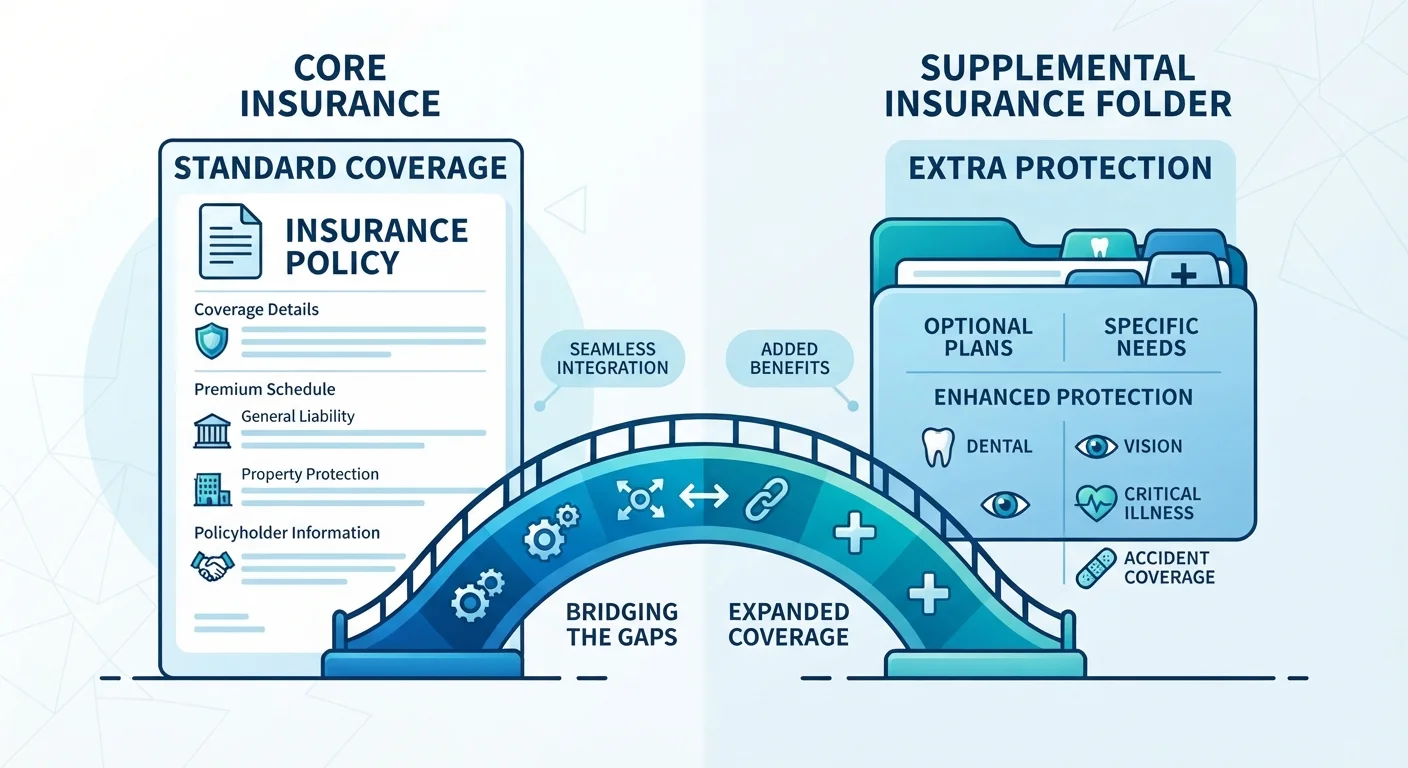
Photo credit: ArticlesHaven.net
In this article
Supplemental plans cover costs your primary insurance may not. Learn what types exist and what gaps they're designed to address.
Key Takeaways
- Supplemental plans pay benefits in addition to your primary insurance, not instead of it.
- Common types include accident, critical illness, hospital indemnity, and disability income plans.
- Most supplemental plans pay cash directly to you, not to a provider.
- They're best suited to people with high deductibles or specific health risk exposures.
- Supplemental coverage does not substitute for comprehensive major medical insurance.
What Supplemental Insurance Actually Does
Standard health insurance covers a lot - but it rarely covers everything. After deductibles, copays, coinsurance, and coverage exclusions, a serious illness or injury can still leave a significant financial gap. That's the space supplemental health insurance is built for.
Unlike your primary health plan, which pays a portion of covered medical bills, most supplemental plans pay a fixed cash benefit directly to you when a qualifying event occurs. A hospitalization, a cancer diagnosis, a broken bone from an accident - these triggers activate a payout you can use however you need, whether that's covering medical bills, making rent, or replacing lost wages while you're out of work.
It's worth understanding that supplemental plans vary widely in what they cover and how they calculate benefits. Reading the policy documents carefully - and understanding what triggers a payout versus what's excluded - is essential before enrolling. For a broader view of what standard insurance policies typically leave uncovered, see what insurance actually covers and what it doesn't.
Supplemental Plans Are Not ACA-Compliant Coverage
Supplemental health insurance does not meet the Affordable Care Act's definition of minimum essential coverage. If you rely solely on a supplemental plan without a primary major medical policy, you may face coverage gaps for routine care, prescription drugs, and preventive services. These plans are designed as add-ons, not standalone solutions.
The Main Types of Supplemental Health Plans
Supplemental coverage isn't one-size-fits-all. Several distinct plan types exist, each targeting a different kind of gap:
- Hospital indemnity insurance pays a fixed daily or per-admission benefit when you're hospitalized. This can offset deductibles and the income you lose while you're unable to work.
- Critical illness insurance provides a lump-sum payment if you're diagnosed with a covered condition - typically cancer, heart attack, stroke, kidney failure, or organ transplant. The payout is generally tax-free and unrestricted in use.
- Accident insurance covers injuries from accidents: emergency room visits, fractures, dislocations, and sometimes follow-up care. It's particularly relevant for people in physically active occupations or with young children.
- Disability income insurance replaces a portion of your income if you can't work due to illness or injury. Short-term and long-term varieties exist, with different elimination periods and benefit durations.
- Disease-specific plans focus on a single condition like cancer or heart disease and pay benefits related to diagnosis, treatment, and recovery costs specific to that illness.
Each type addresses a different financial risk. Someone with a high-deductible health plan might prioritize hospital indemnity, while someone with a strong family history of cancer might look more closely at critical illness coverage.
~46%
US workers enrolled in high-deductible health plans
According to KFF (formerly Kaiser Family Foundation) employer health benefits survey data, nearly half of covered workers are enrolled in HDHPs, increasing exposure to out-of-pocket costs supplemental plans can offset.
$1,763
Average individual HDHP deductible
KFF's employer health benefits data shows the average deductible for single-coverage HDHPs, illustrating the gap supplemental hospital indemnity or accident plans are designed to partially address.
1 in 3
Americans with no emergency savings cushion
Federal Reserve survey data on household financial wellbeing has consistently found that roughly one-third of adults would struggle to cover an unexpected $400 expense, underscoring why income-replacement supplemental plans are relevant.
When Supplemental Coverage Makes Practical Sense
Supplemental plans aren't necessary for everyone. Their value depends on the structure of your primary insurance, your financial reserves, and your personal risk profile.
The strongest case for supplemental insurance typically involves one or more of these factors:
- A high-deductible health plan (HDHP): If your deductible runs into the thousands, a hospital stay could be costly before your primary insurance pays anything. A hospital indemnity or accident plan can offset that exposure.
- Limited emergency savings: If you don't have three to six months of expenses set aside, a serious health event could create immediate cash flow pressure. Supplemental plans can act as a financial buffer.
- Income that stops when you stop working: Freelancers, hourly workers, and self-employed individuals often have no employer-paid sick leave. Disability and hospital indemnity plans directly address income replacement.
- Elevated health risk: A family history of heart disease or cancer doesn't make supplemental insurance a certainty, but it makes the calculation worth running honestly.
For people who are already underinsured on their primary plan, supplemental coverage alone won't fix the underlying problem. Understanding the difference between being insured and being adequately insured is a useful starting point before layering on additional plans.
Compare Your Deductible to Plan Premiums First
Before enrolling in a supplemental plan, calculate your actual annual deductible and out-of-pocket maximum under your primary insurance. If the supplemental plan's annual premiums plus your primary costs exceed what you'd realistically pay out-of-pocket in a typical year, the math may not work in your favor. A licensed insurance adviser can help you model different scenarios based on your actual plan documents.
Important Limitations to Keep in Mind
Supplemental plans come with real constraints that matter before you enroll. Most have waiting periods before coverage activates - typically 30 to 90 days for illness-related claims, though accident claims may be covered immediately. Pre-existing condition exclusions are common, particularly on individually purchased plans.
Benefits are fixed, not reimbursement-based. If your hospital stay costs $15,000 and your plan pays $200 per day for five days, you receive $1,000 regardless of actual costs. That fixed structure can be helpful for predictability but may not fully bridge your gap.
Supplemental plans also don't interact with your primary insurance deductible or out-of-pocket maximum in any coordinated way. They're parallel, not integrated. And because they're not major medical insurance, they're not subject to the same regulatory requirements around coverage minimums or consumer protections that apply under the Affordable Care Act.
For a comparison with other add-on coverage strategies, long-term care insurance addresses a different but related category of extended health costs that standard plans typically exclude entirely.
This article is for general informational purposes only and does not constitute insurance, financial, or medical advice. Coverage terms, eligibility, and benefits vary by plan and provider. Consult a licensed insurance professional to evaluate your specific situation before making coverage decisions.
Frequently Asked Questions

Author
Articles Haven Editorial Contributor
Articles Haven Editorial Team is the collective byline for our editorial team and contributor network. Articles published under this byline or an editorial pen name are researched, written, and reviewed according to our editorial standards for clarity, consistency, and independence before publication.
View all articles →